Mineral SPF & Sun Protection
Sunscreen ingredients to avoid with rosacea
Most of the trouble is not the UV filter. It is everything around it.
By Michael W. · Last updated
The short answer
Screen out fragrance, essential oils, denatured alcohol, menthol and camphor first - those cause more reported trouble than any UV filter. Among the filters themselves, the AAD's advice is to choose zinc oxide, titanium dioxide or both if sunscreen irritates your skin, and the stinging chemical filters to watch are the ones carried in high-alcohol bases.
Some links on this page are affiliate links. If you buy through one, we may earn a commission at no extra cost to you - it is what funds the site. It does not change what gets recommended or in what order. Full disclosure.
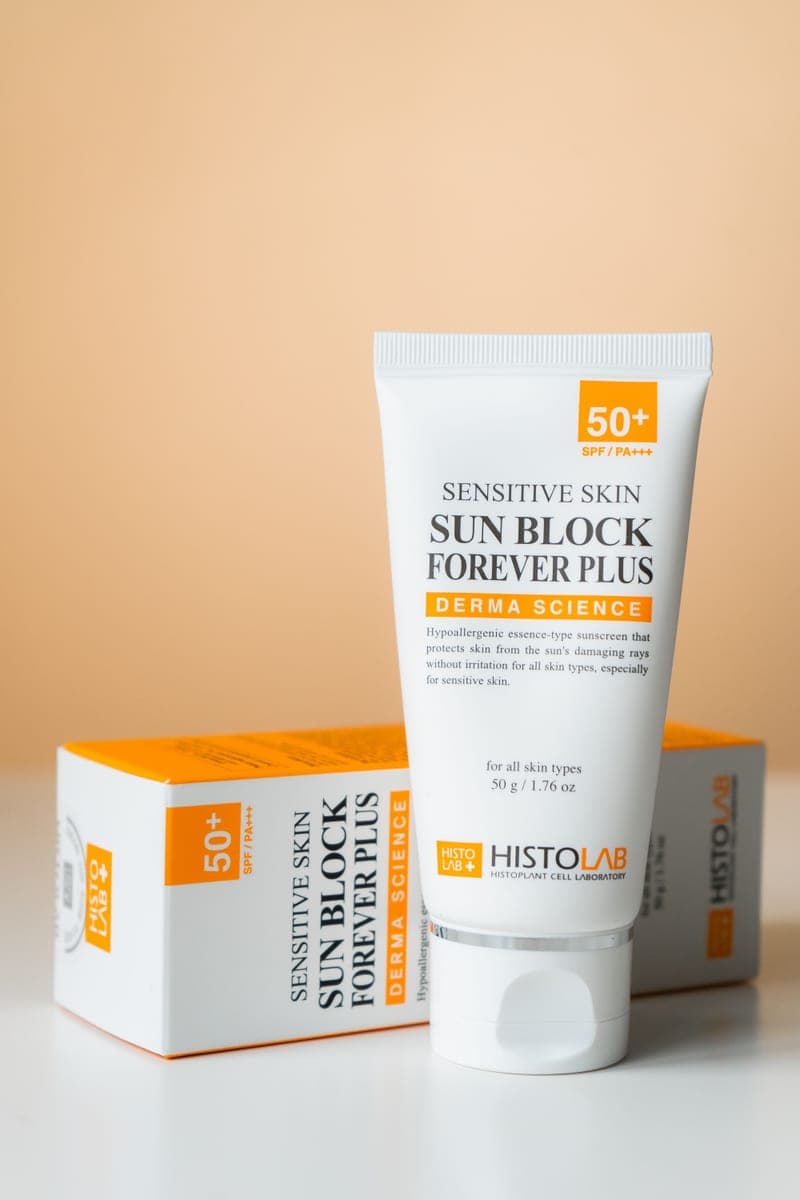
Sun exposure is one of the most frequently reported rosacea triggers, which puts anyone with rosacea in an awkward position: the single most useful product in the routine is also the one most likely to sting. The usual response is to blame the UV filter. That is sometimes right and mostly wrong - in a typical sunscreen the filters are a minority of the formula, and the things around them are where the trouble usually lives.
What follows is the screen, in the order it is worth applying. Work down the list rather than starting at the filters, because the first four entries disqualify more products than everything after them combined.
1. Fragrance and masking fragrance
Fragrance is on the AAD's rosacea avoid-list, and its sunscreen guidance goes further than usual: look for a sunscreen with no fragrance, and if the label says unscented, choose another sunscreen. A single parfum entry can stand for dozens of undeclared compounds, and fragrance is the most common cause of cosmetic contact allergy.
The gap to watch is the essential oil declared under a botanical name. A sunscreen can legitimately say fragrance-free on the front and list eucalyptus globulus leaf extract on the back - that is a perfuming agent, and it is how one of the most-recommended tinted mineral sunscreens in this category fails our screen. The mechanics are at fragrance-free vs unscented.
2. Denatured alcohol
Alcohol appears on the AAD's rosacea avoid-list. In sunscreen it is doing a specific job: chemical filters need a solvent, and alcohol evaporates fast, which is what makes many European and Asian chemical sunscreens feel so light and dry so quickly. That texture is genuinely pleasant and it is why those products are popular.
It is also the ingredient most likely to make an SPF sting on reactive skin. If a sunscreen you liked the feel of burned on application, alcohol denat high on the list is the first thing to check. The distinction between this and the harmless fatty alcohols is covered at alcohol in skincare and rosacea.
3. Menthol, camphor and anything cooling
Both are on the AAD's rosacea avoid-list, and the National Rosacea Society's Seal of Acceptance screens specifically for neurosensory stimulants. The cooling sensation is nerve stimulation - which is precisely the signal you are trying to reduce. They appear in after-sun and sport formulas more often than in daily facial SPF, so this one is mostly about where you shop rather than what you read.
4. Exfoliating acids bundled into the SPF
Glycolic acid and lactic acid are both on the AAD's rosacea avoid-list. A daily sunscreen is a strange place to put either, and a few multitasking formulas do. The exception worth knowing: lactic acid appears at a trace level in some sunscreens purely for pH adjustment, which is not the same as an exfoliating dose. Position on the list tells you which it is.
The screen
Every product on this page had to clear all of the following before it was considered on its merits. This is the exclusion step, and it runs before any recommendation.
- No added fragrance or parfum anywhere in the ingredient list.
- No essential oils, including ones declared under a botanical name.
- No denatured alcohol, witch hazel, menthol, camphor or peppermint.
- No physical scrub particles.
- Sold in the US right now, from a brand that publishes its full ingredient list.
- Every remaining flagged ingredient is named on the product card rather than quietly left out.
Ingredient lists last checked 2026-09-29. Formulas change - if you spot a discrepancy, the published list on the brand's own site wins and we want to know.
Quick picks
Every product here cleared the screen. Tap a row for the full write-up.
| # | Product | Best for | Fragrance | Price |
|---|---|---|---|---|
| 1 |  La Roche-Posay Anthelios Mineral Zinc Oxide Sunscreen SPF 50 Mineral-only filters at SPF 50, fragrance-free, in a fluid base that actually spreads instead of dragging. | Mineral-only SPF 50 that still spreads | Free | |
| 2 | Vanicream Facial Moisturizer SPF 30 Zinc oxide at 19. | Zinc-only SPF with a moisturizer built in | Free | |
| 3 |  Blue Lizard Sensitive Mineral Sunscreen SPF 50+ Mineral-only at SPF 50+, fragrance-free and paraben-free, in a water-resistant base. | High-SPF mineral for long days outside | Free |
#ad - Amazon links are affiliate links. We do not publish prices, because we have no live price feed and will not print a number we cannot verify.
5. Now the filters
The AAD's position is specific and worth quoting as the starting point: if you find that a sunscreen irritates your skin, look for one that contains zinc oxide, titanium dioxide, or both. That is the mineral route, and it is the reason this site leads with mineral sunscreen.
| Filter | Type | Where it stands for rosacea |
|---|---|---|
| Zinc oxide | Mineral | The AAD's recommended route if sunscreen irritates you. Casts white in proportion to how much is in the bottle |
| Titanium dioxide | Mineral | The AAD's other named option. Usually paired with zinc oxide, and lighter in feel |
| Octinoxate | Chemical | Approved and long-established. Not what the AAD points irritated skin towards, and present in several products sold as rosacea picks |
| Avobenzone | Chemical | The main UVA chemical filter in US sunscreens. Needs stabilisers and usually a solvent-heavy base |
| Homosalate, octisalate, octocrylene | Chemical | Solvent and stabiliser filters. Their formulas tend to be the alcohol-light textures described above |
No chemical filter is unsafe, and it is worth saying plainly that a chemical sunscreen you wear daily beats a mineral one you abandon. The full argument is at mineral vs chemical sunscreen for rosacea.
6. The grey-area ingredients
- Niacinamide. Not an irritant, well evidenced for redness, and in a great many sunscreens sold for rosacea. It also causes flushing in a minority of people with rosacea. Not a universal avoid - a personal one. The niacinamide-free picks are at best sunscreens for rosacea without niacinamide.
- Benzyl alcohol. A preservative and solvent, not a drying alcohol. A documented contact allergen for a minority, and a plausible answer to why a fragrance-free product stung.
- Chlorhexidine digluconate. Used in a handful of pharmacy formulas and reacted to by a small number of people. Worth knowing the name if you are eliminating variables.
- Botanical antioxidants. Green tea, feverfew and centella are generally well tolerated and are not perfuming agents. Botanicals are not automatically a flag; perfuming botanicals are.
- Silicone. Often blamed, and the AAD actually names it as something to look for in a rosacea-friendly sunscreen - listed as silicone, dimethicone, cyclomethicone or cyclopentasiloxane.
What to look for instead
- 1Mineral filters - zinc oxide, titanium dioxide, or both, per the AAD.
- 2Silicone in the base, which the AAD names directly and which is what keeps a high-zinc formula from dragging.
- 3Fragrance-free on the label, and reject unscented.
- 4Broad spectrum, SPF 30 or higher, water resistant - the AAD's general sun-protection standard.
- 5A micronized or tinted mineral formula if white cast is what stops you wearing it. The AAD recommends exactly this, and the picks are at best tinted sunscreens for rosacea.
Three sunscreens that clear the whole screen
The picks below are the ones that survive every line above: mineral-only filters, no fragrance, no essential oils, no denatured alcohol, no cooling agents and no bundled acids. They differ in zinc load and therefore in cast, which is the trade you are left with once everything else has been screened out.
The picks, in order
1. Mineral-only SPF 50 that still spreads
La Roche-Posay Anthelios Mineral Zinc Oxide Sunscreen SPF 50
Illustrative photo - not the product.
Mineral-only filters at SPF 50, fragrance-free, in a fluid base that actually spreads instead of dragging. The trade is a visible cast on deeper skin tones, which the tinted version solves.
Filters: Titanium dioxide 6%, zinc oxide 5%
What is in it
- Titanium dioxide 6%
- Zinc oxide 5%
- Dimethicone
Best for
Mineral-only SPF 50 that still spreads
Strengths
- 100% mineral - titanium dioxide 6% and zinc oxide 5%, no chemical filters
- SPF 50 with a genuinely light fluid texture
- No added fragrance
- Layers under makeup without pilling
Trade-offs
- Leaves a white cast on medium and deep skin tones
- The fluid finish is matte - dry skin needs moisturizer under it
Who should skip it: If a white cast is a dealbreaker, go straight to a tinted mineral formula - untinted zinc always casts.
Ingredient list read at INCIDecoder - La Roche-Posay Anthelios Mineral Zinc Oxide Sunscreen SPF 50.
2. Zinc-only SPF with a moisturizer built in
Vanicream Facial Moisturizer SPF 30
Illustrative photo - not the product.
Zinc oxide at 19.5% - the highest single-filter load here - with five ceramides and squalane in the base. It is a moisturizer and a sunscreen in one step, which is exactly what a short routine needs.
Filters: Zinc oxide 19.5%
What is in it
- Zinc oxide 19.5%
- Ceramides EOP, NG, NP, AS and AP
- Squalane
- Glycerin
Best for
Zinc-only SPF with a moisturizer built in
Strengths
- Zinc oxide only at 19.5% - no titanium dioxide, no chemical filters
- Five ceramides plus squalane, so it moisturizes properly
- No fragrance, masking fragrance, lanolin, parabens or formaldehyde releasers
- Collapses two steps into one
Trade-offs
- SPF 30, not 50 - you need to reapply more attentively
- A high zinc load means a real white cast
Who should skip it: If you are outdoors for hours or want SPF 50, step up to a dedicated high-SPF mineral formula.
Ingredient list read at Vanicream - Mineral Facial Moisturizer with SPF 30.
3. High-SPF mineral for long days outside
Blue Lizard Sensitive Mineral Sunscreen SPF 50+
Illustrative photo - not the product.
Mineral-only at SPF 50+, fragrance-free and paraben-free, in a water-resistant base. It is the one to take on a hike rather than the one to wear under makeup.
Filters: Zinc oxide 10%, titanium dioxide 8%
What is in it
- Zinc oxide 10%
- Titanium dioxide 8%
- Tocopheryl acetate
Best for
High-SPF mineral for long days outside
Strengths
- Mineral only - zinc oxide 10% and titanium dioxide 8%
- SPF 50+ with water resistance
- No fragrance, no parabens, no chemical filters
- Large bottle - practical for face and body
Trade-offs
- Thick and noticeably casting
- Contains beeswax, so it is not vegan
Who should skip it: Not the pick for daily wear under makeup - it is too heavy. Use a fluid mineral for that.
Ingredient list read at INCIDecoder - Blue Lizard Sensitive Mineral Sunscreen SPF 50+.
How this list was built
From the published guidance of the American Academy of Dermatology and the National Rosacea Society, cross-checked against the published drug facts panels and inactive-ingredient lists of the sunscreens on this site. Every ingredient named above appears either on a dermatology body's avoid-list or on a real product label we read. Nothing here is asserted from memory, and the selection criteria are published at how we choose.
Questions people ask
What sunscreen ingredients should I avoid with rosacea?
Fragrance and masking fragrance first, then denatured alcohol, then menthol and camphor, then exfoliating acids bundled into the SPF. Those four cause more reported trouble than the UV filters do. Among the filters, the AAD advises choosing zinc oxide, titanium dioxide or both if sunscreen irritates your skin.
Are chemical sunscreens bad for rosacea?
Not unsafe, and not automatically irritating. The AAD points irritated skin towards mineral filters, but many chemical formulas are tolerated fine. The bigger issue is usually the solvent-heavy base those filters need - alcohol denat high on the list is what tends to sting.
Is zinc oxide good for rosacea?
It is one of the two filters the AAD names for people whose skin is irritated by sunscreen, and it has a long history of use on inflamed skin. The trade-off is cosmetic: the more zinc oxide in the bottle, the more white cast you get.
Why does my fragrance-free sunscreen still sting?
The most likely candidates are denatured alcohol, benzyl alcohol, or simply a barrier that is currently compromised. An essential oil declared under a botanical name is also possible - fragrance-free claims do not cover those. If a genuinely bland mineral SPF stings, repair the barrier first.
Should I avoid niacinamide in sunscreen?
Only if it is your trigger. Niacinamide is not an irritant and has good evidence for redness, which is why it appears in so many sunscreens sold for rosacea. It causes flushing in a minority of people, and for them several niacinamide-free mineral options exist.
Is silicone in sunscreen a problem for rosacea?
No - the AAD actually lists silicone as something to look for in a rosacea-friendly sunscreen, naming dimethicone, cyclomethicone and cyclopentasiloxane. It is also what makes a high-zinc formula spreadable instead of draggy.