Mineral SPF & Sun Protection
Does sunscreen help rosacea?
Yes - preventatively. That distinction is the whole answer.
By Michael W. · Last updated
The short answer
Yes, preventatively. Sun is among the triggers people with rosacea report most consistently, so daily protection reduces how often you flare. It will not clear existing redness and it will not touch visible vessels - it stops things getting worse rather than making them better.
Some links on this page are affiliate links. If you buy through one, we may earn a commission at no extra cost to you - it is what funds the site. It does not change what gets recommended or in what order. Full disclosure.
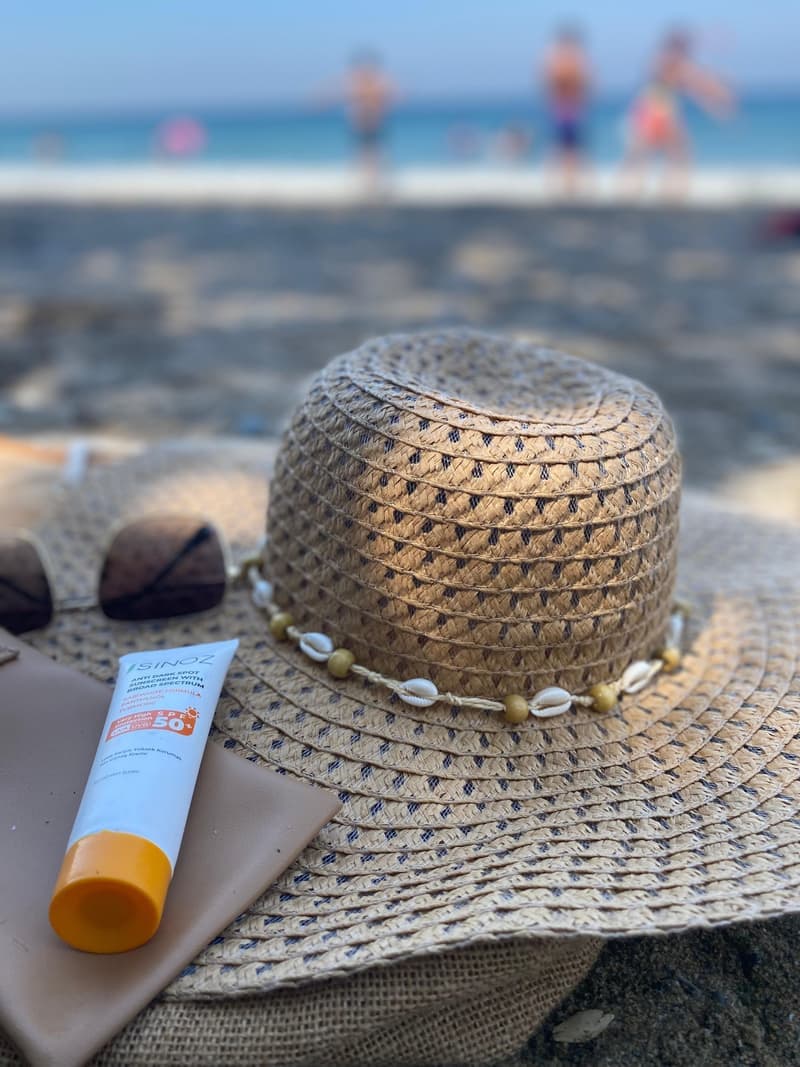
This is a question worth answering precisely, because the imprecise version - sunscreen helps rosacea - sets an expectation that daily SPF will make your face less red, and then it does not, and people stop using it.
What sunscreen does is remove one of the most consistently reported triggers from your day. The National Rosacea Society lists sun among its trigger factors, alongside wind, cold, heat, stress, alcohol and hot drinks. Removing one reliable trigger means fewer flares, and fewer flares over months means less cumulative inflammation.
What it changes, and what it does not
| Does daily sunscreen help? | |
|---|---|
| How often you flare | Yes - this is the main effect |
| How severe a flare gets | Indirectly, by removing one trigger from the stack |
| Existing diffuse redness | Slowly, over months, and only partly |
| Visible blood vessels | No. Prevents more; removes none |
| Papules and pustules | No. That is azelaic acid or a prescription |
| Long-term progression | Probably the most valuable thing it does |
That last row is the underrated one. UV degrades the collagen and elastin that support dermal blood vessels. Less support means vessels dilate more easily and recover more slowly, which is a plausible route by which sun exposure contributes to rosacea getting worse over years. Protecting against that is not something you will notice week to week, and it may be the most useful thing on this list.
How long before you notice anything
- 1Week one. Nothing. Do not expect anything.
- 2Weeks two to four. Fewer flare days, if sun was a meaningful trigger for you. This is subtle and easy to miss without notes.
- 3Months two to three. A clearer pattern - you may notice you are not reacting to bright days the way you did.
- 4Longer term. Slower progression. Invisible by definition, and the main argument for doing it.
The screen
Every product on this page had to clear all of the following before it was considered on its merits. This is the exclusion step, and it runs before any recommendation.
- No added fragrance or parfum anywhere in the ingredient list.
- No essential oils, including ones declared under a botanical name.
- No denatured alcohol, witch hazel, menthol, camphor or peppermint.
- No physical scrub particles.
- Sold in the US right now, from a brand that publishes its full ingredient list.
- Every remaining flagged ingredient is named on the product card rather than quietly left out.
Ingredient lists last checked 2026-09-29. Formulas change - if you spot a discrepancy, the published list on the brand's own site wins and we want to know.
Quick picks
Every product here cleared the screen. Tap a row for the full write-up.
| # | Product | Best for | Fragrance | Price |
|---|---|---|---|---|
| 1 |  La Roche-Posay Anthelios Mineral Zinc Oxide Sunscreen SPF 50 Mineral-only filters at SPF 50, fragrance-free, in a fluid base that actually spreads instead of dragging. | Mineral-only SPF 50 that still spreads | Free | |
| 2 |  Vanicream Facial Moisturizer SPF 30 Zinc oxide at 19. | Zinc-only SPF with a moisturizer built in | Free | |
| 3 |  EltaMD UV Physical Broad-Spectrum SPF 41 Mineral-only and tinted with iron oxide, so the cast problem largely disappears. | Tinted mineral SPF with no niacinamide | Free |
#ad - Amazon links are affiliate links. We do not publish prices, because we have no live price feed and will not print a number we cannot verify.
What else to do alongside it
- A wide-brimmed hat. Genuinely more effective than an extra 20 SPF points, and it needs no reapplication.
- Shade at the middle of the day, where the UV index is highest.
- Sunglasses, particularly if you have eye symptoms.
- Reapplication. A morning application does not cover a whole day outdoors.
- The rest of the trigger list. Heat, alcohol, spice and stress are all on it - see the trigger list.
The picks, in order
1. Mineral-only SPF 50 that still spreads
La Roche-Posay Anthelios Mineral Zinc Oxide Sunscreen SPF 50
Illustrative photo - not the product.
Mineral-only filters at SPF 50, fragrance-free, in a fluid base that actually spreads instead of dragging. The trade is a visible cast on deeper skin tones, which the tinted version solves.
Filters: Titanium dioxide 6%, zinc oxide 5%
What is in it
- Titanium dioxide 6%
- Zinc oxide 5%
- Dimethicone
Best for
Mineral-only SPF 50 that still spreads
Strengths
- 100% mineral - titanium dioxide 6% and zinc oxide 5%, no chemical filters
- SPF 50 with a genuinely light fluid texture
- No added fragrance
- Layers under makeup without pilling
Trade-offs
- Leaves a white cast on medium and deep skin tones
- The fluid finish is matte - dry skin needs moisturizer under it
Who should skip it: If a white cast is a dealbreaker, go straight to a tinted mineral formula - untinted zinc always casts.
Ingredient list read at INCIDecoder - La Roche-Posay Anthelios Mineral Zinc Oxide Sunscreen SPF 50.
2. Zinc-only SPF with a moisturizer built in
Vanicream Facial Moisturizer SPF 30
Illustrative photo - not the product.
Zinc oxide at 19.5% - the highest single-filter load here - with five ceramides and squalane in the base. It is a moisturizer and a sunscreen in one step, which is exactly what a short routine needs.
Filters: Zinc oxide 19.5%
What is in it
- Zinc oxide 19.5%
- Ceramides EOP, NG, NP, AS and AP
- Squalane
- Glycerin
Best for
Zinc-only SPF with a moisturizer built in
Strengths
- Zinc oxide only at 19.5% - no titanium dioxide, no chemical filters
- Five ceramides plus squalane, so it moisturizes properly
- No fragrance, masking fragrance, lanolin, parabens or formaldehyde releasers
- Collapses two steps into one
Trade-offs
- SPF 30, not 50 - you need to reapply more attentively
- A high zinc load means a real white cast
Who should skip it: If you are outdoors for hours or want SPF 50, step up to a dedicated high-SPF mineral formula.
Ingredient list read at Vanicream - Mineral Facial Moisturizer with SPF 30.
3. Tinted mineral SPF with no niacinamide
EltaMD UV Physical Broad-Spectrum SPF 41
Illustrative photo - not the product.
Mineral-only and tinted with iron oxide, so the cast problem largely disappears. It is also the EltaMD that does not contain niacinamide, which matters if that ingredient flushes you.
Filters: Zinc oxide and titanium dioxide (mineral only)
What is in it
- Zinc oxide
- Titanium dioxide
- Iron oxide (tint)
- Quercetin
Best for
Tinted mineral SPF with no niacinamide
Strengths
- Mineral filters only - no chemical UV absorbers
- Iron oxide tint cancels the white cast and adds visible-light coverage
- No niacinamide, unlike the better-known UV Clear
- No added fragrance
Trade-offs
- One tint shade - it will not match every skin tone
- Thick; it needs working in
Who should skip it: If your skin tone is much deeper or much fairer than the single shade, an untinted mineral plus your own tint will look better.
Ingredient list read at INCIDecoder - EltaMD UV Physical Broad-Spectrum SPF 41.
If sunscreen seems to make it worse
That is common and it is almost always the formula rather than the concept. Work through it in this order: check for fragrance and essential oils on the list; switch to a mineral filter; check for niacinamide if you have flushed from it before; and make sure there is moisturizer underneath, because a matte SPF on an unmoisturized compromised barrier will sting.
If a genuinely bland mineral sunscreen still stings, the barrier is usually the issue rather than the sunscreen. Two weeks of barrier repair before trying again is the usual fix.
Questions people ask
Does sunscreen help rosacea?
Yes, preventatively. Sun is one of the most consistently reported rosacea triggers, so daily protection reduces how often you flare. It will not clear existing redness or remove visible vessels - it stops things getting worse rather than making them better.
How long before sunscreen improves rosacea?
Two to four weeks before you notice fewer flare days, if sun was a meaningful trigger for you, and the effect is subtle enough that it is easy to miss without keeping notes. The long-term benefit - slower progression - is invisible by definition.
Can sunscreen make rosacea worse?
A particular sunscreen can, usually because of fragrance, essential oils, a chemical filter you react to, or niacinamide. The concept is not the problem. Work through the formula rather than abandoning sun protection.
Do I need sunscreen indoors?
Generally not away from windows. UVA passes through glass, so if you sit beside a window for hours daily it is worth applying. For most indoor days, protection matters much less than the internet suggests.
Is a hat better than sunscreen?
A wide-brimmed hat is genuinely effective and needs no reapplication, which is a real advantage. Use both - the hat covers what you forget to reapply, and the sunscreen covers reflected light the hat does not block.