Mineral SPF & Sun Protection
Best sunscreen sticks for sensitive skin
A stick is the only sunscreen format you can reapply over makeup at noon. It is also the easiest one to under-apply.
By Michael W. · Last updated
The short answer
EltaMD UV Stick Broad-Spectrum SPF 50+ is the best sunscreen stick for sensitive skin: zinc oxide at 22% with no second filter, fragrance-free, and bisabolol as the one soothing ingredient in this group. CeraVe 100% Mineral Sunscreen Stick is the lighter, cheaper option with ceramides and the only one thin enough for around the eyes, and Blue Lizard Sensitive is the cheapest zinc-only stick if its seven plant oils suit your history.
Some links on this page are affiliate links. If you buy through one, we may earn a commission at no extra cost to you - it is what funds the site. It does not change what gets recommended or in what order. Full disclosure.
A sunscreen stick solves one problem that no bottle solves: reapplication on a face that already has moisturizer, mineral SPF and possibly makeup on it. At eleven in the morning you are not going to wash your face and start again, and rubbing a lotion over the top of a worn layer is how a day's work gets smeared off. A stick goes on dry, over everything, without a mirror. For skin that flushes in sun, that is a genuinely useful tool.
It also comes with a trade that the marketing never mentions, and it matters more than any ingredient on this page: a wax stick is the easiest sunscreen in the world to under-apply. The American Academy of Dermatology is specific about this - four passes back and forth over each area of skin, then rub it in. Almost nobody does four passes. Most people do one, decide it feels greasy, and stop. One pass on a stick is not SPF 50; it is an unknown fraction of SPF 50.
So this page is ordered on two things at once: what is in the stick, and how easily you can get enough of it onto your face. The screen below is the same one every product on this site has to clear, and the four picks are the sticks that cleared it and are currently in stock.
The screen
Every product on this page had to clear all of the following before it was considered on its merits. This is the exclusion step, and it runs before any recommendation.
- No added fragrance or parfum anywhere in the ingredient list.
- No essential oils, including ones declared under a botanical name.
- No denatured alcohol, witch hazel, menthol, camphor or peppermint.
- No physical scrub particles.
- Sold in the US right now, from a brand that publishes its full ingredient list.
- Every remaining flagged ingredient is named on the product card rather than quietly left out.
Ingredient lists last checked 2026-09-29. Formulas change - if you spot a discrepancy, the published list on the brand's own site wins and we want to know.
Quick picks
Every product here cleared the screen. Tap a row for the full write-up.
| # | Product | Best for | Fragrance | Price |
|---|---|---|---|---|
| 1 | 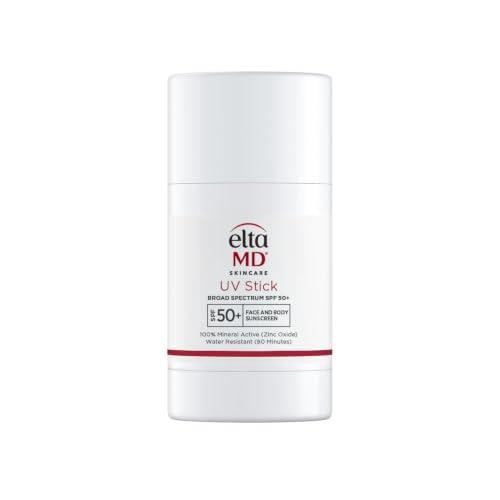 EltaMD UV Stick Broad-Spectrum SPF 50+ Zinc oxide at 22% with no second filter, in a transparent-zinc wax base that reapplies over makeup without a chalk line. | The highest zinc load in a stick that still disappears | Free | |
| 2 | 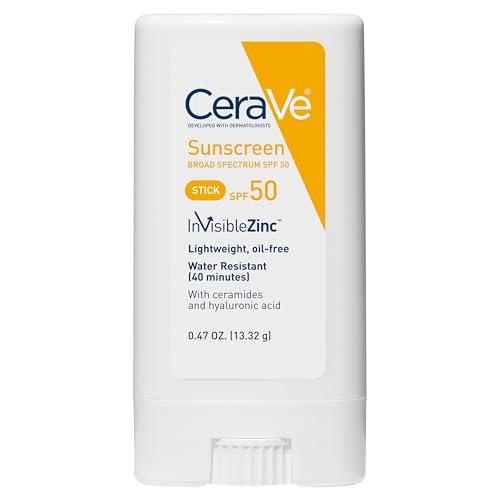 CeraVe 100% Mineral Sunscreen Stick SPF 50 The only stick here carrying the three ceramides plus cholesterol, in the lightest, least waxy base of the five. | The lightest stick, and the one for around the eyes | Free | |
| 3 | 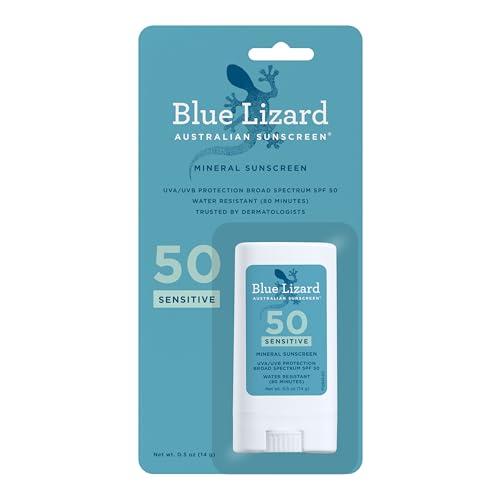 Blue Lizard Sensitive Mineral Sunscreen Stick SPF 50+ Zinc oxide at 20%, fragrance-free per the brand, in a plant-oil and butter base - coconut, shea, cocoa, jojoba, castor, sunflower and soybean. | A zinc-only stick at the lowest price | Free | |
| 4 | 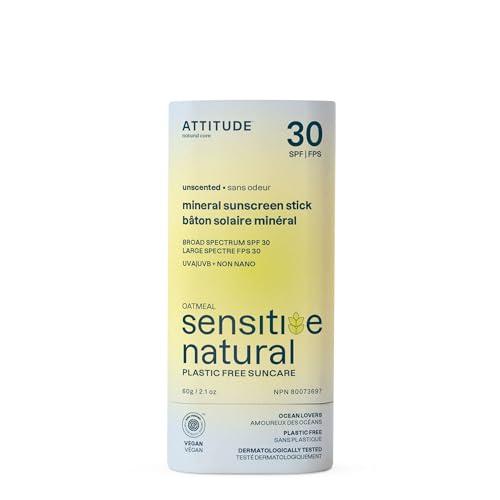 Attitude Sensitive Skin Mineral Sunscreen Stick SPF 30 Non-nano zinc oxide at 20%, unscented, with oat kernel oil for the soothing claim, in a biodegradable cardboard tube rather than a plastic twist-up. | A plastic-free stick for people who read EWG ratings | Free |
#ad - Amazon links are affiliate links. Prices come from the Amazon API, are refreshed daily, and disappear rather than go stale - the button shows the current number or it asks you to check.
Why a stick is mostly wax and oil - and why that matters here
A sunscreen has to stay solid at room temperature to work as a stick, and there are only two ways to do that: waxes and butters. Read the inactive list on any mineral stick and you will find candelilla wax, carnauba, beeswax or sunflower seed wax holding the shape, with plant oils and butters keeping it soft enough to glide. That is not a cost-cutting choice. It is the format.
The consequence for reactive skin is that sticks carry more botanical content than the equivalent lotion, even when they are perfectly fragrance-free. Blue Lizard's stick is a good example: zinc oxide at 20%, no fragrance at all, and a base of coconut, shea, cocoa, jojoba, castor, sunflower and soybean. None of those is an irritant by default. Coconut oil is also the single most common trigger complaint we see in this category, and cocoa butter and castor oil are the ones people with fungal acne learn to avoid.
That is why the picks are not ranked purely on zinc percentage. A 22% zinc stick in a short base beats a 20% zinc stick in a seven-oil base for a face that has reacted to oils before - and the reverse is true if your skin is simply dry and nothing has ever bothered it. There is no universally correct answer, which is the whole reason the cons on every card below are as long as the pros.
The dose problem, honestly
| Lotion or fluid | Stick | |
|---|---|---|
| How the dose is measured | A measurable quantity - two fingers' worth for a face | Passes of a solid, so the amount varies with pressure and temperature |
| AAD application guidance | Apply generously and evenly; reapply every two hours | Four passes back and forth over each area, then rub in |
| Easy to apply too little? | Yes, and most people do | Much easier, because the stick looks finished before it is |
| Reapply over makeup | Poorly - it smears the layer underneath | Well - this is the format's real advantage |
| Around the eyes and on the eyelids | Stings on most formulas | The safest format there, with a thin stick |
| Ears, hairline, the bridge of the nose | Fiddly | Easier than anything else |
| Whole-face primary layer | The right tool | Slow, and expensive per ounce |
The practical conclusion we would draw from that table: use a stick as a reapplication tool and a spot tool, not as your only sun protection. Put a fluid or lotion on in the morning where you can see how much you used, then keep a stick in a bag for the ears, nose, hairline and the eleven o'clock top-up. If you want the full dose argument for the morning layer, it is at how much sunscreen to use on your face.
The picks, in order
1. The highest zinc load in a stick that still disappears
EltaMD UV Stick Broad-Spectrum SPF 50+
Product photo from Amazon.
Zinc oxide at 22% with no second filter, in a transparent-zinc wax base that reapplies over makeup without a chalk line. The brand states fragrance-free, paraben-free and dye-free, and the only botanical content is cocoa and shea butter rather than an essential-oil blend.
Filters: Zinc oxide 22%
What is in it
- Zinc oxide 22%
- Bisabolol
- Theobroma cacao (cocoa) seed butter
- Butyrospermum parkii (shea) butter
- Tocopherol
Best for
The highest zinc load in a stick that still disappears
Strengths
- Zinc oxide 22% - the highest single-filter load of any stick here
- Fragrance-free, paraben-free and dye-free per the brand's own claim
- Bisabolol in the base, the one soothing ingredient in this group
- Water-resistant to 80 minutes in a 1.3 oz twist-up
Trade-offs
- The most expensive stick here by a wide margin, per ounce and outright
- Cocoa and shea butter make it the richest-feeling of the five
- A wax stick cannot be spread thinly enough to cover a whole face quickly
Who should skip it: If you breakout around rich butters, the Aveeno or CeraVe stick bases are lighter for the same job.
#ad How we are funded - price as of November 18, 2026
Ingredient list read at EltaMD - UV Stick Broad-Spectrum SPF 50+.
2. The lightest stick, and the one for around the eyes
CeraVe 100% Mineral Sunscreen Stick SPF 50
Product photo from Amazon.
The only stick here carrying the three ceramides plus cholesterol, in the lightest, least waxy base of the five. The trade is a far lower total filter load - 10.7% against roughly 20% - so it needs the full four passes rather than a quick swipe.
Filters: Titanium dioxide 6%, zinc oxide 4.7%
What is in it
- Titanium dioxide 6%
- Zinc oxide 4.7%
- Ceramides NP, AP and EOP
- Cholesterol
- Sodium hyaluronate
Best for
The lightest stick, and the one for around the eyes
Strengths
- Three ceramides plus cholesterol and sodium hyaluronate in the base
- The thinnest, least draggy glide here - the one that works around the eyes
- Fragrance-free and oil-free per the brand's own claim
- Widely stocked at drugstore pricing
Trade-offs
- 10.7% total mineral filter - under half the zinc load of the Aveeno or EltaMD sticks
- Water-resistant to 40 minutes, not 80
- Beeswax, which rules it out for anyone avoiding animal-derived ingredients
- Contains BHT, a preservative a few very reactive people choose to avoid
Who should skip it: If you want the biggest possible zinc load in the smallest possible layer, this is the wrong stick - take the Aveeno or EltaMD instead.
#ad How we are funded - price as of November 18, 2026
Ingredient list read at CeraVe - Mineral Sunscreen Stick.
3. A zinc-only stick at the lowest price
Blue Lizard Sensitive Mineral Sunscreen Stick SPF 50+
Product photo from Amazon.
Zinc oxide at 20%, fragrance-free per the brand, in a plant-oil and butter base - coconut, shea, cocoa, jojoba, castor, sunflower and soybean. Cheap, effective and the most botanical formula here, which is exactly the thing to check your own history against.
Filters: Zinc oxide 20%
What is in it
- Zinc oxide 20%
- Cocos nucifera (coconut) oil
- Butyrospermum parkii (shea) butter
- Squalane
- Aloe barbadensis leaf extract
Best for
A zinc-only stick at the lowest price
Strengths
- Zinc oxide 20% with no second filter and no chemical filters
- Fragrance-free and paraben-free per the brand's own claim
- Squalane and shea butter make it the most comfortable glide of the five
- The lowest price per stick here
Trade-offs
- Seven plant oils and butters, including coconut oil - the single most common trigger complaint in this category
- Coconut, cocoa butter and castor oil are fungal-acne suspects if that is part of your picture
- Aloe leaf extract, a botanical with documented if uncommon contact allergy
- A pronounced white cast at a full layer
Who should skip it: Anyone who has reacted to coconut oil or has fungal acne alongside redness - the Aveeno stick does the same job with one botanical instead of seven.
#ad How we are funded - price as of November 18, 2026
Ingredient list read at Blue Lizard - Sensitive Mineral Sunscreen Stick SPF 50+.
4. A plastic-free stick for people who read EWG ratings
Attitude Sensitive Skin Mineral Sunscreen Stick SPF 30
Product photo from Amazon.
Non-nano zinc oxide at 20%, unscented, with oat kernel oil for the soothing claim, in a biodegradable cardboard tube rather than a plastic twist-up. SPF 30 rather than 50 is the honest limit, and the plant-oil base is as long as Blue Lizard's.
Filters: Zinc oxide 20%
What is in it
- Zinc oxide 20%
- Avena sativa (oat) kernel oil
- Vitis vinifera (grape) seed oil
- Butyrospermum parkii (shea) butter
Best for
A plastic-free stick for people who read EWG ratings
Strengths
- Non-nano zinc oxide 20%, no second filter
- Unscented with no fragrance or essential oil on the published list
- Cardboard tube - the only plastic-free stick here
- EWG Verified and dermatologically tested per the brand
Trade-offs
- SPF 30, the lowest of the five, so reapplication matters more
- Grape seed, coconut, sunflower and castor oils plus shea butter - a long botanical base
- Contains mica, so it reads slightly luminous rather than flat
- Narrower US retail presence than the other four
Who should skip it: If you want SPF 50 or the shortest possible botanical list, the Aveeno stick is the better buy at a similar zinc load.
#ad How we are funded - price as of November 18, 2026
Ingredient list read at Attitude - Mineral Sunscreen Stick for Sensitive Skin.
What we screened out, and why
These are products you will find recommended elsewhere for this exact search. Each one is excluded here for a specific, checkable reason - not because it is a bad product, but because it does not clear the screen above.
Chemical-filter sticks
Most sunscreen sticks sold in Europe and a good number in the US are built on avobenzone, octocrylene and octinoxate. They are not unsafe, but reactive skin reports stinging from chemical filters far more often than from zinc, and a stick is a concentrated layer on the thinnest skin on your face. Every pick here is mineral only. The reasoning is at mineral vs chemical sunscreen for rosacea.
Fragranced glow and tinted sticks
The stick aisle has been colonized by highlighter-adjacent products that smell of coconut or citrus. Fragrance is the most common contact allergen in cosmetics, and a product designed for reapplication goes on three or four times a day. Nothing fragranced made this list.
Sticks with citrus or lavender essential oils
An essential oil is fragrance declared under a botanical name, and the citrus oils add a photosensitivity problem to a product whose entire job is sun protection. Bergamot, lemon and lime oils are the ones to look for on a stick label.
Cooling and after-sun sticks with menthol or camphor
Both act on the nerve receptors implicated in facial flushing, which makes a cooling sensation the single worst feature a rosacea product can advertise.
Aveeno Protect + Soothe Mineral Sunscreen Stick SPF 50
Not a formula objection - on paper it has the shortest botanical list in the category, zinc oxide at 21.6% with oat kernel oil and nothing else of note. We checked its Amazon listing while writing this page and it came back currently unavailable, so it is not a pick. If it returns to stock it belongs near the top of this list.
The full list of what we flag, what each ingredient is and where the evidence is genuinely mixed lives on ingredients to avoid with rosacea.
How to choose between these four
- 1You want the biggest zinc load and the shortest botanical list, and cost is not the deciding factor. EltaMD UV Stick Broad-Spectrum SPF 50+. Zinc oxide 22%, fragrance-free, bisabolol in the base, and the brand's transparent zinc finish is the reason it does not chalk on reapplication. It is also roughly four times the price of the CeraVe stick, which is the honest caveat.
- 2You want the thinnest layer, something for around the eyes, or the cheapest route in. CeraVe 100% Mineral Sunscreen Stick SPF 50. Three ceramides plus cholesterol, the least waxy glide here, and drugstore pricing - at the cost of a 10.7% total filter load and only 40 minutes of water resistance.
- 3You want zinc-only at the lowest price and plant oils have never bothered you. Blue Lizard Sensitive Mineral Sunscreen Stick SPF 50+. Zinc oxide 20%, fragrance-free, and the most comfortable glide of the four thanks to squalane and shea.
- 4You avoid plastic packaging, or you read EWG ratings before you buy. Attitude Sensitive Skin Mineral Sunscreen Stick SPF 30. Non-nano zinc at 20% in a cardboard tube, unscented, EWG Verified - with SPF 30 rather than 50 as the limit you accept.
If none of those four descriptions fits because your real problem is a white cast rather than a formula, a stick is the wrong format to solve it in - untinted zinc at 20% will always cast. The tinted options that do solve it are at best tinted sunscreens for rosacea, and none of them is a stick.
What a mineral stick has to clear before it gets on this page
- Mineral filters only. Zinc oxide, titanium dioxide, or both, with the percentages published. No avobenzone, octocrylene, octinoxate or homosalate.
- No fragrance and no masking fragrance on the published inactive list, and no essential oil declared under a botanical name.
- Broad-spectrum, SPF 30 or higher, water-resistant - the three attributes the AAD tells you to look for on a stick.
- A published inactive list we could read in full before writing a word about it. Every pick links its source.
- Currently buyable. We check the live listing before a product gets a card. One stick came off this page for exactly that reason and is named in the screened-out list above.
What we deliberately do not screen on: price, brand prestige, reef claims, or whether the zinc is described as non-nano. Non-nano is a marketing distinction more than a safety one for a leave-on product, and the FDA's sunscreen guidance does not treat particle size as the deciding factor. If a stick's only differentiator is non-nano, it has no differentiator.
How to actually use one
- 1Four passes back and forth over each area, per the AAD, then rub it in with a fingertip for an even layer. If it looks like you have applied enough, you probably have not.
- 2Warm the stick on the back of your hand first on a cold morning. A cold wax stick drags, and dragging across a flare is its own problem.
- 3Do the easy-to-miss places first - ears, hairline, the bridge of the nose, the back of the neck. The stick exists for these.
- 4Reapply every two hours outdoors, and immediately after swimming or sweating and towel drying. Water resistance is 40 minutes on the CeraVe stick and 80 on the other three.
- 5Wipe the exposed end before it goes back in a bag if you have used it over makeup, or the tip picks up foundation and transfers it next time.
- 6Keep it out of a hot car. A stick that has melted and reset has an unevenly distributed filter load, and there is no way to tell by looking.
One more practical note on reapplication over a redness routine: if you are using azelaic acid or any other active in the morning, a stick is the gentlest thing you can put over it, because there is no rubbing-in of a wet layer and no water to reactivate anything. The ordering question is covered in the rosacea skincare routine.
Who should not buy a stick at all
- Anyone looking for their primary morning sunscreen. Per ounce, a stick is the most expensive way to buy SPF, and the hardest to dose. Start from best mineral sunscreens for sensitive skin instead.
- Anyone whose skin dislikes occlusive butters. A stick is wax and butter by definition and there is no low-oil version of the format.
- Anyone who needs a sheer finish on medium or deep skin. Untinted zinc at 20% casts, and buffing a stick harder does not fix it.
- Anyone who will not do four passes. An honestly applied SPF 30 lotion beats a hopefully applied SPF 50 stick every time.
How we chose
By reading the published active and inactive lists for every mineral stick we could find a full list for, discarding anything with fragrance, masking fragrance, essential oils or a chemical filter, then checking each surviving product's live retail listing for availability before it was given a card. Application guidance is quoted from the AAD, and the SPF and water-resistance figures are the ones on each brand's own label. We have no testing lab, we ran no trial, and we make no first-hand-use claim about any product here. The full method is at how we choose.
Questions people ask
Are sunscreen sticks good for sensitive skin?
The format is good for reapplication and for awkward areas - ears, hairline, around the eyes - because it goes on dry with no rubbing of a wet layer. The formulas are a mixed bag: a stick has to be wax and oil to hold its shape, so it carries more botanical content than the equivalent lotion. Pick a fragrance-free mineral one and read the oils.
How much sunscreen stick should I apply?
The American Academy of Dermatology says four passes back and forth over each area of skin, then rub it in for an even layer. That is considerably more than most people apply, and under-application is the main practical weakness of the format.
Which sunscreen stick has the most zinc oxide?
Of the four here, EltaMD UV Stick at 22% zinc oxide, with Blue Lizard Sensitive and Attitude both at 20%. The CeraVe stick is the outlier at 6% titanium dioxide plus 4.7% zinc oxide - 10.7% total - which is why it needs the full four passes rather than a quick swipe.
Can I use a sunscreen stick around my eyes?
It is the best format for it, because nothing runs into the eye the way a fluid does. Use the thinnest, least waxy stick you can find - the CeraVe one here - and go gently on the lid itself. If a product stings, stop; the skin there is thinner than anywhere else on the face.
Can a sunscreen stick replace my regular sunscreen?
We would not. A stick is hard to dose and expensive per ounce, which makes it a poor primary layer and an excellent top-up. Apply a measurable lotion or fluid in the morning and keep the stick for reapplication, the ears, the hairline and the nose.
Do sunscreen sticks leave a white cast?
Untinted mineral sticks at 20% zinc do, on medium and deeper skin tones especially. EltaMD's transparent zinc is the least obvious of these four. If a cast is the dealbreaker, a tinted fluid solves it properly and a stick does not.
Is non-nano zinc oxide better in a stick?
Not for your skin in any way we can demonstrate. Non-nano is largely an environmental and marketing claim; the FDA's sunscreen guidance does not treat particle size as the deciding factor for a leave-on product. Judge a stick on its filter percentage, its fragrance status and the rest of the inactive list.
Are sunscreen sticks safe to use on children?
The mineral ones here are sold for adults and children alike, and the EltaMD and Attitude labels say so explicitly. The practical issue with a child is the same as with an adult, only worse: getting four passes onto a moving face.
Sources
- AAD - How to use stick and spray sunscreens
- FDA - Sunscreen: How to help protect your skin from the sun
- EltaMD - UV Stick Broad-Spectrum SPF 50+
- CeraVe - Mineral Sunscreen Stick
- Blue Lizard - Sensitive Mineral Sunscreen Stick SPF 50+
- Attitude - Mineral Sunscreen Stick for Sensitive Skin
- National Rosacea Society - Skin care and cosmetics