Cleansers & Face Wash
Cetaphil Gentle Skin Cleanser review
Ten ingredients, no rinse required, and one addition that changes who it suits.
By Michael W. · Last updated
The short answer
Still one of the two or three cleansers worth recommending for rosacea-prone skin, and no longer the right one for everybody. Ten ingredients, no fragrance, no essential oils, no parabens, a single mild surfactant, and the unusual ability to be wiped off without water on a day when your face cannot stand a washcloth. The catch is niacinamide, fifth on the current list and absent from the formula most online advice is still describing.
Some links on this page are affiliate links. If you buy through one, we may earn a commission at no extra cost to you - it is what funds the site. It does not change what gets recommended or in what order. Full disclosure.
Cetaphil Gentle Skin Cleanser is probably the most-recommended cleanser in the history of sensitive skin. It has been handed out of dermatology offices for decades, it costs about as much as a sandwich, and it is stocked by every pharmacy in the country. When someone with rosacea asks what to wash their face with, this is the answer they get roughly half the time.
Most of that reputation is still earned. But the bottle on the shelf today is not the bottle the reputation was built on - Cetaphil reformulated its core range in 2021 - and the single most repeated claim about this cleanser, that it contains almost nothing, is now slightly less true than it was. That is the whole review.
What is actually in it
Ten ingredients on the published list, which is short by any standard and very short for a cleanser. In order:
- Water, then glycerin second. Glycerin that high is doing real humectant work - it is the reason the cleanser leaves skin feeling softened rather than tight, and the reason it can be used without rinsing at all.
- Cetearyl alcohol, third. A fatty alcohol, which is worth saying plainly because the word alcohol on an ingredient list makes people flinch. Fatty alcohols are emollients and thickeners; they behave nothing like the denatured alcohol that makes toners sting.
- Panthenol, fourth. Pro-vitamin B5, one of the better-evidenced ingredients in skincare for comfort on irritated skin, and one of the three things the 2021 reformulation added.
- Niacinamide, fifth. The ingredient this review spends the most time on, below. Fifth position in a ten-ingredient list is a real inclusion, not a trace.
- Pantolactone, sixth. A humectant from the same chemical family as panthenol, and the pair are usually formulated together.
- Xanthan gum, seventh. A thickener. It is why the product has a lotion texture instead of a watery one.
- Sodium cocoyl isethionate, eighth. The only surfactant in the formula, and the only thing in the bottle that actually cleanses. It is one of the mildest commercial surfactants available - an isethionate rather than a sulfate - and at eighth on a ten-item list, the load is genuinely low.
- Sodium benzoate and citric acid, last. Preservative and pH adjuster.
What is not on the list matters as much. No fragrance. No masking fragrance. No essential oils. No denatured alcohol. No parabens - the reformulated range is sold as paraben-free and sulfate-free, and the surfactant above is consistent with that. For a product in this price bracket, that is a clean label by the standards of the whole category.
The 2021 reformulation, and why half the advice online is out of date
In September 2021 Cetaphil announced updated formulas across its core range, Gentle Skin Cleanser among them, describing the new versions as featuring 'a blend of Niacinamide (Vitamin B3), Panthenol (Vitamin B5), and hydrating Glycerin' and as free of parabens, sulfates and animal-origin ingredients. That is a sourced quote rather than our characterization - the trade announcement is linked in our sources.
For most readers this was an upgrade. Panthenol is a straightforwardly good addition to a cleanser, dropping the parabens removed a preservative class a lot of people specifically avoid, and the surfactant swap made an already mild formula milder. The problem is that a very large amount of rosacea advice on the internet predates the change, still describes this cleanser as a near-inert list of six or seven ingredients, and recommends it on exactly that basis.
The niacinamide question
Niacinamide is a well-supported ingredient. It helps barrier function, it increases ceramide synthesis, and it has reasonable evidence behind it for redness. For the large majority of people reading this, its presence here is neutral to mildly positive.
For a minority of people with rosacea, niacinamide produces flushing - a warm, pink, prickling response that arrives within minutes and fades within an hour. It is not an allergy and it is not damage; it is a vascular response, and it is the single commonest reason someone tells us a bland, well-reviewed product 'does not agree' with them. If that describes you, this cleanser is now the wrong bottle and the swap is easy.
Two things take the edge off the problem. The first is contact time: a cleanser is on your face for under a minute and then goes down the drain, which is a very different exposure from the same ingredient in a moisturizer you wear for eight hours. The second is dose - fifth on a ten-ingredient list is a real inclusion, but it is not a treatment-strength serum. Plenty of people who flush from a 10% niacinamide serum are completely fine with this. The full picture, including how to test it on yourself in a week, is at is niacinamide good for rosacea.
What it does well
Two things, and the second is nearly unique.
The first is that it cleanses without stripping. One mild surfactant at a low position in the list, glycerin second, and no foaming agents means it removes sebum and the day's grime and leaves the barrier lipids largely where they were. Cleanser is the step that does the most avoidable damage in a rosacea routine - the usual pattern is a foaming wash that leaves skin tight, followed by a moisturizer trying to repair what the wash just did - and this formula simply does not create that problem. The argument in full is at foaming vs cream cleansers for rosacea.
The second is that it can be used without water. Cetaphil has marketed this since long before the reformulation: massage it on, wipe it off with a soft cloth or tissue, done. On a day when your face is sore enough that running tap water over it is genuinely unpleasant - mid-flare, post-procedure, after a sunburn - a rinse-free cleanse is worth more than any ingredient on the label. Very few cleansers can honestly make that claim, and it is the main reason this product stays on our shortlists. The flare routine that uses it is at how to calm a rosacea flare-up.
What it does not do
- It will not remove sunscreen or makeup properly. The surfactant load is too low, which is the flip side of its gentleness. Mineral sunscreen in particular needs more than this - either double-cleanse with a balm first, or accept that you are leaving some of it on. Options are at best cleansing balms for sensitive skin, and whether you should double-cleanse at all is at should you double cleanse with rosacea.
- It has no barrier ingredients. No ceramides, no cholesterol, no fatty acids. It does not damage your barrier, which is a lower bar than repairing it. If you want the cleanser itself doing barrier work, CeraVe Hydrating is the one that tries.
- It leaves a faint film if you do not rinse. This is the trade for rinse-free use. Some people like the feeling; others find it interferes with how sunscreen sits. If you are layering mineral SPF over it, rinse.
- It is not a treatment. Nothing in it addresses papules, pustules or visible vessels. A cleanser's job in rosacea is to not make things worse, and that is the job this one does.
- It no longer has the shortest list in the category. Ten ingredients is excellent. Vanicream's Gentle Facial Cleanser is twelve with no niacinamide, and for someone running an elimination period that is the better instrument.
How it compares
| Cetaphil Gentle Skin | Vanicream Gentle Facial | CeraVe Hydrating | LRP Toleriane Hydrating | |
|---|---|---|---|---|
| Ingredients | Ten | Twelve | Longer | Mid-length |
| Niacinamide | Yes, fifth | No | Yes | Yes |
| Ceramides | No | No | Ceramides NP, AP, EOP | Ceramide NP |
| Soothing actives | Panthenol, pantolactone | None | None | Niacinamide, glycerin |
| Foams | No | No | No | No |
| Can be used without water | Yes - the brand's own instruction | No | No | No |
| Removes sunscreen | Poorly | Poorly | Partly | Partly |
| Best used for | A bad day, and a short routine | Elimination periods | Dry skin that wants ceramides | Reactive skin that wants both |
The honest summary of that table is that these four cleansers are close enough that the deciding factor is rarely the formula. It is whether you flush from niacinamide, whether your skin is dry enough to want ceramides in a rinse-off product, and whether you need the rinse-free option. The head-to-head most people are actually choosing between is at CeraVe vs Cetaphil for rosacea.
The picks, in order
1. Rinse-free cleansing on a bad flare day
Cetaphil Gentle Skin Cleanser
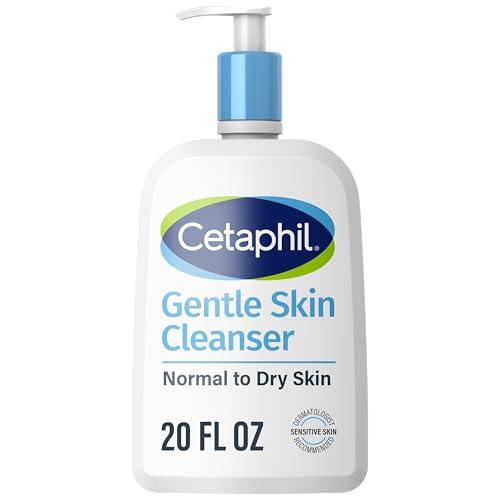
Product photo from Amazon.
Ten ingredients, no fragrance, and it can be wiped off without water - genuinely useful when your face is too sore to touch a washcloth. The current formula does contain niacinamide.
What is in it
- Glycerin
- Panthenol
- Niacinamide
- Pantolactone
Best for
Rinse-free cleansing on a bad flare day
Strengths
- Ten ingredients, no added fragrance, no parabens
- Can be used without rinsing on days when water makes things worse
- Panthenol and pantolactone for soothing and moisture
- Cheap and stocked by every pharmacy
Trade-offs
- The current formula contains niacinamide - check if that is a trigger for you
- Leaves a faint residue if you do not rinse
Who should skip it: If niacinamide flushes you, this is now the wrong cleanser - the reformulated version lists it fifth.
#ad How we are funded - price as of November 18, 2026
Ingredient list read at INCIDecoder - Cetaphil Gentle Skin Cleanser.
How to use it without undoing the point of it
- 1Once a day, at night, unless your skin is oily. A morning rinse with lukewarm water is enough for most rosacea-prone faces. Twice-daily cleansing is a habit, not a requirement.
- 2Lukewarm, never hot. Heat is one of the most-reported rosacea triggers in the National Rosacea Society's own patient surveys, and a hot-water wash undoes more than any cleanser can fix.
- 3Fingers only, about twenty seconds. No washcloths, no brushes, no konjac sponges. Friction is a trigger in its own right.
- 4Pat dry with a soft towel, do not rub. Then moisturize within about a minute, while skin is still slightly damp, which is the AAD's standing advice for dry and itchy skin.
- 5Use it dry on the bad days. Massage in, wipe off with a tissue or a soft cloth, skip the water entirely. This is the use case that justifies owning it.
Who should skip it
Three groups. Anyone who flushes from niacinamide - the Vanicream Gentle Facial Cleanser is the closest niacinamide-free swap at a similar price, reviewed in context at best cleansers for rosacea. Anyone mid-elimination who needs the fewest possible suspects on their face, for the same reason. And anyone who wears heavy mineral sunscreen or full makeup daily and wants to remove it in one step, which this cleanser cannot do.
Everyone else: it is a genuinely good product at a trivial price, and the fact that it is recommended reflexively does not make it the wrong recommendation. It just means the reasoning behind it is usually a decade out of date.
The verdict
Buy it if you want a cleanser that will not make your skin worse, you are not a niacinamide flusher, and you value having something you can use on the days when water is too much. On those terms it is close to unbeatable for the money: ten ingredients, no fragrance, no essential oils, no parabens, one mild surfactant, and a soothing pair in panthenol and pantolactone that most cheap cleansers do not bother with.
Do not buy it as the blandest possible product, because since 2021 it has not been that. The bland end of the shelf now belongs to Vanicream, and the difference between the two is one ingredient that most people will never notice and a minority will notice immediately.
We have no testing lab and we make no first-hand-use claim anywhere on this site. Everything above is read off the published ingredient list and the brand's own reformulation announcement, and set against published guidance from the AAD and the National Rosacea Society; the method is at how we choose.
Questions people ask
Is Cetaphil Gentle Skin Cleanser good for rosacea?
For most people, yes. Ten ingredients, no fragrance, no essential oils, no parabens, one mild surfactant and the option to cleanse without water make it one of the safest cleansers in the category. The exception is the minority of people with rosacea who flush from niacinamide, which the current formula lists fifth.
Does Cetaphil Gentle Skin Cleanser contain niacinamide?
Yes. The current published list has niacinamide fifth of ten, added as part of Cetaphil's 2021 reformulation alongside panthenol and extra glycerin. A lot of online advice still describes the older formula and does not mention it.
Did Cetaphil change its formula?
Yes, in 2021. Cetaphil announced updated formulas across its core range including the Gentle Skin Cleanser, adding niacinamide, panthenol and glycerin, and describing the reformulated products as free of parabens, sulfates and animal-origin ingredients. The announcement is linked in our sources.
Does Cetaphil Gentle Skin Cleanser contain fragrance?
No. There is no fragrance, masking fragrance or essential oil on its published ingredient list, and no denatured alcohol either. The ingredient worth checking against your own history is niacinamide, not a fragrance allergen.
Can you really use it without water?
Yes - it is the brand's own instruction, and it predates the reformulation. Massage it in, then wipe it off with a soft cloth or tissue. The trade is a faint residue, so rinse on the days you are layering mineral sunscreen over it. On a bad flare day, that trade is worth making.
Does it remove sunscreen and makeup?
Not well. The single mild surfactant that makes it gentle is the same thing that makes it a poor remover, and mineral sunscreen in particular needs more. Use a fragrance-free balm first - see best cleansing balms for sensitive skin.
Cetaphil Gentle Skin Cleanser or CeraVe Hydrating?
Cetaphil for the shortest list and the rinse-free option; CeraVe if your skin is dry and you want ceramides doing barrier work during the cleanse. Both now contain niacinamide, so that is not the tiebreaker it used to be. The full comparison is at CeraVe vs Cetaphil for rosacea.
Is the Gentle Skin Cleanser the same as the Daily Facial Cleanser?
No. The Daily Facial Cleanser is a different, foaming product aimed at normal to oily skin, and it was also reformulated in 2021. If you have rosacea-prone or reactive skin, the Gentle Skin Cleanser is the one in the range that suits you, and the brand-wide verdict is at is Cetaphil good for rosacea.