Mineral SPF & Sun Protection
How much sunscreen to use on your face
A quarter of a teaspoon. Almost nobody applies it, and that is where the protection goes.
By Michael W. · Last updated
The short answer
Use about a quarter of a teaspoon - roughly 1.25ml - on your face, or the two-finger rule: a continuous line of sunscreen down the full length of your index and middle fingers. The SPF number on every bottle is measured at two milligrams per square centimetre, and protection falls off faster than the dose does, so applying half the tested amount leaves you with far less than half the SPF. La Roche-Posay Anthelios Mineral SPF 50 and CeraVe Hydrating Mineral SPF 50 are both easy to apply at the full dose; Vanicream Facial Moisturizer SPF 30 doubles as the moisturizer, which makes the generous amount feel normal.
Some links on this page are affiliate links. If you buy through one, we may earn a commission at no extra cost to you - it is what funds the site. It does not change what gets recommended or in what order. Full disclosure.
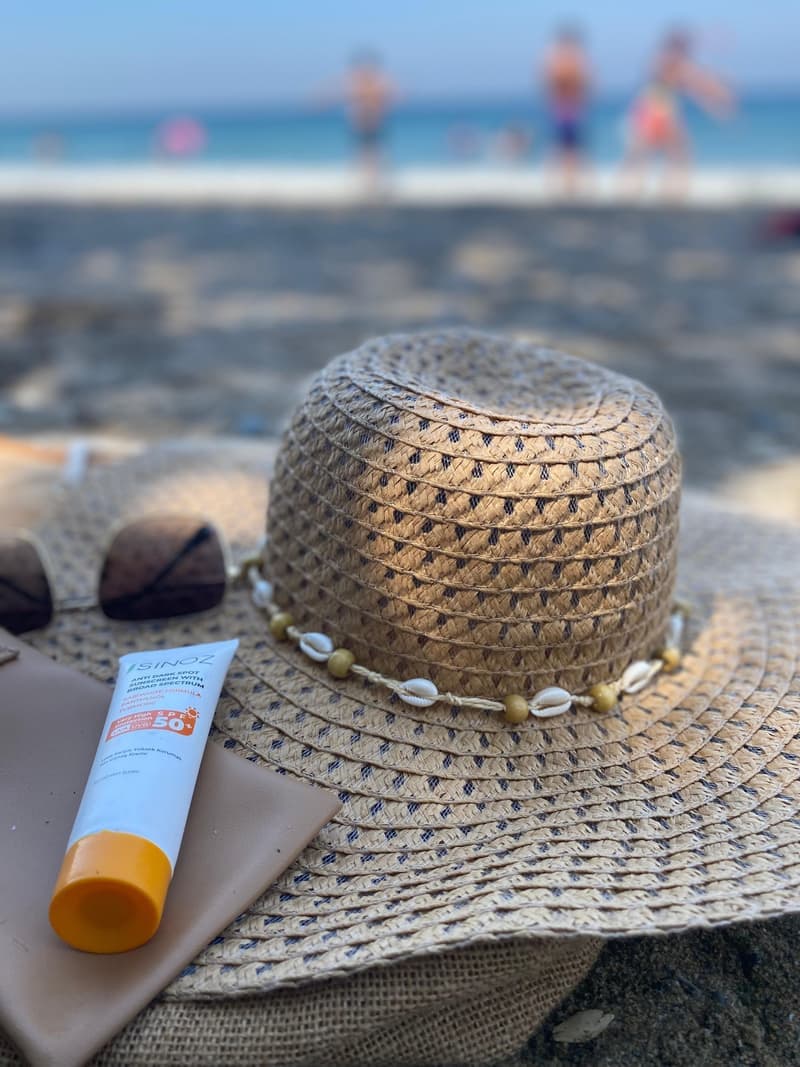
Every SPF number you have ever read was measured at a specific application density: two milligrams of product per square centimetre of skin. That is the international testing standard, and it is considerably more product than almost anyone uses. Studies of real-world application have repeatedly found people applying between a quarter and a half of that amount, which means the SPF 50 on the bottle is not the SPF 50 on the face.
For an adult face and neck, two milligrams per square centimetre comes out at roughly 1.25ml - a quarter of a teaspoon. That is a surprising amount when you see it in a measuring spoon, and seeing it once is the most useful thing you can do about your sun protection this year.
Three ways to measure the same dose
| Method | The measure | Best for |
|---|---|---|
| Quarter teaspoon | 1.25ml of product, face and neck | Lotions and fluids, measured once to calibrate your eye |
| Two-finger rule | A line down the full length of index and middle fingers | Everyday use, no equipment, works with any tube |
| Three-dot-per-zone | Three generous dots each on forehead, each cheek, nose, chin, neck | Mineral sunscreens, which need pressing rather than spreading |
| Half teaspoon | 2.5ml - face, neck, ears and the back of the neck | Outdoors, where ears and hairline matter |
| Shot glass for the body | About 30ml for a whole adult body | Beach and outdoor days, as a sanity check |
The two-finger rule is the practical one and it has reasonable support in the dermatology literature as an approximation of the facial dose. The reason we prefer it to eyeballing is that it is a fixed reference you carry with you - your fingers do not change length when the bottle gets emptier or when you are in a hurry.
Why half the dose is not half the protection
This is the part that changes behaviour. SPF does not scale linearly with application thickness. The relationship is closer to exponential, which means the protection factor falls off much faster than the amount you leave out. Applying half the tested dose of an SPF 50 does not give you an SPF 25; published modelling puts it closer to an SPF 7 or 8. Applying a quarter of the dose brings it down near single figures regardless of what the bottle claims.
That is also why the argument about whether to buy SPF 30 or SPF 50 matters much less than it appears to. Dose dominates. A properly applied SPF 30 outperforms a thinly applied SPF 50 by a wide margin, and the full comparison is at SPF 30 vs SPF 50 for sensitive skin.
The screen
Every product on this page had to clear all of the following before it was considered on its merits. This is the exclusion step, and it runs before any recommendation.
- No added fragrance or parfum anywhere in the ingredient list.
- No essential oils, including ones declared under a botanical name.
- No denatured alcohol, witch hazel, menthol, camphor or peppermint.
- No physical scrub particles.
- Sold in the US right now, from a brand that publishes its full ingredient list.
- Every remaining flagged ingredient is named on the product card rather than quietly left out.
Ingredient lists last checked 2026-09-29. Formulas change - if you spot a discrepancy, the published list on the brand's own site wins and we want to know.
Quick picks
Every product here cleared the screen. Tap a row for the full write-up.
| # | Product | Best for | Fragrance | Price |
|---|---|---|---|---|
| 1 | 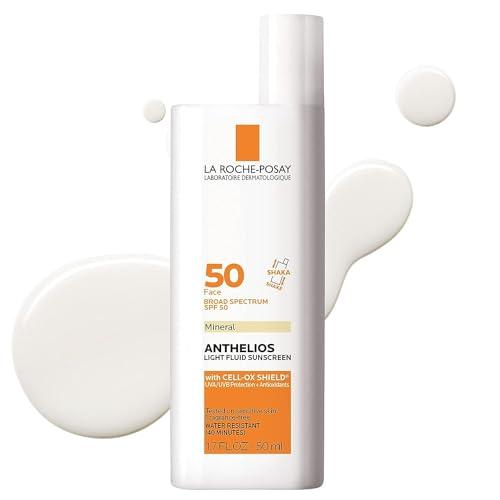 La Roche-Posay Anthelios Mineral Zinc Oxide Sunscreen SPF 50 Mineral-only filters at SPF 50, fragrance-free, in a fluid base that actually spreads instead of dragging. | Mineral-only SPF 50 that still spreads | Free | |
| 2 | 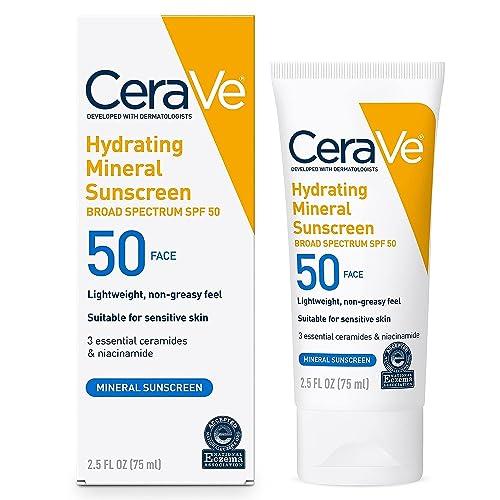 CeraVe Hydrating Mineral Sunscreen Face Lotion SPF 50 Mineral-only filters at SPF 50 with three ceramides and niacinamide in the base, from the cheapest range on this page. | A drugstore mineral SPF with ceramides in the base | Free | |
| 3 | 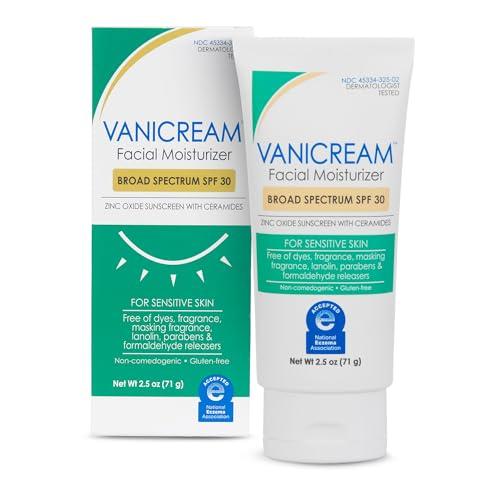 Vanicream Facial Moisturizer SPF 30 Zinc oxide at 19.5% - the highest single-filter load here - with five ceramides and squalane in the base. | Zinc-only SPF with a moisturizer built in | Free |
#ad - Amazon links are affiliate links. Prices come from the Amazon API, are refreshed daily, and disappear rather than go stale - the button shows the current number or it asks you to check.
The picks, in order
1. Mineral-only SPF 50 that still spreads
La Roche-Posay Anthelios Mineral Zinc Oxide Sunscreen SPF 50
Product photo from Amazon.
Mineral-only filters at SPF 50, fragrance-free, in a fluid base that actually spreads instead of dragging. The trade is a visible cast on deeper skin tones, which the tinted version solves.
Filters: Titanium dioxide 6%, zinc oxide 5%
What is in it
- Titanium dioxide 6%
- Zinc oxide 5%
- Dimethicone
Best for
Mineral-only SPF 50 that still spreads
Strengths
- 100% mineral - titanium dioxide 6% and zinc oxide 5%, no chemical filters
- SPF 50 with a genuinely light fluid texture
- No added fragrance
- Layers under makeup without pilling
Trade-offs
- Leaves a white cast on medium and deep skin tones
- The fluid finish is matte - dry skin needs moisturizer under it
Who should skip it: If a white cast is a dealbreaker, go straight to a tinted mineral formula - untinted zinc always casts.
#ad How we are funded - price as of November 18, 2026
Ingredient list read at INCIDecoder - La Roche-Posay Anthelios Mineral Zinc Oxide Sunscreen SPF 50.
2. A drugstore mineral SPF with ceramides in the base
CeraVe Hydrating Mineral Sunscreen Face Lotion SPF 50
Product photo from Amazon.
Mineral-only filters at SPF 50 with three ceramides and niacinamide in the base, from the cheapest range on this page. The niacinamide is the thing to check: it is the one ingredient here that flushes a minority of people with rosacea.
Filters: Titanium dioxide 9%, zinc oxide 7%
What is in it
- Titanium dioxide 9%
- Zinc oxide 7%
- Ceramides NP, AP and EOP
- Niacinamide
Best for
A drugstore mineral SPF with ceramides in the base
Strengths
- 100% mineral filters - titanium dioxide 9% and zinc oxide 7%, no chemical absorbers
- Ceramides NP, AP and EOP plus sodium hyaluronate in the base
- No added fragrance and no parabens
- Sold untinted, in the face size, in every US drugstore
Trade-offs
- Contains niacinamide - CeraVe lists it in the inactive ingredients
- A high mineral filter load means a real white cast
Who should skip it: Skip if niacinamide flushes you - the La Roche-Posay mineral fluid is the closest niacinamide-free swap.
#ad How we are funded - price as of November 18, 2026
Ingredient list read at CeraVe - Hydrating Mineral Sunscreen Face Lotion SPF 50 ingredients.
3. Zinc-only SPF with a moisturizer built in
Vanicream Facial Moisturizer SPF 30
Product photo from Amazon.
Zinc oxide at 19.5% - the highest single-filter load here - with five ceramides and squalane in the base. It is a moisturizer and a sunscreen in one step, which is exactly what a short routine needs.
Filters: Zinc oxide 19.5%
What is in it
- Zinc oxide 19.5%
- Ceramides EOP, NG, NP, AS and AP
- Squalane
- Glycerin
Best for
Zinc-only SPF with a moisturizer built in
Strengths
- Zinc oxide only at 19.5% - no titanium dioxide, no chemical filters
- Five ceramides plus squalane, so it moisturizes properly
- No fragrance, masking fragrance, lanolin, parabens or formaldehyde releasers
- Collapses two steps into one
Trade-offs
- SPF 30, not 50 - you need to reapply more attentively
- A high zinc load means a real white cast
Who should skip it: If you are outdoors for hours or want SPF 50, step up to a dedicated high-SPF mineral formula.
#ad How we are funded - price as of November 18, 2026
Ingredient list read at Vanicream - Mineral Facial Moisturizer with SPF 30.
Applying the full dose without the white cast
- 1Divide the dose, do not spread it. Three dots each on forehead, each cheek, nose, chin and neck. One blob rubbed outwards always ends up thinnest where the sun hits hardest.
- 2Press with flat fingers. Mineral filters are solid particles in suspension; rubbing them thins the layer unevenly and is also what causes pilling.
- 3Do the first layer, wait a minute, do the second. Two thin layers reach the full dose with half the cast of one thick one, and they settle better.
- 4Go to the hairline, the ears and under the jaw. These are the areas people miss, and on a face with rosacea the jawline and temples flush as readily as the cheeks.
- 5Give it two minutes to set before makeup. The most common cause of patchy foundation over mineral SPF is impatience, not incompatibility - more at best moisturizers for sensitive skin under makeup.
- 6Use a tinted formula if the cast is the obstacle. An iron oxide tint cancels it and filters visible light as well - see best tinted sunscreens for rosacea.
If the full dose of your current sunscreen is genuinely intolerable - too thick, too casting, too shiny - that is useful information about the product rather than a reason to underapply it. A formula you can only wear at half dose is a formula that is giving you a fraction of its stated protection, and swapping it for a fluid or a tinted mineral you can apply properly is a real upgrade. The options are at best mineral sunscreens for sensitive skin.
How often to reapply
- Every two hours outdoors. This is the standard interval and it is not a marketing number - filters degrade, and product is lost to sweat, friction and towels.
- Immediately after swimming or towelling, whatever the water-resistance rating says. Water resistance is tested at 40 or 80 minutes, not all day.
- Once in the morning is realistically enough for a day indoors, away from windows. Glass blocks most UVB but much less UVA.
- Over makeup, use a mineral powder or a stick rather than trying to layer lotion. It is a compromise, and it is better than skipping the reapplication. The sticks that clear our screen are at best sunscreen sticks for sensitive skin.
- Do not rely on a moisturizer with SPF for reapplication. It is a fine first layer - that is what the Vanicream pick is - but you will not reapply a moisturizer at the right dose halfway through a day.
One last practical consequence of the correct dose: a quarter teaspoon per day means a standard 50ml facial sunscreen lasts about forty days of daily use. If a bottle has been in your cabinet for a year, you have been underapplying it - and if it is past the expiry date printed on the tube, the filters may have degraded. Both are arguments for buying a sunscreen you like enough to get through.
How we chose
The two milligrams per square centimetre figure is the international SPF testing standard, and the facial-dose and two-finger approximations follow published dermatological guidance; the non-linear relationship between dose and protection is taken from published modelling rather than from any measurement we made. Ingredient lists and filter percentages read from each product's drug facts panel and from INCIDecoder, with the source linked on every pick. Prices are pulled from the Amazon API, refreshed daily and stamped with the date they were read. Method at how we choose.
Questions people ask
How much sunscreen should I use on my face?
About a quarter of a teaspoon - roughly 1.25ml - for face and neck. The easiest way to hit it without measuring is the two-finger rule: a continuous line of sunscreen down the full length of your index and middle fingers.
What is the two-finger rule for sunscreen?
Squeeze a line of sunscreen along the whole length of your index and middle fingers, then use all of it on your face and neck. It approximates the two milligrams per square centimetre density that SPF numbers are tested at.
Does using less sunscreen just mean proportionally less protection?
No - it is worse than proportional. Protection falls off faster than the dose, so half the tested amount of an SPF 50 behaves closer to an SPF 7 or 8 than to an SPF 25.
How often do I need to reapply sunscreen?
Every two hours outdoors, and immediately after swimming or towel-drying. For a day spent indoors away from windows, one morning application at the full dose is realistically enough for most people.
How long should a bottle of face sunscreen last?
At the correct dose, a 50ml tube is about forty days of daily use. If a facial sunscreen has lasted you a year, you have been applying far less than the amount its SPF was measured at.