Actives & Treatments
Do you need a toner with rosacea?
The one step you can delete today, for free, with nothing lost.
By Michael W. · Last updated
The short answer
No. Toner is the most skippable step in a rosacea routine and the single most common place that denatured alcohol, fragrance, witch hazel and menthol enter an otherwise careful set of products. The original purpose - restoring pH after an alkaline soap - was solved thirty years ago by the pH-balanced cleansers everyone now uses. If you want something in that slot, a hydrating step belongs on damp skin as a serum or a gel moisturizer: Purito Centella Unscented Serum, Aveeno Calm + Restore Oat Gel and Avene Tolerance Control all do a real job, and none of them are toners.
Some links on this page are affiliate links. If you buy through one, we may earn a commission at no extra cost to you - it is what funds the site. It does not change what gets recommended or in what order. Full disclosure.
Almost nothing in a skincare routine can be deleted for free. Drop the sunscreen and you lose the single highest-value thing you do. Drop the moisturizer and the barrier work stops. Toner is the exception, and that is worth knowing early if you have rosacea, because the toner aisle is also the most dangerous shelf in the shop for reactive skin.
The step exists for a historical reason. Traditional soap is alkaline - around pH 9 or 10 - and it left skin's surface pH badly disrupted, so an acidic toner was used to bring it back down. Modern syndet and glucoside cleansers are formulated at or near skin pH, which means the problem the toner was invented to fix no longer happens. The step survived because the bottle was already on the shelf and the industry found new claims for it.
What a toner claims to do, and what actually does it
| Toner claim | Is it real? | What does the job instead |
|---|---|---|
| Restores skin pH after cleansing | Solved by the cleanser being pH-balanced | Any modern gentle cleanser |
| Removes residual cleanser or hard-water residue | If true, the cleanser is the problem | A better cleanser, or rinsing properly |
| Hydrates | Real, and better done elsewhere | A serum or gel moisturizer on damp skin |
| Tightens pores | Astringency - temporary and drying | Nothing; pore size is not changeable topically |
| Calms redness | Not from a water-based wipe-on | Azelaic acid for papules; mineral SPF over months |
| Preps skin so the next product absorbs better | Damp skin does help; the toner is incidental | Applying your moisturizer within a minute of rinsing |
| Balances oil | Dehydrating skin raises oil output | A light fragrance-free gel moisturizer |
Read the right-hand column and a pattern appears: every genuine benefit a toner claims is either already handled by the cleanser or is better delivered by the step that follows it. The one honest kernel is in the sixth row - products do spread and absorb better on damp skin - and you get that benefit by moisturizing promptly after rinsing, not by applying a bottled liquid first.
Why the toner shelf is the riskiest one for rosacea
- Alcohol denat. Common in the first three ingredients, there for the fast-drying matte finish. The argument against is at alcohol in skincare and rosacea.
- Witch hazel. The most-recommended toner ingredient for redness and one of the clearest avoids on this site - the detail is here.
- Fragrance and essential oils. A watery product has nothing to smell of, so anything pleasant has had scent added. Rose, neroli and lavender waters are fragrance ingredients.
- Menthol, camphor and mint. Sold as cooling and acting directly on the receptors implicated in flushing.
- High-concentration acids. Glycolic toners at 7 to 10% are routinely marketed as daily-use products. They are not daily-use products on reactive skin.
- The cotton pad. Even a blameless toner is usually applied by dragging a pad across inflamed skin, and friction does more damage here than chemistry.
That last point applies to the whole category and it is the reason a well-formulated, fragrance-free, alcohol-free toner is still not worth adding: the application method is a friction step on skin that cannot afford friction. If you own one you like and it clears the screen, press it in with your palms rather than wiping, and nothing bad will happen. You simply will not be able to tell what it did.
The screen
Every product on this page had to clear all of the following before it was considered on its merits. This is the exclusion step, and it runs before any recommendation.
- No added fragrance or parfum anywhere in the ingredient list.
- No essential oils, including ones declared under a botanical name.
- No denatured alcohol, witch hazel, menthol, camphor or peppermint.
- No physical scrub particles.
- Sold in the US right now, from a brand that publishes its full ingredient list.
- Every remaining flagged ingredient is named on the product card rather than quietly left out.
Ingredient lists last checked 2026-09-29. Formulas change - if you spot a discrepancy, the published list on the brand's own site wins and we want to know.
Quick picks
Every product here cleared the screen. Tap a row for the full write-up.
| # | Product | Best for | Fragrance | Price |
|---|---|---|---|---|
| 1 | 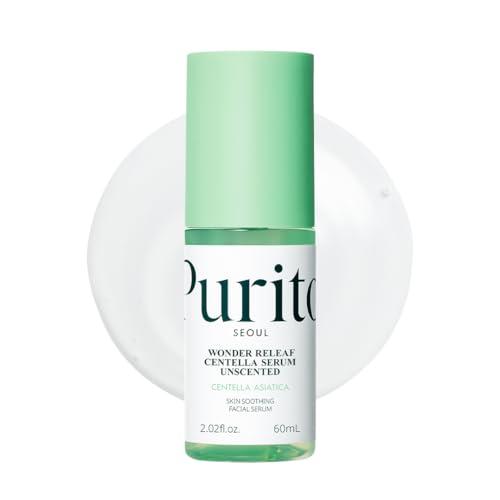 Purito Centella Unscented Serum Centella asiatica extract at 49%, plus the three isolated centella actives, in a fragrance-free base. | Centella at a concentration that is actually doing something | Free | |
| 2 | 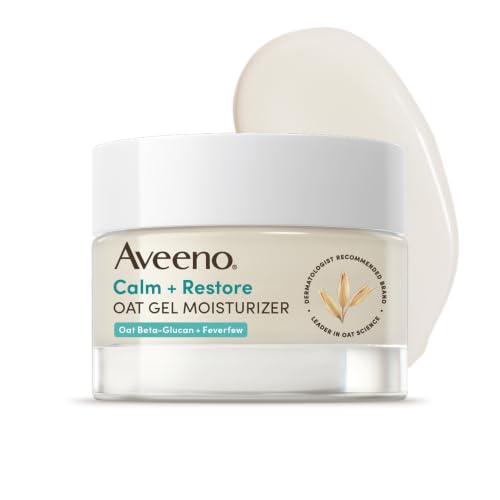 Aveeno Calm + Restore Oat Gel Moisturizer Fragrance-free with oat, feverfew and centella - three of the better-tolerated soothing botanicals. | A lighter gel texture with soothing botanicals | Free | |
| 3 | 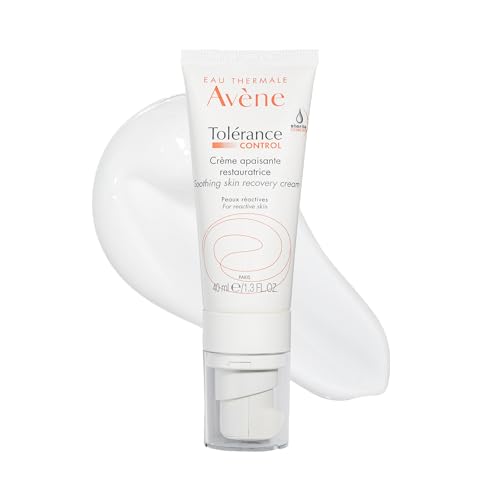 Avene Tolerance Control Soothing Skin Recovery Cream Fifteen ingredients, no fragrance, and no preservative in the ingredient declaration - it ships in a sterile pump instead. | Skin that reacts to almost everything, including preservatives | Free |
#ad - Amazon links are affiliate links. Prices come from the Amazon API, are refreshed daily, and disappear rather than go stale - the button shows the current number or it asks you to check.
The picks, in order
1. Centella at a concentration that is actually doing something
Purito Centella Unscented Serum
Product photo from Amazon.
Centella asiatica extract at 49%, plus the three isolated centella actives, in a fragrance-free base. Most centella products use a trace amount; this one does not. It also contains niacinamide.
What is in it
- Centella asiatica extract 49%
- Asiaticoside, asiatic acid, madecassic acid
- Ceramide NP
- Niacinamide
Best for
Centella at a concentration that is actually doing something
Strengths
- 49% centella extract plus asiaticoside, asiatic acid and madecassic acid
- Ceramide NP and sodium hyaluronate in the base
- No added fragrance - the 'unscented' in the name is accurate
- Light serum texture
Trade-offs
- Contains niacinamide
- A long ingredient list with several peptides and plant extracts
Who should skip it: If you are in the middle of a flare and stripping back to essentials, a 30-ingredient serum is the wrong move - come back to it when things are calm.
#ad How we are funded - price as of November 18, 2026
Ingredient list read at INCIDecoder - Purito Centella Unscented Serum.
2. A lighter gel texture with soothing botanicals
Aveeno Calm + Restore Oat Gel Moisturizer
Product photo from Amazon.
Fragrance-free with oat, feverfew and centella - three of the better-tolerated soothing botanicals. It is a gel rather than a cream, so it suits combination skin that finds ceramide creams heavy.
What is in it
- Oat kernel flour and extract
- Feverfew
- Centella asiatica extract
- Panthenol
Best for
A lighter gel texture with soothing botanicals
Strengths
- Fragrance-free and essential-oil-free despite being botanical-led
- Oat flour plus oat extract, feverfew and centella
- Light gel texture that layers well
- Drugstore price
Trade-offs
- Botanical extracts are still botanicals - a small number of people react to feverfew
- Not occlusive enough for very dry skin on its own
Who should skip it: If you have reacted to plant extracts before, the ingredient-minimal creams are the safer starting point.
#ad How we are funded - price as of November 18, 2026
Ingredient list read at INCIDecoder - Aveeno Calm + Restore Oat Gel Moisturizer.
3. Skin that reacts to almost everything, including preservatives
Avene Tolerance Control Soothing Skin Recovery Cream
Product photo from Amazon.
Fifteen ingredients, no fragrance, and no preservative in the ingredient declaration - it ships in a sterile pump instead. If you have reacted to preserved products, this is the one to try.
What is in it
- Avene thermal spring water
- Squalane
- Aquaphilus dolomiae extract filtrate
- Glycerin
Best for
Skin that reacts to almost everything, including preservatives
Strengths
- No preservative listed - sterile packaging does that job
- Fifteen ingredients, no fragrance, no essential oils
- Squalane and glycerin for comfort without heaviness
- The shortest list of any cream here after Vanicream
Trade-offs
- The most expensive per ounce of any pick on this page
- The sterile pump means you cannot scrape out the last of it
Who should skip it: If cost matters more than ingredient minimalism, the CeraVe or Vanicream creams do the barrier job for a fraction of the price.
#ad How we are funded - price as of November 18, 2026
Ingredient list read at INCIDecoder - Avene Tolerance Control Soothing Skin Recovery Cream.
What to put in the slot instead, if anything
- 1Nothing. The honest first answer. Cleanse, moisturize, sunscreen. A three-step routine is not a compromised routine - it is the one most dermatologists describe for rosacea.
- 2A centella serum, if you want a soothing step. Purito Centella Unscented Serum carries 49% centella extract plus the three isolated actives, which is far more than the trace amounts most calming products use. It contains niacinamide and a long ingredient list.
- 3A gel moisturizer, if your skin runs combination. Aveeno Calm + Restore Oat Gel does the hydrating job a hydrating toner claims, and it stays on your face rather than evaporating.
- 4A minimal cream, if everything stings. Avene Tolerance Control. Fifteen ingredients and no preservative in the declaration - the opposite approach to adding steps.
The serum question is close enough to the toner question that it is worth reading both before you buy anything: a serum is a more defensible purchase than a toner and still optional for most people with rosacea. The honest version is at do you need a serum with rosacea, and if you want the one active with real evidence behind it rather than another hydrating layer, that is azelaic acid - ranked at best azelaic acid products for rosacea.
One more framing that helps: every product you add is a variable, and on skin that reacts unpredictably, variables are expensive. The reason this site keeps recommending three-step routines is not minimalism as an aesthetic - it is that a routine with three products lets you identify a trigger in a fortnight, and a routine with seven does not. The stripped-back starting point is at beginner rosacea routine.
How we chose
Published ingredient lists read on each brand's own site and on INCIDecoder, with the source linked on every pick, screened for added fragrance, masking fragrance, essential oils and the flagged ingredients on our avoid list. The pH reasoning reflects the published formulation position on modern syndet cleansers; where a toner claim has no supporting evidence we say so rather than restating it. Prices are pulled from the Amazon API, refreshed daily and stamped with the date they were read. Method at how we choose.
Questions people ask
Do you need a toner with rosacea?
No. It is the most skippable step in the routine - the pH problem it was invented to solve is handled by any modern gentle cleanser, and the toner shelf is where alcohol, fragrance, witch hazel and menthol most often enter an otherwise careful routine.
Is toner bad for rosacea?
The category is risky rather than universally bad. A fragrance-free, alcohol-free toner pressed in with the palms will not hurt you; it just will not do anything a prompt moisturizer does not already do. The problem is that most toners are not that.
What can I use instead of toner?
Nothing, for most people. If you want something in that slot, a centella serum or a light gel moisturizer applied to damp skin does the hydrating job properly and stays on your face.
Are hydrating toners okay for rosacea?
They are the least objectionable kind, and they are still a watery layer that evaporates. The same humectants work better in a serum or moisturizer with something occlusive over them.
What about Korean toners and essences?
Same analysis. Some are well formulated and fragrance-free; many carry fragrance, alcohol or a long botanical list. The format is not the issue - read the first five ingredients and apply the same screen you would to anything else.