Ingredients & Triggers
Essential oils and rosacea
Fragrance under a botanical name, and why the label claim does not catch them.
By Michael W. · Last updated
The short answer
Essential oils are volatile aromatic plant extracts - fragrance by another name. Because they are declared botanically rather than as fragrance, they do not conflict with a fragrance-free claim, which makes them the most consistent gap between what a label says and what is in the bottle.
Some links on this page are affiliate links. If you buy through one, we may earn a commission at no extra cost to you - it is what funds the site. It does not change what gets recommended or in what order. Full disclosure.
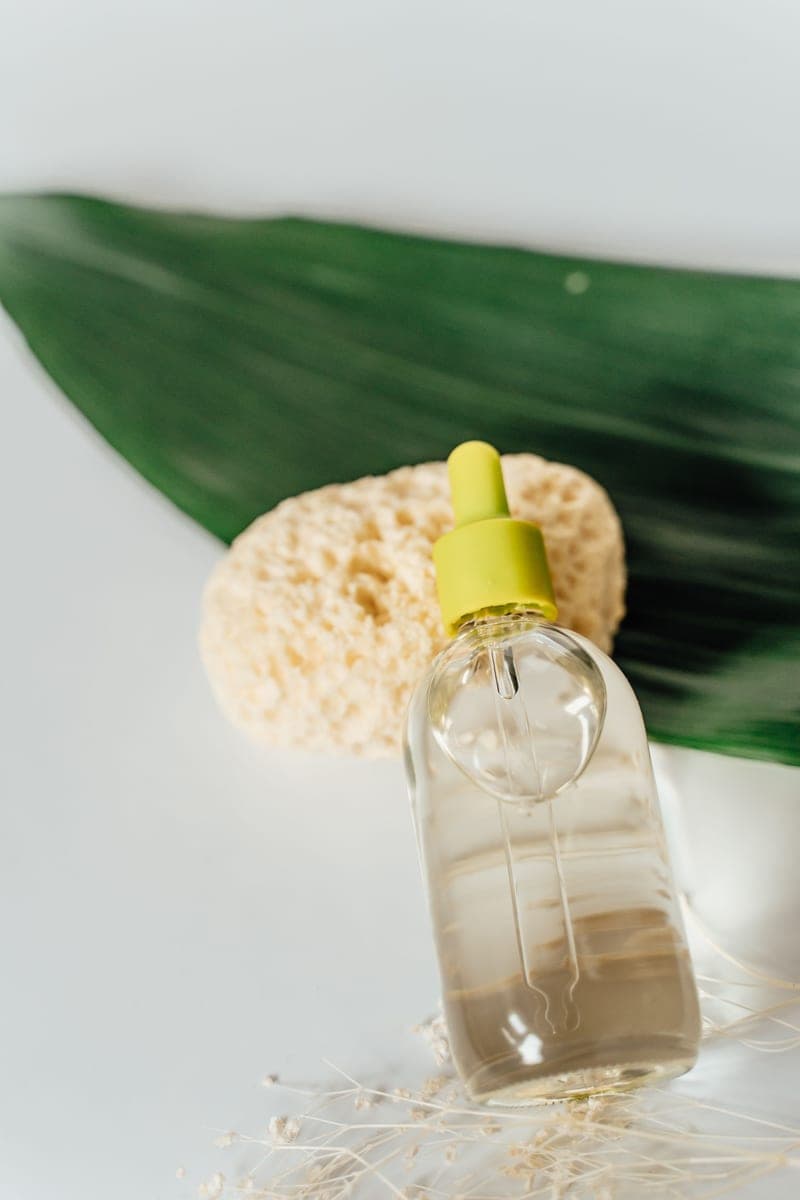
An essential oil is a volatile aromatic extract of a plant, obtained usually by steam distillation. Volatile and aromatic is the definition of a fragrance material - which is exactly what an essential oil is, regardless of how it is marketed.
What makes them worth a page of their own is a naming quirk. Fragrance and parfum are declared as such. An essential oil is declared under its botanical INCI name - Eucalyptus Globulus Leaf Oil - so it does not trigger the fragrance label claim. A product can therefore carry an entirely accurate fragrance-free claim and still contain one.
The ones that appear most often
| Essential oil | INCI name | Where it shows up |
|---|---|---|
| Eucalyptus | Eucalyptus Globulus Leaf Oil | Barrier creams, sunscreens, balms - the most common flag we hit |
| Tea tree | Melaleuca Alternifolia Leaf Oil | Acne and blemish products |
| Lavender | Lavandula Angustifolia Oil | Calming and night products |
| Peppermint | Mentha Piperita Oil | Anything with a cooling claim |
| Citrus | Citrus Limon / Aurantium Peel Oil | Cleansing balms and oils. Several are photosensitizing |
| Clove | Eugenia Caryophyllus Leaf Oil | Balms and warming products |
| Rosemary | Rosmarinus Officinalis Leaf Oil | Often present as an antioxidant as well as a scent |
Why they are a problem on this skin
- Recognized sensitizers. Limonene, linalool, citral and eugenol are components of many essential oils and are among the most frequently identified fragrance allergens.
- They oxidize. Limonene and linalool become more sensitizing as they age in an opened package, so a product can become a problem after months of being fine.
- Some are directly irritating. Peppermint and clove act on nerve endings, which is the mechanism this skin least tolerates.
- Some are photosensitizing. Several citrus oils increase the skin's reaction to UV - a poor property in a product used before sun exposure.
- They are chemically complex. A single essential oil can contain dozens of compounds, which makes it as opaque as a fragrance blend.
The screen
Every product on this page had to clear all of the following before it was considered on its merits. This is the exclusion step, and it runs before any recommendation.
- No added fragrance or parfum anywhere in the ingredient list.
- No essential oils, including ones declared under a botanical name.
- No denatured alcohol, witch hazel, menthol, camphor or peppermint.
- No physical scrub particles.
- Sold in the US right now, from a brand that publishes its full ingredient list.
- Every remaining flagged ingredient is named on the product card rather than quietly left out.
Ingredient lists last checked 2026-09-29. Formulas change - if you spot a discrepancy, the published list on the brand's own site wins and we want to know.
Quick picks
Every product here cleared the screen. Tap a row for the full write-up.
| # | Product | Best for | Fragrance | Price |
|---|---|---|---|---|
| 1 |  Vanicream Moisturizing Skin Cream Eleven ingredients, petrolatum second on the list, and no fragrance, essential oils or botanicals anywhere. | A barrier rebuild with nothing else in the way | Free | |
| 2 |  Clinique Take The Day Off Cleansing Balm Nine ingredients, no fragrance, no essential oils. | Removing mineral sunscreen without scrubbing | Free | |
| 3 |  Vanicream Gentle Facial Cleanser Twelve ingredients, no fragrance, no essential oils, no botanical extracts. | The shortest ingredient list on the shelf | Free |
#ad - Amazon links are affiliate links. We do not publish prices, because we have no live price feed and will not print a number we cannot verify.
How to spot them
- 1Scan for a plant name followed by oil. The single highest-yield check.
- 2Look for extract with a perfuming role. Eucalyptus globulus leaf extract is the example that keeps appearing - extract rather than oil, same function.
- 3Check for declared allergens. Limonene, linalool, citral, eugenol, geraniol. Their presence means a fragrant botanical is there.
- 4Be extra careful in balms, oils and anything botanical. These are the categories where essential oils are close to standard.
- 5Do not trust the fragrance-free claim on its own. It is a useful first filter and not a complete one.
The picks, in order
1. A barrier rebuild with nothing else in the way
Vanicream Moisturizing Skin Cream
Illustrative photo - not the product.
Eleven ingredients, petrolatum second on the list, and no fragrance, essential oils or botanicals anywhere. It is an occlusive that seals water in. It is not elegant and it is not trying to be.
What is in it
- Petrolatum
- Sorbitol
- Glyceryl Stearate
- Simethicone
Best for
A barrier rebuild with nothing else in the way
Strengths
- Eleven ingredients total
- Petrolatum-led - the most reliable occlusive there is
- No fragrance, essential oils or botanical extracts
- Sold in a large tub; cost per ounce is very low
Trade-offs
- Heavy and slightly waxy - it sits on skin rather than sinking in
- No soothing or barrier actives beyond the occlusion itself
Who should skip it: If you wear makeup daily or your skin is oily, this will feel like too much - use it at night only, or pick a lighter cream.
Ingredient list read at INCIDecoder - Vanicream Moisturizing Skin Cream.
2. Removing mineral sunscreen without scrubbing
Clinique Take The Day Off Cleansing Balm
Illustrative photo - not the product.
Nine ingredients, no fragrance, no essential oils. A cleansing balm is usually where fragrance hides, and this one simply does not have any - which makes it the obvious first step for removing high-zinc SPF.
What is in it
- Ethylhexyl palmitate
- Safflower seed oil
- Caprylic/capric triglyceride
- Tocopherol
Best for
Removing mineral sunscreen without scrubbing
Strengths
- Nine ingredients - remarkable for a balm
- No fragrance, no essential oils, no botanical perfuming agents
- Melts high-zinc mineral sunscreen without friction
- A jar lasts months
Trade-offs
- Needs a second cleanse - it emulsifies but leaves a faint film
- Costs more per ounce than a drugstore balm
Who should skip it: If you do not wear sunscreen or makeup, you do not need a balm at all - a single gentle cleanse is enough.
Ingredient list read at INCIDecoder - Clinique Take The Day Off Cleansing Balm.
3. The shortest ingredient list on the shelf
Vanicream Gentle Facial Cleanser
Illustrative photo - not the product.
Twelve ingredients, no fragrance, no essential oils, no botanical extracts. When skin is reacting and you cannot work out to what, this is the cleanser that removes the most variables at once.
What is in it
- Glycerin
- Coco-Glucoside
- Sodium Cocoyl Glycinate
Best for
The shortest ingredient list on the shelf
Strengths
- Twelve ingredients total - the shortest list of any cleanser here
- No fragrance, masking fragrance, essential oils or botanical extracts
- Non-foaming, gentle surfactants (coco-glucoside, sodium cocoyl glycinate)
- Widely stocked and inexpensive for the size
Trade-offs
- Does very little beyond cleaning - no ceramides, no soothing actives
- The lotion texture feels slippery to people used to a foaming wash
Who should skip it: If you wear heavy sunscreen or makeup and want one-step removal, this will not cut through it - double-cleanse or pick a balm.
Ingredient list read at INCIDecoder - Vanicream Gentle Facial Cleanser.
Are any of them fine?
Possibly, for some people, at low concentrations. Plenty of people with rosacea use products containing a trace of a botanical without any problem, and we are not going to claim otherwise.
The reason our screen excludes them anyway is that the screen exists to reduce unknowns rather than to identify the smallest possible harm. If you are trying to work out what is going wrong, an essential oil is a variable you can remove for free. Once things are stable, reintroducing one deliberately is a legitimate experiment - just not the first one.
Questions people ask
Are essential oils bad for rosacea?
They are fragrance under a botanical name, and several carry recognized sensitizers such as limonene, linalool and eugenol. Some people tolerate them; on reactive skin they are an unnecessary variable, and the screen on this site excludes them.
Can a fragrance-free product contain essential oils?
Yes. Essential oils are declared under botanical INCI names rather than as fragrance, so they do not conflict with the claim. This is the most consistent way a label and its contents diverge.
Which essential oils are worst for sensitive skin?
Peppermint and clove act directly on nerve endings. Citrus oils are frequently photosensitizing as well as sensitizing. Lavender and tea tree are among the most commonly identified contact allergens in patch testing.
Is tea tree oil good for rosacea?
It has real antimicrobial activity and real sensitizing potential, and on rosacea-prone skin the second usually outweighs the first. If you want antimicrobial action for coexisting acne, azelaic acid is a better-supported and lower-risk route.
Do essential oils get worse over time?
Some do. Limonene and linalool oxidize on exposure to air and become more sensitizing as a product ages, which is why an opened jar can start causing problems after months of being fine.