Ingredients & Triggers
Is aloe vera good for rosacea?
The plant is fine. The bottle it comes in is where this goes wrong.
By Michael W. · Last updated
The short answer
Aloe vera is mildly soothing, well tolerated by most people and not a treatment for rosacea. It is cooling and humectant, it has modest evidence for wound healing and irritation, and it does nothing for flushing, papules or visible vessels. The real problem is what aloe gels contain besides aloe - fragrance, denatured alcohol, menthol and colouring are common in the aisle, and any one of them will undo the benefit. If you want aloe, get it inside a complete fragrance-free moisturizer: Aveeno Calm + Restore Oat Gel, Avene Tolerance Control and La Roche-Posay Cicaplast Baume B5 are the picks that do the soothing job properly.
Some links on this page are affiliate links. If you buy through one, we may earn a commission at no extra cost to you - it is what funds the site. It does not change what gets recommended or in what order. Full disclosure.
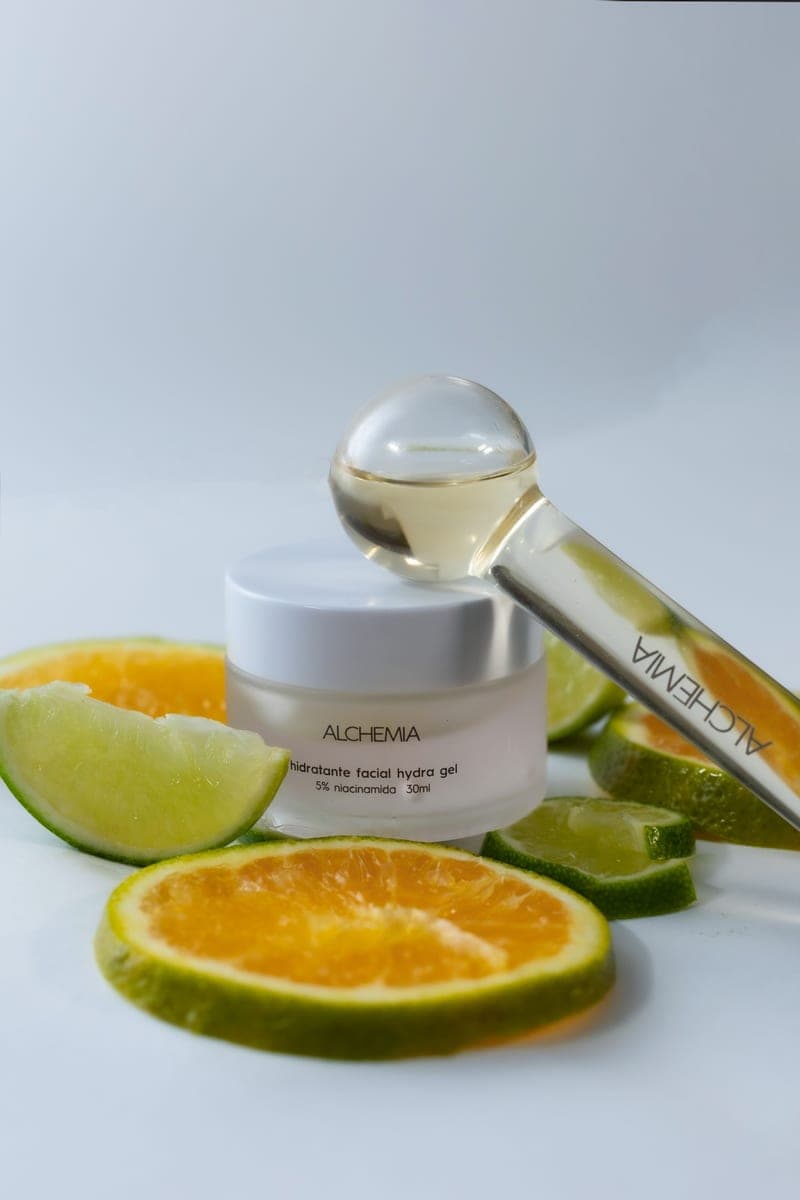
Aloe occupies an unusual position in rosacea advice: it is recommended constantly, it is almost never harmful, and it is also almost never the thing that helps. Both halves of that are worth taking seriously, because the usual internet answers get it wrong in opposite directions - either aloe is a miracle for redness, or botanical extracts are all triggers and aloe is one of them. Neither is right.
What aloe vera leaf juice actually is, in cosmetic terms, is mostly water with polysaccharides, some amino acids, trace minerals and a small amount of salicylic-acid-like compounds. It behaves as a humectant and a mild soothing agent. There is published evidence for aloe in wound healing and in minor burns, and reasonable evidence that it is well tolerated on compromised skin. There is no evidence that it affects the vascular or inflammatory mechanisms behind rosacea.
What aloe does and does not do
| Claim | Evidence | Relevant to rosacea? |
|---|---|---|
| Cools and soothes irritated skin | Reasonable, and partly the water evaporating | Yes, for comfort during a flare |
| Humectant - holds water at the surface | Yes, from the polysaccharide content | Yes, as part of a moisturizer |
| Helps minor burns and wound healing | Published support, mostly in burns and minor wounds | Indirectly - sunburn after a UV trigger |
| Reduces facial flushing | None | No |
| Treats papules and pustules | None | No - azelaic acid is the evidenced option |
| Shrinks visible blood vessels | None, and nothing topical does | No - that is a laser conversation |
| Is a common allergen | Uncommon but documented contact allergy exists | Worth patch testing, like anything else |
The fourth, fifth and sixth rows are the honest centre of this page. Aloe is a comfort ingredient. If what you want is a cool, light layer that makes a hot face feel better for twenty minutes, it does that, and there is nothing wrong with wanting it. If you want the redness itself to change, aloe is not the purchase - the evidence sits with azelaic acid, and the ranking is at best azelaic acid products for rosacea.
The real problem: what else is in the aloe gel
- Fragrance. Extremely common, including in gels marketed as pure. Aloe has almost no smell of its own, so anything that smells fresh has had fragrance added.
- Denatured alcohol. Used to thin the gel and speed drying. It also strips lipids and stings, which is the opposite of soothing.
- Menthol or camphor. Added to intensify the cooling sensation. Both act on the nerve receptors implicated in flushing, which makes them among the worst additions for rosacea.
- Colouring. The bright green and blue gels are dyed. Aloe juice is near-colourless, and the dye is pure risk with no function.
- Isothiazolinone preservatives. A high-water formula needs a robust preservative system, and this family is a documented sensitiser.
- Lidocaine or benzocaine in after-sun aloe gels. These are drug ingredients and known contact sensitisers - not something to apply daily to a face.
Read that list against the typical drugstore aloe gel and the conclusion writes itself: the aloe is not the risk, the product is. This is the same failure mode as every other botanical on this site, and it is why the screen here is applied to formulas rather than to ingredients in isolation. The general version of the argument is at how to read a skincare label.
The screen
Every product on this page had to clear all of the following before it was considered on its merits. This is the exclusion step, and it runs before any recommendation.
- No added fragrance or parfum anywhere in the ingredient list.
- No essential oils, including ones declared under a botanical name.
- No denatured alcohol, witch hazel, menthol, camphor or peppermint.
- No physical scrub particles.
- Sold in the US right now, from a brand that publishes its full ingredient list.
- Every remaining flagged ingredient is named on the product card rather than quietly left out.
Ingredient lists last checked 2026-09-29. Formulas change - if you spot a discrepancy, the published list on the brand's own site wins and we want to know.
Quick picks
Every product here cleared the screen. Tap a row for the full write-up.
| # | Product | Best for | Fragrance | Price |
|---|---|---|---|---|
| 1 | 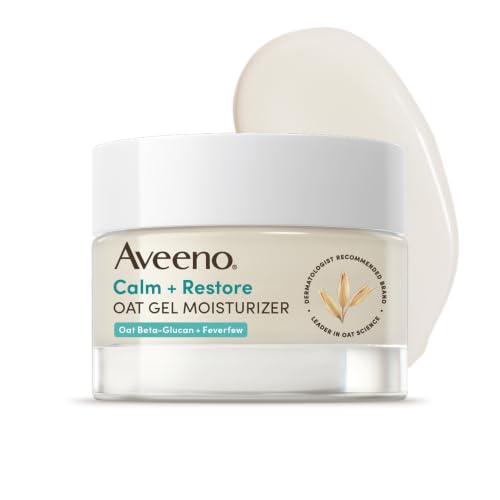 Aveeno Calm + Restore Oat Gel Moisturizer Fragrance-free with oat, feverfew and centella - three of the better-tolerated soothing botanicals. | A lighter gel texture with soothing botanicals | Free | |
| 2 | 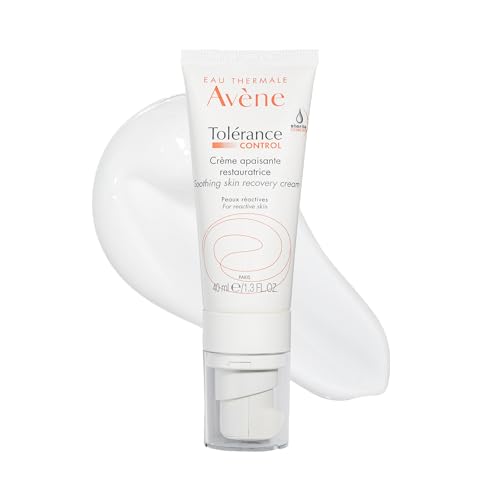 Avene Tolerance Control Soothing Skin Recovery Cream Fifteen ingredients, no fragrance, and no preservative in the ingredient declaration - it ships in a sterile pump instead. | Skin that reacts to almost everything, including preservatives | Free | |
| 3 | 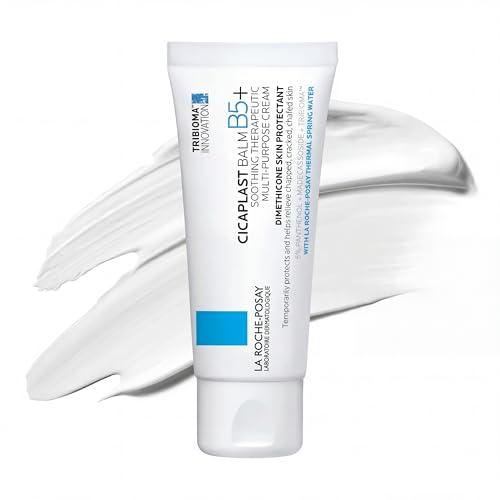 La Roche-Posay Cicaplast Baume B5 A thick fragrance-free balm with panthenol, madecassoside and shea butter. | A rescue balm for the worst two days of a flare | Free |
#ad - Amazon links are affiliate links. Prices come from the Amazon API, are refreshed daily, and disappear rather than go stale - the button shows the current number or it asks you to check.
The picks, in order
1. A lighter gel texture with soothing botanicals
Aveeno Calm + Restore Oat Gel Moisturizer
Product photo from Amazon.
Fragrance-free with oat, feverfew and centella - three of the better-tolerated soothing botanicals. It is a gel rather than a cream, so it suits combination skin that finds ceramide creams heavy.
What is in it
- Oat kernel flour and extract
- Feverfew
- Centella asiatica extract
- Panthenol
Best for
A lighter gel texture with soothing botanicals
Strengths
- Fragrance-free and essential-oil-free despite being botanical-led
- Oat flour plus oat extract, feverfew and centella
- Light gel texture that layers well
- Drugstore price
Trade-offs
- Botanical extracts are still botanicals - a small number of people react to feverfew
- Not occlusive enough for very dry skin on its own
Who should skip it: If you have reacted to plant extracts before, the ingredient-minimal creams are the safer starting point.
#ad How we are funded - price as of November 18, 2026
Ingredient list read at INCIDecoder - Aveeno Calm + Restore Oat Gel Moisturizer.
2. Skin that reacts to almost everything, including preservatives
Avene Tolerance Control Soothing Skin Recovery Cream
Product photo from Amazon.
Fifteen ingredients, no fragrance, and no preservative in the ingredient declaration - it ships in a sterile pump instead. If you have reacted to preserved products, this is the one to try.
What is in it
- Avene thermal spring water
- Squalane
- Aquaphilus dolomiae extract filtrate
- Glycerin
Best for
Skin that reacts to almost everything, including preservatives
Strengths
- No preservative listed - sterile packaging does that job
- Fifteen ingredients, no fragrance, no essential oils
- Squalane and glycerin for comfort without heaviness
- The shortest list of any cream here after Vanicream
Trade-offs
- The most expensive per ounce of any pick on this page
- The sterile pump means you cannot scrape out the last of it
Who should skip it: If cost matters more than ingredient minimalism, the CeraVe or Vanicream creams do the barrier job for a fraction of the price.
#ad How we are funded - price as of November 18, 2026
Ingredient list read at INCIDecoder - Avene Tolerance Control Soothing Skin Recovery Cream.
3. A rescue balm for the worst two days of a flare
La Roche-Posay Cicaplast Baume B5
Product photo from Amazon.
A thick fragrance-free balm with panthenol, madecassoside and shea butter. This is a short-term repair layer for raw, stinging patches, not a daily moisturizer for the whole face.
What is in it
- Panthenol
- Madecassoside
- Shea butter
- Glycerin
Best for
A rescue balm for the worst two days of a flare
Strengths
- Panthenol and madecassoside - both well studied for irritated skin
- No added fragrance
- Thick enough to act as an overnight occlusive layer
- A small tube lasts a long time in spot use
Trade-offs
- Heavy and slightly tacky - not a daily all-over cream
- Contains chlorhexidine digluconate, which a small number of people react to
Who should skip it: If you want one cream for everyday use, this is not it - it is a targeted repair layer.
#ad How we are funded - price as of November 18, 2026
Ingredient list read at INCIDecoder - La Roche-Posay Cicaplast Baume B5.
If you want to use aloe anyway
- 1Buy it inside a moisturizer, not as a standalone gel. You get the soothing plus the emollients and occlusives that actually reduce water loss.
- 2Check the first six ingredients for alcohol denat. If it is there, put it back. This single check eliminates most of the aisle.
- 3Reject anything that smells of anything. Fragrance-free is the floor on this site and the aloe aisle fails it more often than the moisturizer aisle does.
- 4Keep it out of the eye area. High-water gels migrate, and aloe gels sting on the lid more than creams do.
- 5Patch test for two days. Contact allergy to aloe is uncommon but documented - the method is at how to patch test.
- 6Use it as a cold compress substitute, not a treatment. Refrigerated, on a hot face, for comfort during a flare. The protocol is at how to calm a rosacea flare up.
That last point is the most useful thing aloe can do for rosacea, and it is worth saying plainly because it costs almost nothing. During a flare, cool is better than active. A refrigerated fragrance-free gel, a cool damp cloth or simply a cooler room all reduce the sensation of burning without adding a single ingredient to your face. Aloe fits that job well. It is just not doing anything the cold is not.
Where aloe sits against the other soothing botanicals
Aloe, oat, centella, feverfew, chamomile, green tea and licorice root all occupy the same tier: well tolerated by most people, mildly comforting, no effect on the mechanisms of rosacea. Two of them separate out slightly. Colloidal oatmeal is an over-the-counter skin protectant with real anti-itch evidence. Centella asiatica has the most supportive literature of the group, though only at concentrations most products do not reach - the honest version is at does centella asiatica help rosacea.
The one botanical worth paying extra for is licochalcone A, from Glycyrrhiza inflata, because it is a specific isolated flavonoid with a studied effect rather than a whole-plant extract. That sits in the Eucerin Redness Relief range, and the trade-offs are set out at Eucerin Redness Relief review. Everything else in the soothing tier, aloe included, belongs in a formula you were buying anyway - and the full flagged list is at ingredients to avoid with rosacea. The exception in that tier is oat, which is the only one with a regulated over-the-counter status behind it - is colloidal oatmeal good for rosacea.
How we chose
Published ingredient lists read on each brand's own site and on INCIDecoder, with the source linked on every pick, screened for added fragrance, masking fragrance, essential oils and the flagged ingredients on our avoid list. Statements about what aloe does are limited to effects with published support - humectancy, soothing, minor wound healing - and we state plainly where there is no evidence rather than filling the gap. Prices are pulled from the Amazon API, refreshed daily and stamped with the date they were read. Method at how we choose.
Questions people ask
Is aloe vera good for rosacea?
It is mildly soothing and usually well tolerated, but it is not a treatment - there is no evidence it affects flushing, papules or visible vessels. The bigger issue is that most aloe gels also contain fragrance, denatured alcohol or menthol, any of which will make rosacea worse.
Can aloe vera make rosacea worse?
The aloe itself rarely does, though contact allergy to it is documented. What makes rosacea worse is what aloe gels are usually formulated with: fragrance, alcohol denat, menthol, camphor, dyes and in after-sun products, local anaesthetics such as lidocaine.
Is fresh aloe from the plant better than a store-bought gel?
No. A cut leaf brings the irritant latex layer with it - the anthraquinones that cosmetic processing filters out - and it is unpreserved, so it spoils in days. A well-formulated fragrance-free product is the lower-risk option.
Does aloe reduce facial redness?
Not the redness itself. It cools the skin and holds water at the surface, which feels better during a flare, but it has no demonstrated effect on the inflammation or the dilated vessels that produce persistent redness.
What should I use instead of aloe gel?
A fragrance-free moisturizer that happens to contain soothing ingredients - Aveeno Calm + Restore Oat Gel for a light gel texture, Avene Tolerance Control for the shortest ingredient list, or La Roche-Posay Cicaplast Baume B5 for raw patches. For redness itself, azelaic acid has the evidence that aloe does not.