Moisturizers & Barrier Repair
Cream vs lotion vs ointment for sensitive skin
Three words for the same job at three different water contents. The number is the whole story.
By Michael W. · Last updated
The short answer
Pick by water content, not by marketing: a lotion is mostly water and suits daytime and body use, a cream is roughly half water and half oil and is the right default for a reactive face, and an ointment is almost all oil and is the most effective and least pleasant option for raw skin overnight. For sensitive, redness-prone skin the cream format wins most of the time - Vanicream Moisturizing Skin Cream is the plainest, La Roche-Posay Toleriane Double Repair is the lightest, and La Roche-Posay Cicaplast Baume B5 is the near-ointment for the two days when nothing else is tolerable.
Some links on this page are affiliate links. If you buy through one, we may earn a commission at no extra cost to you - it is what funds the site. It does not change what gets recommended or in what order. Full disclosure.
Lotion, cream and ointment are not grades of quality or strength. They are three points on a single axis - how much water a formula contains relative to oil - and that one variable decides how a product feels, how long it lasts on skin, how many preservatives it needs, and which skin it suits. Nothing else about the distinction is mysterious, and once you know the number you can read the format off any shelf. This page is the explainer; the shortlist of lotions that clear our screen is at best lotions for sensitive skin.
This matters more on sensitive skin than it does on anyone else's, for a reason that is easy to miss: the more water a formula contains, the more preservative system it needs to stay sterile, and preservatives are among the more common contact sensitisers in skincare. An ointment with almost no water needs almost no preservative. That is why the plainest products in dermatology are also the greasiest.
The three formats, by the numbers
| Format | Roughly | Feel | Preservative load | Best use on reactive skin |
|---|---|---|---|---|
| Lotion | 70 to 90% water | Thin, spreads easily, absorbs fast | Highest - lots of water to protect | Body, daytime, oilier skin, under sunscreen |
| Cream | Around half water, half oil | Substantial but still absorbs | Moderate | The default for a reactive face, day or night |
| Ointment | Almost no water - petrolatum base | Greasy, sits on top, does not sink in | Lowest, sometimes none needed | Raw or cracked patches, overnight, spot use |
| Gel | Mostly water, thickened | Lightest of all; cooling | High | Combination skin that finds creams heavy |
| Balm | Low water, wax-stabilised | Thick, tacky, long-lasting | Low | A targeted repair layer rather than all-over use |
| Serum | Water or silicone carrier | Varies | Varies | Delivering an active, not moisturizing |
The two middle columns explain every complaint people have about moisturizers. A lotion that disappears instantly also stops working sooner. An ointment that feels unbearable at 8am is the most effective thing you can apply at 11pm. Neither is better; they are optimised for different moments, and a sensible routine owns two of the three.
What each format is actually doing
- Humectants - glycerin, sorbitol, hyaluronic acid - pull water into the outer skin layer. Present in all three formats, and the main mechanism in a lotion.
- Emollients - squalane, fatty alcohols, esters - fill the gaps between surface cells so skin feels smooth. The reason a cream feels better than a lotion.
- Occlusives - petrolatum, mineral oil, dimethicone - form a physical barrier that slows water escaping. The dominant mechanism in an ointment, and the one with the strongest evidence behind it.
- Barrier lipids - ceramides, cholesterol, fatty acids - are raw materials rather than a mechanism. They work over weeks, not minutes, and the format matters less than the presence.
- Water itself does almost nothing beyond carrying the rest. Applying water to skin and letting it evaporate leaves skin drier than before, which is why a moisturizer goes on damp skin rather than instead of it.
The screen
Every product on this page had to clear all of the following before it was considered on its merits. This is the exclusion step, and it runs before any recommendation.
- No added fragrance or parfum anywhere in the ingredient list.
- No essential oils, including ones declared under a botanical name.
- No denatured alcohol, witch hazel, menthol, camphor or peppermint.
- No physical scrub particles.
- Sold in the US right now, from a brand that publishes its full ingredient list.
- Every remaining flagged ingredient is named on the product card rather than quietly left out.
Ingredient lists last checked 2026-09-29. Formulas change - if you spot a discrepancy, the published list on the brand's own site wins and we want to know.
Quick picks
Every product here cleared the screen. Tap a row for the full write-up.
| # | Product | Best for | Fragrance | Price |
|---|---|---|---|---|
| 1 | 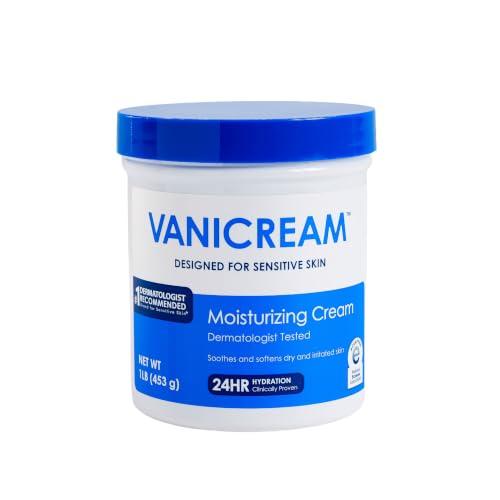 Vanicream Moisturizing Skin Cream Eleven ingredients, petrolatum second on the list, and no fragrance, essential oils or botanicals anywhere. | A barrier rebuild with nothing else in the way | Free | |
| 2 | 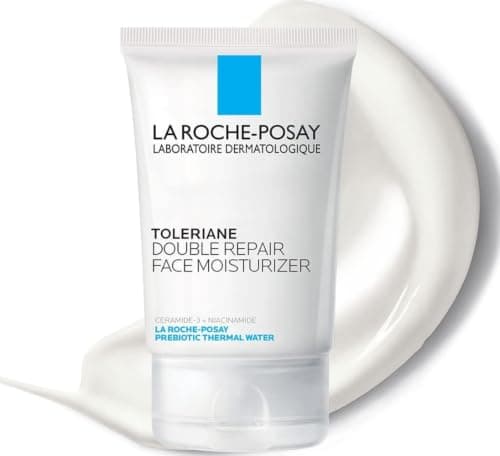 La Roche-Posay Toleriane Double Repair Face Moisturizer Light, fast-absorbing, fragrance-free, with ceramide NP and glycerin doing the barrier work. | Daily moisturizer that disappears under sunscreen | Free | |
| 3 | 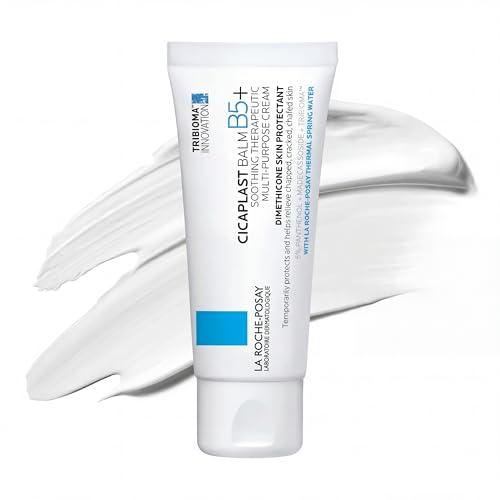 La Roche-Posay Cicaplast Baume B5 A thick fragrance-free balm with panthenol, madecassoside and shea butter. | A rescue balm for the worst two days of a flare | Free |
#ad - Amazon links are affiliate links. Prices come from the Amazon API, are refreshed daily, and disappear rather than go stale - the button shows the current number or it asks you to check.
The picks, in order
1. A barrier rebuild with nothing else in the way
Vanicream Moisturizing Skin Cream
Product photo from Amazon.
Eleven ingredients, petrolatum second on the list, and no fragrance, essential oils or botanicals anywhere. It is an occlusive that seals water in. It is not elegant and it is not trying to be.
What is in it
- Petrolatum
- Sorbitol
- Glyceryl Stearate
- Simethicone
Best for
A barrier rebuild with nothing else in the way
Strengths
- Eleven ingredients total
- Petrolatum-led - the most reliable occlusive there is
- No fragrance, essential oils or botanical extracts
- Sold in a large tub; cost per ounce is very low
Trade-offs
- Heavy and slightly waxy - it sits on skin rather than sinking in
- No soothing or barrier actives beyond the occlusion itself
Who should skip it: If you wear makeup daily or your skin is oily, this will feel like too much - use it at night only, or pick a lighter cream.
#ad How we are funded - price as of November 18, 2026
Ingredient list read at INCIDecoder - Vanicream Moisturizing Skin Cream.
2. Daily moisturizer that disappears under sunscreen
La Roche-Posay Toleriane Double Repair Face Moisturizer
Product photo from Amazon.
Light, fast-absorbing, fragrance-free, with ceramide NP and glycerin doing the barrier work. Niacinamide sits fifth on the list, which is the only reason it is not our first pick for everyone.
What is in it
- Niacinamide
- Ceramide NP
- Glycerin
- Prebiotic thermal water
Best for
Daily moisturizer that disappears under sunscreen
Strengths
- Absorbs in seconds - layers cleanly under mineral SPF
- Ceramide NP and glycerin for barrier and water
- No added fragrance
- Works year-round for most skin types
Trade-offs
- Niacinamide is fifth on the ingredient list - a flushing trigger for some
- Not rich enough on its own for very dry skin in winter
Who should skip it: Skip if niacinamide reliably flushes you. Also skip as a standalone if your skin is very dry - layer it over an occlusive.
#ad How we are funded - price as of November 18, 2026
Ingredient list read at INCIDecoder - La Roche-Posay Toleriane Double Repair Face Moisturizer.
3. A rescue balm for the worst two days of a flare
La Roche-Posay Cicaplast Baume B5
Product photo from Amazon.
A thick fragrance-free balm with panthenol, madecassoside and shea butter. This is a short-term repair layer for raw, stinging patches, not a daily moisturizer for the whole face.
What is in it
- Panthenol
- Madecassoside
- Shea butter
- Glycerin
Best for
A rescue balm for the worst two days of a flare
Strengths
- Panthenol and madecassoside - both well studied for irritated skin
- No added fragrance
- Thick enough to act as an overnight occlusive layer
- A small tube lasts a long time in spot use
Trade-offs
- Heavy and slightly tacky - not a daily all-over cream
- Contains chlorhexidine digluconate, which a small number of people react to
Who should skip it: If you want one cream for everyday use, this is not it - it is a targeted repair layer.
#ad How we are funded - price as of November 18, 2026
Ingredient list read at INCIDecoder - La Roche-Posay Cicaplast Baume B5.
Which format for which situation
- 1Daily face moisturizer under sunscreen. Cream, on the lighter end - La Roche-Posay Toleriane Double Repair. A lotion will not last the day; an ointment will ruin the sunscreen.
- 2Dry, tight skin that a lotion never fixes. Cream, on the richer end - Vanicream Moisturizing Skin Cream, applied to damp skin.
- 3Two raw, stinging patches during a flare. Balm or ointment, on those patches only - La Roche-Posay Cicaplast Baume B5.
- 4Body skin after a shower. Lotion is fine and far more practical for the surface area. The fragrance-free options are at best fragrance-free body lotions.
- 5Combination or oilier skin that hates creams. Gel, such as the Aveeno Calm + Restore oat gel, and accept that it needs reapplying sooner.
- 6You have reacted to multiple moisturizers. Move down the water axis. Fewer preservatives, fewer variables, greasier finish.
The most common mistake in this list is the fourth one in reverse - using a body lotion on the face because it is what is in the cupboard. The formats are not interchangeable in that direction: body lotions are built for a surface area twenty times larger and are frequently fragranced, and a face takes the consequences first. The whole-face ranking is at best fragrance-free moisturizers.
The one application rule that matters more than format
Whichever format you pick, put it on damp skin within a minute of cleansing. Occlusives and emollients slow water leaving the skin; they do not add any. Applying a cream to a face that has been dry for ten minutes seals in whatever hydration is left rather than the water you just rinsed with, and that single timing difference does more for dryness than moving up one format grade would.
The other rule, specific to reactive skin, is to pat rather than rub. Friction on inflamed skin is a trigger in its own right, and the thicker the format the more tempting it is to work it in. Press it on with flat fingers, leave the streaks, and let body heat finish the job. The full sequence is set out at the rosacea skincare routine, and the night-specific version is at best night creams for sensitive skin.
How we chose
Published ingredient lists read on each brand's own site and on INCIDecoder, with the source linked on every pick, screened for added fragrance, masking fragrance, essential oils and the flagged ingredients on our avoid list. The format definitions follow standard cosmetic and dermatological usage - water content relative to oil - rather than any brand's naming. Prices are pulled from the Amazon API, refreshed daily and stamped with the date they were read. Method at how we choose.
Questions people ask
What is the difference between a lotion, a cream and an ointment?
Water content. A lotion is roughly 70 to 90 percent water, a cream is about half water and half oil, and an ointment is almost all oil with virtually no water. That single variable sets the feel, how long it lasts and how much preservative the formula needs.
Which is best for sensitive skin?
A cream, for most faces, most of the time - enough occlusion to last the day without the greasiness of an ointment. Move to an ointment for raw patches overnight, and to a lotion only for the body.
Why do ointments contain fewer preservatives?
Preservatives exist to stop microbial growth in water. An ointment has almost no water, so it needs little or no preservative system - which is why the greasiest products are often the ones reactive skin tolerates best.
Can I use body lotion on my face?
You can, but it is the wrong direction to substitute in. Body lotions are frequently fragranced and formulated for a much larger surface area, and facial skin reacts first. Use a face product on the face and a body product on the body.
Does it matter when I apply moisturizer?
More than the format does. Apply to damp skin within a minute of cleansing - moisturizers slow water leaving the skin rather than adding any, so they work best over water that is already there.