Mineral SPF & Sun Protection
Best sunscreens for eczema-prone skin
A disrupted barrier absorbs more of whatever you put on it. That changes which filters are reasonable.
By Michael W. · Last updated
The short answer
Vanicream Facial Moisturizer SPF 30 is the best sunscreen for eczema-prone facial skin: zinc oxide only at 19.5%, no titanium dioxide, no chemical filters, and five ceramides plus squalane in the base, so it moisturizes and protects in one step. Blue Lizard Sensitive SPF 50+ is the pick for long days outside, La Roche-Posay Anthelios Mineral SPF 50 is the best-spreading mineral fluid, and CeraVe Hydrating Mineral SPF 50 adds ceramides at a drugstore price with niacinamide as the thing to check.
Some links on this page are affiliate links. If you buy through one, we may earn a commission at no extra cost to you - it is what funds the site. It does not change what gets recommended or in what order. Full disclosure.
Eczema and rosacea are different conditions, and this is a rosacea site - but the sunscreen problem they create is close to identical, which is why this page exists. In both cases the barrier is impaired, which means more of what you apply gets absorbed and more of it has the chance to sting. In both cases fragrance is the first thing to eliminate. And in both cases the right answer is a mineral filter in a lipid-rich base rather than a weightless chemical formula.
There is one extra consideration for atopic skin specifically: sun exposure is not a straightforward villain. Some people with eczema find moderate sun helps their skin, and narrowband UVB phototherapy is a genuine prescribed treatment for it. That is a clinical decision made by a dermatologist with a controlled dose, and it is not an argument for skipping sunscreen in daily life - but it is worth knowing that the relationship is more complicated here than it is with rosacea, where UV is simply a trigger.
The screen
Every product on this page had to clear all of the following before it was considered on its merits. This is the exclusion step, and it runs before any recommendation.
- No added fragrance or parfum anywhere in the ingredient list.
- No essential oils, including ones declared under a botanical name.
- No denatured alcohol, witch hazel, menthol, camphor or peppermint.
- No physical scrub particles.
- Sold in the US right now, from a brand that publishes its full ingredient list.
- Every remaining flagged ingredient is named on the product card rather than quietly left out.
Ingredient lists last checked 2026-09-29. Formulas change - if you spot a discrepancy, the published list on the brand's own site wins and we want to know.
Quick picks
Every product here cleared the screen. Tap a row for the full write-up.
| # | Product | Best for | Fragrance | Price |
|---|---|---|---|---|
| 1 | 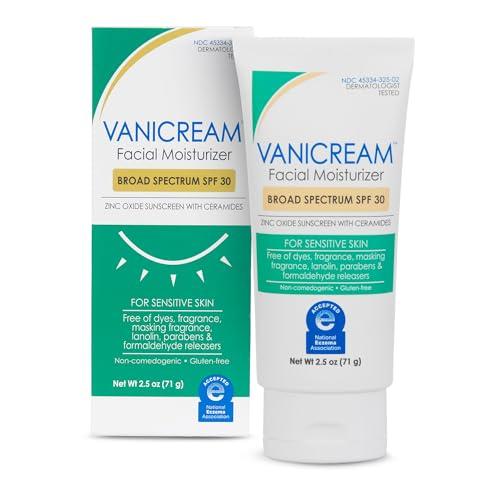 Vanicream Facial Moisturizer SPF 30 Zinc oxide at 19.5% - the highest single-filter load here - with five ceramides and squalane in the base. | Zinc-only SPF with a moisturizer built in | Free | |
| 2 | 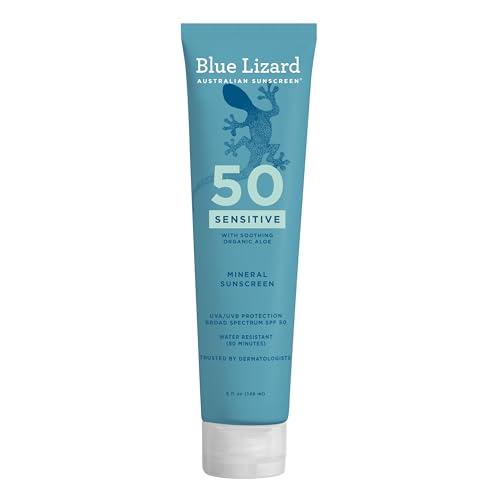 Blue Lizard Sensitive Mineral Sunscreen SPF 50+ Mineral-only at SPF 50+, fragrance-free and paraben-free, in a water-resistant base. | High-SPF mineral for long days outside | Free | |
| 3 | 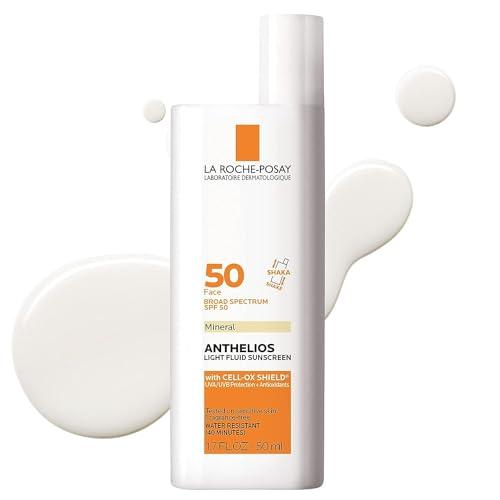 La Roche-Posay Anthelios Mineral Zinc Oxide Sunscreen SPF 50 Mineral-only filters at SPF 50, fragrance-free, in a fluid base that actually spreads instead of dragging. | Mineral-only SPF 50 that still spreads | Free | |
| 4 | 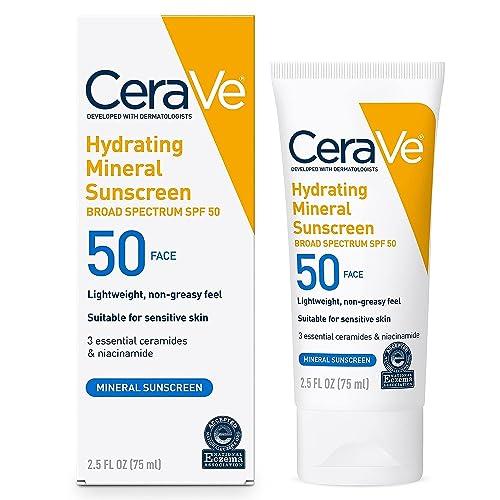 CeraVe Hydrating Mineral Sunscreen Face Lotion SPF 50 Mineral-only filters at SPF 50 with three ceramides and niacinamide in the base, from the cheapest range on this page. | A drugstore mineral SPF with ceramides in the base | Free |
#ad - Amazon links are affiliate links. Prices come from the Amazon API, are refreshed daily, and disappear rather than go stale - the button shows the current number or it asks you to check.
What to look for on the panel
| Feature | Why it matters on eczema-prone skin | What to look for |
|---|---|---|
| Filter type | A disrupted barrier absorbs organic filters more readily, and stinging is common | Zinc oxide, titanium dioxide, or both. Nothing else |
| Fragrance | The most common contact allergen in cosmetics | No parfum, no fragrance, no essential oils, no masking fragrance |
| Base lipids | A sunscreen worn daily is also a leave-on product; it can carry ceramides | Ceramides, squalane, glycerin, petrolatum |
| Preservative system | MI and formaldehyde releasers are documented sensitisers | Phenoxyethanol or benzoates rather than isothiazolinones |
| Alcohol content | Strips the lipids a compromised barrier is already short of | Alcohol denat absent, or low in the list |
| NEA Seal of Acceptance | A real review with published criteria, unlike dermatologist recommended | Check the National Eczema Association directory |
The third row is the one that separates a good sunscreen for this skin from a merely acceptable one. A daily sunscreen is on your face for twelve hours, which makes it the most-worn leave-on product in the routine - so a base carrying ceramides and squalane is doing real work, not adding a marketing ingredient. Two of the four picks below are formulated that way, and one of them replaces the moisturizer step entirely.
The picks, in order
1. Zinc-only SPF with a moisturizer built in
Vanicream Facial Moisturizer SPF 30
Product photo from Amazon.
Zinc oxide at 19.5% - the highest single-filter load here - with five ceramides and squalane in the base. It is a moisturizer and a sunscreen in one step, which is exactly what a short routine needs.
Filters: Zinc oxide 19.5%
What is in it
- Zinc oxide 19.5%
- Ceramides EOP, NG, NP, AS and AP
- Squalane
- Glycerin
Best for
Zinc-only SPF with a moisturizer built in
Strengths
- Zinc oxide only at 19.5% - no titanium dioxide, no chemical filters
- Five ceramides plus squalane, so it moisturizes properly
- No fragrance, masking fragrance, lanolin, parabens or formaldehyde releasers
- Collapses two steps into one
Trade-offs
- SPF 30, not 50 - you need to reapply more attentively
- A high zinc load means a real white cast
Who should skip it: If you are outdoors for hours or want SPF 50, step up to a dedicated high-SPF mineral formula.
#ad How we are funded - price as of November 18, 2026
Ingredient list read at Vanicream - Mineral Facial Moisturizer with SPF 30.
2. High-SPF mineral for long days outside
Blue Lizard Sensitive Mineral Sunscreen SPF 50+
Product photo from Amazon.
Mineral-only at SPF 50+, fragrance-free and paraben-free, in a water-resistant base. It is the one to take on a hike rather than the one to wear under makeup.
Filters: Zinc oxide 10%, titanium dioxide 8%
What is in it
- Zinc oxide 10%
- Titanium dioxide 8%
- Tocopheryl acetate
Best for
High-SPF mineral for long days outside
Strengths
- Mineral only - zinc oxide 10% and titanium dioxide 8%
- SPF 50+ with water resistance
- No fragrance, no parabens, no chemical filters
- Large bottle - practical for face and body
Trade-offs
- Thick and noticeably casting
- Contains beeswax, so it is not vegan
Who should skip it: Not the pick for daily wear under makeup - it is too heavy. Use a fluid mineral for that.
#ad How we are funded - price as of November 18, 2026
Ingredient list read at INCIDecoder - Blue Lizard Sensitive Mineral Sunscreen SPF 50+.
3. Mineral-only SPF 50 that still spreads
La Roche-Posay Anthelios Mineral Zinc Oxide Sunscreen SPF 50
Product photo from Amazon.
Mineral-only filters at SPF 50, fragrance-free, in a fluid base that actually spreads instead of dragging. The trade is a visible cast on deeper skin tones, which the tinted version solves.
Filters: Titanium dioxide 6%, zinc oxide 5%
What is in it
- Titanium dioxide 6%
- Zinc oxide 5%
- Dimethicone
Best for
Mineral-only SPF 50 that still spreads
Strengths
- 100% mineral - titanium dioxide 6% and zinc oxide 5%, no chemical filters
- SPF 50 with a genuinely light fluid texture
- No added fragrance
- Layers under makeup without pilling
Trade-offs
- Leaves a white cast on medium and deep skin tones
- The fluid finish is matte - dry skin needs moisturizer under it
Who should skip it: If a white cast is a dealbreaker, go straight to a tinted mineral formula - untinted zinc always casts.
#ad How we are funded - price as of November 18, 2026
Ingredient list read at INCIDecoder - La Roche-Posay Anthelios Mineral Zinc Oxide Sunscreen SPF 50.
4. A drugstore mineral SPF with ceramides in the base
CeraVe Hydrating Mineral Sunscreen Face Lotion SPF 50
Product photo from Amazon.
Mineral-only filters at SPF 50 with three ceramides and niacinamide in the base, from the cheapest range on this page. The niacinamide is the thing to check: it is the one ingredient here that flushes a minority of people with rosacea.
Filters: Titanium dioxide 9%, zinc oxide 7%
What is in it
- Titanium dioxide 9%
- Zinc oxide 7%
- Ceramides NP, AP and EOP
- Niacinamide
Best for
A drugstore mineral SPF with ceramides in the base
Strengths
- 100% mineral filters - titanium dioxide 9% and zinc oxide 7%, no chemical absorbers
- Ceramides NP, AP and EOP plus sodium hyaluronate in the base
- No added fragrance and no parabens
- Sold untinted, in the face size, in every US drugstore
Trade-offs
- Contains niacinamide - CeraVe lists it in the inactive ingredients
- A high mineral filter load means a real white cast
Who should skip it: Skip if niacinamide flushes you - the La Roche-Posay mineral fluid is the closest niacinamide-free swap.
#ad How we are funded - price as of November 18, 2026
Ingredient list read at CeraVe - Hydrating Mineral Sunscreen Face Lotion SPF 50 ingredients.
What we screened out, and why
These are products you will find recommended elsewhere for this exact search. Each one is excluded here for a specific, checkable reason - not because it is a bad product, but because it does not clear the screen above.
Chemical-filter sunscreens on broken or weeping skin
Organic UV filters are absorbed into and through the stratum corneum by design - that is how they work. On skin where the barrier is actively disrupted, absorption is higher and stinging is common. This is not a safety claim about the filters; it is a tolerability one, and it is the reason every pick here is mineral.
Anything with fragrance, including the fresh and clean variants
Fragrance is the most common contact allergen in cosmetics and the first thing eliminated in atopic skin care. Sunscreen is worn all day and reapplied, which makes it the worst place to accept it.
Alcohol-heavy sunscreen sprays and essences
Denatured alcohol gives a weightless finish and strips lipids from a barrier that is already short of them. The spray format also makes it nearly impossible to apply the amount the SPF number assumes.
Sunscreens with methylisothiazolinone or formaldehyde releasers
Both preservative families are well-documented contact sensitisers and both appear in sun care. On atopic skin these are among the most worthwhile ingredients to actively avoid.
The full list of what we flag, what each ingredient is and where the evidence is genuinely mixed lives on ingredients to avoid with rosacea.
How to choose between these four
- 1Daily facial use, and you want one product instead of two. Vanicream Facial Moisturizer SPF 30. Zinc oxide 19.5% with five ceramides and squalane, so it is a moisturizer with SPF rather than a sunscreen you layer.
- 2A whole day outdoors, face and body. Blue Lizard Sensitive SPF 50+. Mineral only, water-resistant, in a bottle big enough to use properly. Note it contains beeswax.
- 3You want SPF 50 on your face without the paste texture. La Roche-Posay Anthelios Mineral SPF 50 - the best-spreading mineral fluid here, and niacinamide-free.
- 4Lowest cost, with ceramides in the base. CeraVe Hydrating Mineral SPF 50, with the caveat that it contains niacinamide.
If flare-prone eyelids and the skin around the eyes are part of your problem, no facial sunscreen will be comfortable there - this is the one area where a mineral stick or simply wearing sunglasses beats any lotion. The related case against buying an eye-specific cream is at do you need an eye cream with rosacea.
Applying sunscreen over eczema-prone skin
- Moisturize first and wait. Sunscreen goes over the moisturizer, not instead of it - unless the sunscreen is itself a moisturizer, as the Vanicream pick is.
- Press, do not rub. Mineral sunscreen is a particle suspension, and rubbing it into inflamed skin is both uncomfortable and the main cause of pilling.
- Apply in sections. Forehead, each cheek, nose, chin, neck. Spreading one blob across a whole face reliably underdoses it.
- Never over a weeping or broken patch. Cover it with clothing or shade until it has closed. Sunscreen is for intact skin.
- Patch test for two days before daily use, on the inner forearm and then beside the jaw. The method is at how to patch test.
- Reapply, or accept less protection. There is no formula that lasts eight hours. Two hours outdoors is the practical interval.
The fourth point deserves emphasis because it is the one most often got wrong. Sunscreen on openly broken skin stings, can sensitise, and is not what any of these products are tested for. If a patch is weeping or cracked, the answer is a hat, long sleeves and shade while it heals, plus whatever your clinician has prescribed for it - not a gentler sunscreen.
And if you are here because of rosacea rather than eczema, the general ranking is at best mineral sunscreens for sensitive skin, with the mineral-against-chemical argument set out at mineral vs chemical sunscreen for rosacea. The two conditions overlap often enough that the differential is worth reading: rosacea vs eczema.
How we chose
Filter identities and percentages read off each product's drug facts panel, and full ingredient lists read on each brand's own site and on INCIDecoder, with the source linked on every pick. Every pick is mineral-only and fragrance-free on its published INCI, and every caveat we found is printed on the card rather than omitted - including the beeswax in the Blue Lizard and the niacinamide in the CeraVe. We make no claim about eczema treatment outcomes; this page is about tolerability and UV protection. Prices are pulled from the Amazon API, refreshed daily and stamped with the date they were read. Method at how we choose.
Questions people ask
What is the best sunscreen for eczema-prone skin?
Vanicream Facial Moisturizer SPF 30 for daily facial use - zinc oxide only at 19.5%, no fragrance, and five ceramides plus squalane in the base, so it moisturizes as well as protecting. For long days outside, Blue Lizard Sensitive SPF 50+ is the mineral option in a practical size.
Should eczema-prone skin use mineral or chemical sunscreen?
Mineral, on tolerability grounds. Organic filters are absorbed into the stratum corneum by design, and a disrupted barrier absorbs more of them - stinging is the common complaint. Zinc oxide and titanium dioxide sit on the surface and zinc is itself a skin protectant.
Can I put sunscreen on an eczema flare?
Not on broken or weeping skin. Cover it with clothing or stay in the shade until it has closed, and keep sunscreen for intact skin. Applying any sunscreen to an open patch risks stinging and sensitisation.
Does sun help or harm eczema?
Both, depending on the dose. Narrowband UVB phototherapy is a prescribed treatment for eczema under clinical supervision, but uncontrolled sun exposure brings sunburn, heat and sweat - all of which commonly provoke flares. Daily sunscreen remains the sensible default.
What ingredients should eczema-prone skin avoid in sunscreen?
Fragrance and essential oils first, then denatured alcohol, then the isothiazolinone preservatives and formaldehyde releasers. All four appear in mainstream sun care and all four are documented irritants or sensitisers.