Moisturizers & Barrier Repair
Best creams for red, itchy skin
Itch and flushing are different signals, and the cream that helps one is often the wrong one for the other.
By Michael W. · Last updated
The short answer
CeraVe Moisturizing Cream is the pick for most red, itchy skin: ceramides NP, AP and EOP with cholesterol and petrolatum rebuild the barrier whose failure is producing the itch in the first place. Vanicream Moisturizing Skin Cream is the one to use if you suspect something in your routine is causing it, because eleven ingredients removes the most suspects at once. Aveeno Daily Moisturizing Lotion is the budget pick and the only one here built on colloidal oat, the single soothing botanical with FDA skin-protectant status behind it.
Some links on this page are affiliate links. If you buy through one, we may earn a commission at no extra cost to you - it is what funds the site. It does not change what gets recommended or in what order. Full disclosure.
Red and itchy is a different complaint from red and flushing, and the distinction decides which cream helps. Flushing is vascular: skin warms, colors and settles, and it burns or stings rather than itches. Itch is the hallmark of a barrier that has stopped doing its job - eczema, contact dermatitis, simple xerosis - and it responds to entirely different things.
That matters because most of the advice people find for facial redness is written about rosacea, where the National Rosacea Society describes burning and stinging among the characteristic sensations. Itch appears far less often in that picture. So if the dominant sensation is itch, the odds are that the thing you are treating is not rosacea, and a cream chosen for flushing will miss.
The six products below were screened on their published ingredient lists before anything else, then ranked on one question: does it repair the barrier whose failure is producing the itch, or does it just make the skin feel different for twenty minutes? Everything that works by numbing, cooling or counter-irritation is excluded, and so is every added drug.
The screen
Every product on this page had to clear all of the following before it was considered on its merits. This is the exclusion step, and it runs before any recommendation.
- No added fragrance or parfum anywhere in the ingredient list.
- No essential oils, including ones declared under a botanical name.
- No denatured alcohol, witch hazel, menthol, camphor or peppermint.
- No physical scrub particles.
- Sold in the US right now, from a brand that publishes its full ingredient list.
- Every remaining flagged ingredient is named on the product card rather than quietly left out.
Ingredient lists last checked 2026-09-29. Formulas change - if you spot a discrepancy, the published list on the brand's own site wins and we want to know.
Quick picks
Every product here cleared the screen. Tap a row for the full write-up.
| # | Product | Best for | Fragrance | Price |
|---|---|---|---|---|
| 1 | 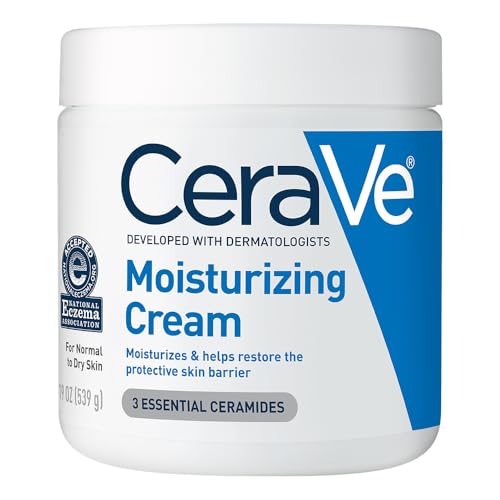 CeraVe Moisturizing Cream Three ceramides plus cholesterol and petrolatum, no fragrance, in a tub big enough to use on your body too. | Barrier repair on a budget | Free | |
| 2 | 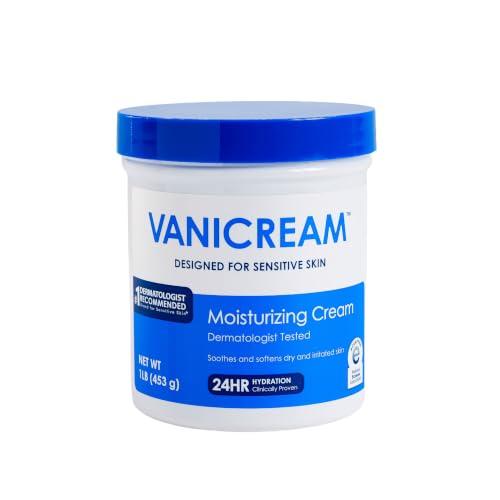 Vanicream Moisturizing Skin Cream Eleven ingredients, petrolatum second on the list, and no fragrance, essential oils or botanicals anywhere. | A barrier rebuild with nothing else in the way | Free | |
| 3 | 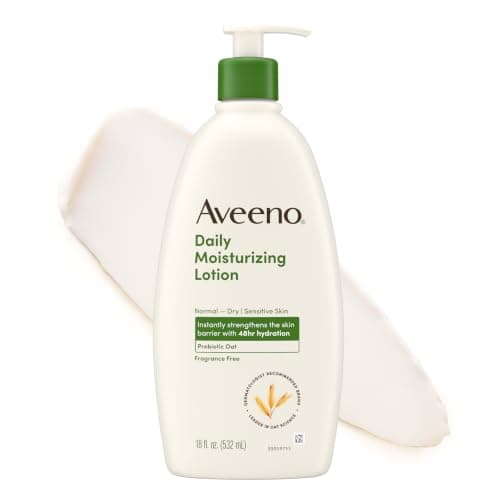 Aveeno Daily Moisturizing Lotion Ten ingredients, with petrolatum fourth and oat kernel flour seventh. | Oat plus petrolatum in ten ingredients | Free | |
| 4 | 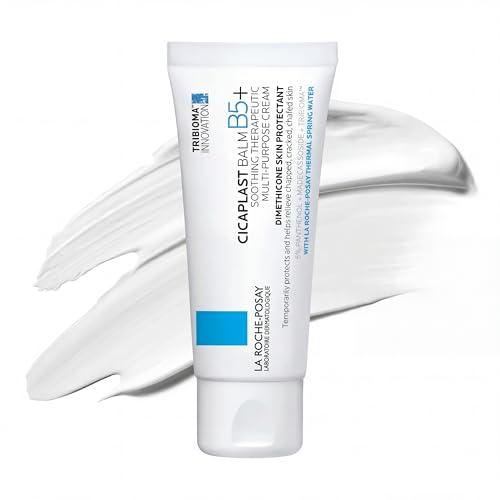 La Roche-Posay Cicaplast Baume B5 A thick fragrance-free balm with panthenol, madecassoside and shea butter. | A rescue balm for the worst two days of a flare | Free | |
| 5 | 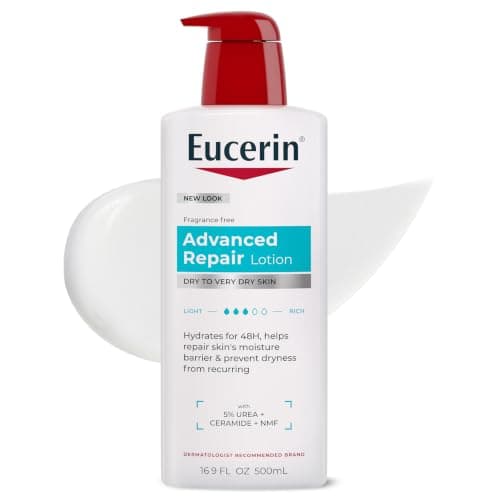 Eucerin Advanced Repair Lotion Urea third on the list with sodium lactate and lactic acid behind it, which makes this the only lotion here that softens thickened skin rather than just hydrating it. | Rough, scaly, genuinely cracked body skin | Free |
#ad - Amazon links are affiliate links. Prices come from the Amazon API, are refreshed daily, and disappear rather than go stale - the button shows the current number or it asks you to check.
Why the cooling creams are not here
The anti-itch aisle is built on menthol and camphor, and they work in the sense that you feel something immediately. What you feel is a nerve response, not a repaired barrier. On ordinary skin that trade is fine. On skin that is red and already overreacting to stimulus, a counter-irritant is being added to a surface whose problem is that it overreacts to stimulus.
The same logic rules out topical antihistamines, which carry a recognized sensitization record of their own, and the pramoxine and benzocaine lotions, which are anesthetics with a Drug Facts panel rather than moisturizers. None of them is dangerous used sensibly for a few days. None of them belongs in a list of things you will put on twice a day for a month, which is what barrier repair actually takes.
What is left is unglamorous and it is the part with the best record: occlusion, barrier lipids, and colloidal oat. The National Eczema Association's own moisturizing guidance points in exactly this direction - plain, frequent, generous.
What actually reduces itch in a cream
- 1Occlusion. A film that stops water leaving. Dry skin itches; the simplest and most reliable intervention is to stop it drying. Petrolatum is the most effective occlusive available and one of the least allergenic ingredients in cosmetics.
- 2Barrier lipids. Ceramides, cholesterol and fatty acids are what the stratum corneum uses to hold itself together, and a barrier that holds together is one that is not constantly signaling. This is the only item on this list that rebuilds rather than compensates.
- 3Colloidal oat. The one soothing botanical that holds FDA over-the-counter skin-protectant status, which is a regulatory recognition rather than a marketing claim. What it does and does not support is at is colloidal oatmeal good for rosacea.
- 4Removing the cause. If something in your routine is causing an allergic contact dermatitis, no amount of cream fixes it while you keep applying the thing. This is why one of the six picks is an eleven-ingredient cream whose entire merit is that it removes suspects.
Notice what is not on that list: anything that changes the sensation directly. There is no over-the-counter cosmetic ingredient that reliably switches itch off, and products implying otherwise are generally doing it with a counter-irritant.
How the six compare
| Product | Format | What it brings to itch | Face or body | Watch for |
|---|---|---|---|---|
| CeraVe Moisturizing Cream | Tub cream | Ceramides NP, AP, EOP, cholesterol, petrolatum | Both | Around twenty-four ingredients; thick |
| Vanicream Moisturizing Skin Cream | Tub cream | Petrolatum occlusion with nothing else in the way | Both | No barrier lipids; waxy finish |
| Aveeno Daily Moisturizing Lotion | Pump lotion | Oat kernel flour plus petrolatum, in ten ingredients | Body, face if you like it | Benzyl alcohol; no published oat percentage |
| LRP Cicaplast Baume B5 | Tube balm | Panthenol and madecassoside on a raw patch | Spot use | Chlorhexidine; no ceramides; white cast |
| Eucerin Advanced Repair Lotion | Pump lotion | Urea and lactic acid on thickened, scaly skin | Body only | Stings a compromised face; shea butter |
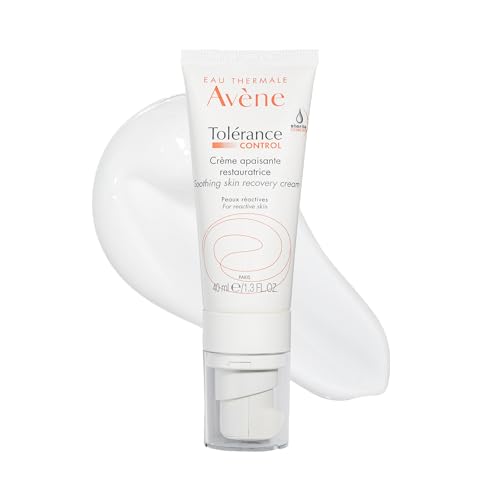
| Avene Tolerance Control | Sterile pump | Fifteen ingredients with no declared preservative | Face | Highest cost per ounce by a wide margin |
The picks, in order
1. Barrier repair on a budget
CeraVe Moisturizing Cream
Product photo from Amazon.
Three ceramides plus cholesterol and petrolatum, no fragrance, in a tub big enough to use on your body too. This is the cream most dermatology offices hand out, and the formula earns it.
What is in it
- Ceramide NP, AP and EOP
- Petrolatum
- Sodium Hyaluronate
- Cholesterol
Best for
Barrier repair on a budget
Strengths
- Ceramides NP, AP and EOP with cholesterol - a complete lipid set
- Petrolatum for occlusion plus hyaluronic acid for water
- No added fragrance
- Very low cost per ounce in the large tub
Trade-offs
- Thick - it needs warming between your palms in winter
- The tub invites fingers into the product; the pump version is more hygienic
Who should skip it: Oily or acne-prone skin may find the richness too much for daytime; use the lotion version instead.
#ad How we are funded - price as of November 18, 2026
Ingredient list read at INCIDecoder - CeraVe Moisturizing Cream.
2. A barrier rebuild with nothing else in the way
Vanicream Moisturizing Skin Cream
Product photo from Amazon.
Eleven ingredients, petrolatum second on the list, and no fragrance, essential oils or botanicals anywhere. It is an occlusive that seals water in. It is not elegant and it is not trying to be.
What is in it
- Petrolatum
- Sorbitol
- Glyceryl Stearate
- Simethicone
Best for
A barrier rebuild with nothing else in the way
Strengths
- Eleven ingredients total
- Petrolatum-led - the most reliable occlusive there is
- No fragrance, essential oils or botanical extracts
- Sold in a large tub; cost per ounce is very low
Trade-offs
- Heavy and slightly waxy - it sits on skin rather than sinking in
- No soothing or barrier actives beyond the occlusion itself
Who should skip it: If you wear makeup daily or your skin is oily, this will feel like too much - use it at night only, or pick a lighter cream.
#ad How we are funded - price as of November 18, 2026
Ingredient list read at INCIDecoder - Vanicream Moisturizing Skin Cream.
3. Oat plus petrolatum in ten ingredients
Aveeno Daily Moisturizing Lotion
Product photo from Amazon.
Ten ingredients, with petrolatum fourth and oat kernel flour seventh. It is the only lotion here built on the one soothing botanical that holds FDA skin-protectant status, and the published list carries no fragrance and no essential oils.
What is in it
- Avena sativa (oat) kernel flour
- Petrolatum
- Glycerin
- Dimethicone
Best for
Oat plus petrolatum in ten ingredients
Strengths
- Ten ingredients - second-shortest list on this page
- Petrolatum fourth, so it seals better than most lotions of this weight
- Oat kernel flour, the ingredient class with FDA OTC skin-protectant status behind it
- The cheapest pick here per ounce and sold everywhere
Trade-offs
- Benzyl alcohol is classed as a perfuming ingredient despite the fragrance-free claim
- The published list we read gives no oat percentage, so we do not quote one
- No ceramides, no cholesterol - it soothes and seals rather than rebuilds
Who should skip it: If your history includes reactions to oat or to gluten-adjacent botanicals, every other lotion on this page is oat-free.
#ad How we are funded - price as of November 18, 2026
Ingredient list read at INCIDecoder - Aveeno Daily Moisturizing Body Lotion.
4. A rescue balm for the worst two days of a flare
La Roche-Posay Cicaplast Baume B5
Product photo from Amazon.
A thick fragrance-free balm with panthenol, madecassoside and shea butter. This is a short-term repair layer for raw, stinging patches, not a daily moisturizer for the whole face.
What is in it
- Panthenol
- Madecassoside
- Shea butter
- Glycerin
Best for
A rescue balm for the worst two days of a flare
Strengths
- Panthenol and madecassoside - both well studied for irritated skin
- No added fragrance
- Thick enough to act as an overnight occlusive layer
- A small tube lasts a long time in spot use
Trade-offs
- Heavy and slightly tacky - not a daily all-over cream
- Contains chlorhexidine digluconate, which a small number of people react to
Who should skip it: If you want one cream for everyday use, this is not it - it is a targeted repair layer.
#ad How we are funded - price as of November 18, 2026
Ingredient list read at INCIDecoder - La Roche-Posay Cicaplast Baume B5.
5. Rough, scaly, genuinely cracked body skin
Eucerin Advanced Repair Lotion
Product photo from Amazon.
Urea third on the list with sodium lactate and lactic acid behind it, which makes this the only lotion here that softens thickened skin rather than just hydrating it. Thirty-four ingredients, no fragrance, no essential oils - and the urea is exactly why it is a body lotion and not a face lotion.
What is in it
- Urea
- Sodium lactate
- Ceramide NP
- Shea butter
Best for
Rough, scaly, genuinely cracked body skin
Strengths
- Urea third on the list - the one humectant that also breaks down thickened, scaly skin
- Ceramide NP and shea butter for the lipid side
- No fragrance and no essential oils on the published list
- The pick for heels, shins, elbows and hands rather than faces
Trade-offs
- Urea and lactic acid sting on a compromised barrier - not for facial use on reactive skin
- Thirty-four ingredients, the longest list on this page
- Contains shea butter, which is the usual problem for anyone with a tree-nut history
Who should skip it: Anyone looking for a face lotion, and anyone whose skin is currently raw rather than rough - urea on broken skin is the wrong instrument.
#ad How we are funded - price as of November 18, 2026
Ingredient list read at INCIDecoder - Eucerin Advanced Repair Lotion.
6. Skin that reacts to almost everything, including preservatives
Avene Tolerance Control Soothing Skin Recovery Cream
Product photo from Amazon.
Fifteen ingredients, no fragrance, and no preservative in the ingredient declaration - it ships in a sterile pump instead. If you have reacted to preserved products, this is the one to try.
What is in it
- Avene thermal spring water
- Squalane
- Aquaphilus dolomiae extract filtrate
- Glycerin
Best for
Skin that reacts to almost everything, including preservatives
Strengths
- No preservative listed - sterile packaging does that job
- Fifteen ingredients, no fragrance, no essential oils
- Squalane and glycerin for comfort without heaviness
- The shortest list of any cream here after Vanicream
Trade-offs
- The most expensive per ounce of any pick on this page
- The sterile pump means you cannot scrape out the last of it
Who should skip it: If cost matters more than ingredient minimalism, the CeraVe or Vanicream creams do the barrier job for a fraction of the price.
#ad How we are funded - price as of November 18, 2026
Ingredient list read at INCIDecoder - Avene Tolerance Control Soothing Skin Recovery Cream.
What we screened out, and why
These are products you will find recommended elsewhere for this exact search. Each one is excluded here for a specific, checkable reason - not because it is a bad product, but because it does not clear the screen above.
Cooling and menthol anti-itch creams
Menthol, camphor and peppermint are the single most common thing added to a cream sold for itch, because they produce an immediate sensation that reads as relief. They do it by stimulating nerve endings, which on skin that already overreacts is the reaction rather than evidence of recovery - and the National Rosacea Society lists menthol among the cosmetic ingredients that may provoke a flare.
Topical antihistamine creams
Diphenhydramine applied to skin has a well-recognized sensitization record, which means the cream sold to stop the itch can become the reason the itch keeps coming back. Oral antihistamines are a different question and one for a clinician, not a moisturizer page.
Pramoxine and benzocaine anti-itch lotions
These are topical anesthetics - drugs with a Drug Facts panel, not moisturizers. They can be the right short-term call and that is a conversation with a pharmacist or a clinician. They do nothing for the barrier failure that is usually generating the itch, and using them for weeks masks the thing you actually need to fix.
Hydrocortisone as a daily moisturizer
Over-the-counter hydrocortisone has a real place in treating an itchy inflammatory rash for a few days. It is not a moisturizer, it is not for indefinite use, and it is specifically not for the face without advice - thinning and perioral dermatitis are the two things that go wrong. Every product on this page is something you can use twice a day for months.
Anything with fragrance or parfum declared
Fragrance is the leading cause of cosmetic contact allergy, and allergic contact dermatitis is itself one of the commonest causes of skin that is both red and itching. A fragranced cream applied to itchy skin is the one combination most likely to be the cause rather than the cure.
Colloidal oatmeal products with fragrance added
Oat is the one soothing botanical with FDA over-the-counter skin-protectant status, and a lot of products trade on it while adding a perfume on top. The oat is doing real work; the fragrance is undoing it. Read the back, not the oat claim on the front.
Thick botanical balms sold for irritated skin
Calendula, chamomile, lavender and tea tree turn up constantly in creams marketed at irritated skin, and all four are aromatic plant material. On intact skin most people tolerate them; on broken, itching skin they are being applied to exactly the surface least able to screen them out.
The full list of what we flag, what each ingredient is and where the evidence is genuinely mixed lives on ingredients to avoid with rosacea.
Match the cream to why it is itching
Your skin is dry, red and itchy, and that is the whole story
CeraVe Moisturizing Cream. Ceramides NP, AP and EOP with cholesterol and petrolatum is the lipid set your barrier actually uses, and a barrier that holds water is one that itches less. It is fragrance-free, it comes in a tub big enough to be generous with, and it is the cream most dermatology offices hand out for exactly this complaint. The trade is around twenty-four ingredients and a thickness that needs warming between the palms. More on what barrier repair means is at best barrier repair creams.
You suspect something you are using is causing it
Vanicream Moisturizing Skin Cream. Eleven ingredients, petrolatum second, and no fragrance, masking fragrance, essential oil, botanical extract, lanolin or dye anywhere. Allergic contact dermatitis is one of the commonest reasons skin is both red and itching, and you cannot identify the culprit while you are still applying forty ingredients a day. Strip back to a bland cleanser and this cream for a fortnight, then add things back one at a time. The full write-up is at our Vanicream Moisturizing Cream review.
It is your arms, legs and torso more than your face
Aveeno Daily Moisturizing Lotion, the budget pick here. Ten ingredients with petrolatum fourth and oat kernel flour seventh, in a pump that makes covering two legs a forty-second job rather than a four-minute one. That last point is not trivial: with body itch, frequency beats formula, and the commonest failure is rationing something expensive. The two caveats are on the card - the published list declares benzyl alcohol, and it gives no oat percentage, so we do not quote one.
One patch has gone past itchy and into raw
La Roche-Posay Cicaplast Baume B5, over your usual cream, for a few nights. A thick fragrance-free film with panthenol and madecassoside under it is the most reliable over-the-counter thing for a patch that has been scratched open or has cracked. It has no ceramides and it pills under sunscreen, so it is a night product and a spot product rather than a daily cream, and it contains chlorhexidine, which a small number of people react to. Full detail at our Cicaplast Baume B5 review.
It itches because it is rough and scaly
Eucerin Advanced Repair Lotion, on a body and not on a face. Urea third on the list with sodium lactate and lactic acid behind it is what softens thickened, flaking skin, and when the itch is coming from scale rather than from inflammation that is the thing that helps. Shins, heels, elbows and hands. The same chemistry is why it stings a compromised facial barrier, and why we have labeled it body-only rather than ranking it on finish. The lotion shortlist in full is at best lotions for sensitive skin.
You have reacted to bland products before
Avene Tolerance Control. Fifteen ingredients, no fragrance, no essential oils, and no preservative in the ingredient declaration at all - it ships in a sterile pump that does that job mechanically. Preservatives are among the more common contact sensitizers in skincare, so if your history is a string of reactions to creams with nothing obviously wrong on the label, this is the one that removes that variable. It is also by some distance the most expensive thing on this page, and nothing about the price buys a stricter list than Vanicream's.
When a cream is the wrong answer
This is a product page and it should still say plainly that moisturizer is not always the thing. Itch that is severe enough to wake you, itch with weeping, crusting or spreading patches, itch with no visible rash at all, or itch that has not improved after two to three weeks of consistent fragrance-free moisturizing - all of those are reasons to see a clinician rather than buy a seventh cream.
The commonest diagnosis behind persistent red, itchy skin is eczema, and it is a condition with real treatments that a moisturizer supports rather than replaces. The National Eczema Association's guidance on bathing and moisturizing is a better starting point than any product list, and our own routine page is at eczema and sensitive skin.
If you are unsure whether what you have is eczema or rosacea - and the two get confused constantly, in both directions - the differences are set out at rosacea vs eczema. The short version is that rosacea tends to burn and sting while eczema itches, and that the treatments diverge sharply from there.
The label checks that do most of the work
- Scan for fragrance, parfum and aroma first. On itchy skin this matters more than anywhere else, because allergic contact dermatitis is one of the likely causes and fragrance is its leading trigger.
- Then scan for menthol, camphor, peppermint and anything promising a cooling sensation. These are over-represented in the itch aisle specifically, and they are the ingredient class this page excludes most firmly.
- Check for a Drug Facts panel. If there is one, you are holding a medicine - pramoxine, benzocaine, hydrocortisone - not a moisturizer, and it has a different use pattern and a time limit.
- Then scan for Latin plant names ending in oil or extract. Calendula, chamomile, lavender, tea tree. Broken skin is the worst surface to test a botanical on.
- Look at where the occlusive sits. Petrolatum second does real work. Petrolatum twentieth is on the label for the label.
- Count the list if you suspect your routine. Eleven ingredients is an instrument for finding a cause. Forty is a product.
None of this needs expertise - it needs the back of the jar, which is why we link a published ingredient list on every card rather than asking you to take our word for it. The method end to end is at how to read a skincare ingredient label.
How to use them so the itch actually settles
- 1Moisturize within about a minute of patting dry. The AAD's advice for dry, itchy skin is to apply while skin is still slightly damp. On itchy skin this single habit does more than any product swap.
- 2Twice a day, and more on the worst areas. The National Eczema Association's moisturizing guidance is about frequency and quantity rather than about which jar. Be generous; that is what the large cheap tubs are for.
- 3Lukewarm showers, kept short. Hot water strips lipid and leaves skin itchier an hour later. This is the change people resist most and notice fastest.
- 4Press, never rub, and keep nails short. Scratching breaks skin, broken skin itches more, and the loop is the reason a mild problem becomes a stubborn one.
- 5Give it two to three weeks before you judge it. Comfort improves before appearance does. If three consistent weeks produce nothing, that is the signal to see someone rather than to buy another cream.
What we did not consider
Anything with an active in it that belongs in a separate, controlled step - acids, retinoids, vitamin C. On skin that is currently itching, none of them is the next thing to add, and several are plausible causes of the problem in the first place. The one honest exception is azelaic acid for inflammatory redness, and that is a different complaint - see best azelaic acid products for rosacea.
We also left out body washes, which matter more for body itch than most people expect, because a stripping wash undoes the cream applied after it. Those are ranked separately at best body wash for sensitive skin.
How we chose
We read the published ingredient list for every cream considered and excluded anything carrying a flagged ingredient - fragrance, essential oils, cooling agents, added drugs - before looking at anything else. What remained was ranked on whether it rebuilds the barrier rather than only sealing it, whether it brings an ingredient with real standing behind it for itch, and whether it is easy enough to buy and cheap enough to use generously, because quantity and frequency are what decide outcomes here. We have no testing lab and we make no first-hand-use claim anywhere on this site - what we do is read the label and show our working, which is set out in full at how we choose.
Questions people ask
What is the best cream for red, itchy skin?
CeraVe Moisturizing Cream for most people - ceramides NP, AP and EOP with cholesterol and petrolatum rebuild the barrier whose failure usually produces the itch. If you suspect something in your routine is causing it, Vanicream Moisturizing Skin Cream is eleven ingredients and removes the most suspects at once. For body itch on a budget, Aveeno Daily Moisturizing Lotion has oat and petrolatum in ten ingredients.
Does itchy skin mean I have rosacea?
Usually not. The National Rosacea Society describes burning and stinging among the characteristic sensations of rosacea; itch is far less typical. Persistent itch with redness more often points to eczema, contact dermatitis or simple dryness, which is why this page is screened and ranked differently from our redness pages. The comparison is at rosacea vs eczema.
Why do you leave out anti-itch creams with menthol?
Because they work by stimulating nerve endings rather than by repairing anything, and on skin that already overreacts to stimulus that is the wrong trade. The sensation lasts twenty minutes; the barrier problem does not go anywhere. The National Rosacea Society also lists menthol among cosmetic ingredients that may provoke a flare.
Should I use hydrocortisone cream instead?
Over-the-counter hydrocortisone has a real place in calming an itchy inflammatory rash for a few days, and it is not a moisturizer and not for indefinite use - especially not on the face, where thinning and perioral dermatitis are the risks. Everything on this page is something you can use twice a day for months. If you are reaching for a steroid repeatedly, that is a reason to see a clinician.
Is colloidal oatmeal good for itchy skin?
It is the one soothing botanical with FDA over-the-counter skin-protectant status behind it, which is a regulatory recognition rather than a marketing claim. It is worth having, and it is not a substitute for occlusion and barrier lipids. The detail is at is colloidal oatmeal good for rosacea.
How long before a cream helps itchy skin?
Expect less tightness and less itch within the first week and no change in visible redness or texture for two to six. If three consistent weeks of fragrance-free moisturizing twice a day produce nothing, that is the point to see a clinician rather than buy another cream.
Can a moisturizer make itching worse?
Yes, and it is common. Fragrance is the leading cause of cosmetic contact allergy, essential oils survive a fragrance-free claim, and cooling agents produce a sensation people mistake for a reaction to the cream working. If a cream stings on application, stop using it rather than pushing through.
What should I use on my body versus my face?
A ceramide cream or a petrolatum cream works on both. The two exceptions here are the urea lotion, which belongs on rough body skin and will sting a reactive face, and the balm, which is for spot use on a raw patch rather than all over. The format argument is at cream vs lotion vs ointment for sensitive skin.