Moisturizers & Barrier Repair
Anti-redness cream vs moisturizer
One of these words describes a formula. The other describes a shelf.
By Michael W. · Last updated
The short answer
Buy the anti-redness cream only when it names an active: licochalcone A, azelaic acid or a high-percentage centella extract. Everything else sold as an anti face redness cream is a fragrance-free moisturizer with a claim on the carton, and a plain barrier cream at a third of the price will do the same job. Eucerin Redness Relief Soothing Night Creme is the pick that genuinely carries an active; Avene Tolerance Control and La Roche-Posay Toleriane Double Repair are the moisturizers worth buying instead of a claim.
Some links on this page are affiliate links. If you buy through one, we may earn a commission at no extra cost to you - it is what funds the site. It does not change what gets recommended or in what order. Full disclosure.
There is no legal definition of an anti-redness cream. It is a cosmetic, which means it can claim to improve the appearance of redness without demonstrating that it does anything to the cause, and in practice most products in the category are ordinary fragrance-free moisturizers positioned differently. That is not a scandal - a fragrance-free moisturizer is genuinely the right product for most red faces - but it means the price premium is often paid for the carton.
The useful distinction is not the word on the front. It is whether a named, studied active appears on the ingredient list. There are only a handful of those in over-the-counter skincare, and if none of them is present, you are comparing two moisturizers and should buy the cheaper one.
What separates the two, in practice
| Anti-redness cream | Plain fragrance-free moisturizer | |
|---|---|---|
| Regulated claim? | No - cosmetic appearance claim only | No claim to make |
| Usually contains | An anti-redness active, or just a soothing botanical | Humectants, emollients, occlusives, often ceramides |
| Does it reduce redness? | Only if the active is named and dosed | Indirectly - a repaired barrier is a less reactive one |
| Price | Typically 1.5 to 3 times the plain equivalent | Lowest in the category |
| Risk profile | More ingredients means more to react to | Fewer variables |
| Worth it when | It names licochalcone A, azelaic acid or high-dose centella | Always - this is the base layer either way |
The last row is the whole page. These are not alternatives you choose between. A moisturizer is the base layer and you need one regardless; an anti-redness cream is either that moisturizer with a useful active in it, or that moisturizer with a sticker on it.
The actives that are worth the premium
- Licochalcone A. A flavonoid from Glycyrrhiza inflata root, and the active behind the Eucerin Redness Relief range. The one named redness ingredient on this site that sits inside a plain fragrance-free cream rather than a serum.
- Azelaic acid. The best-evidenced over-the-counter option for papules and background redness, and the only one with prescription-strength versions. It is a treatment, not a moisturizer, so it goes under one.
- Centella asiatica, at a real concentration. Asiaticoside and madecassoside have supporting evidence. A trace extract at the end of an ingredient list does not count - the honest version of this is at does centella asiatica help rosacea.
- Niacinamide. Useful for barrier function and for some people's redness, and a flushing trigger for a minority with rosacea. A genuine two-way bet rather than a free win.
- Colloidal oatmeal. An over-the-counter skin protectant with real anti-itch evidence. Better for irritation and eczema than for vascular redness.
Notice what is not on that list. Green tea extract, chamomile, allantoin, panthenol, aloe, licorice extract generally, cucumber, feverfew and every other calming botanical are, at best, mildly soothing and well tolerated. None of them is a reason to pay more. Several of them are plant extracts that a reactive face may object to, which is the trade you are making when you buy the botanical version of a cream rather than the plain one.
The screen
Every product on this page had to clear all of the following before it was considered on its merits. This is the exclusion step, and it runs before any recommendation.
- No added fragrance or parfum anywhere in the ingredient list.
- No essential oils, including ones declared under a botanical name.
- No denatured alcohol, witch hazel, menthol, camphor or peppermint.
- No physical scrub particles.
- Sold in the US right now, from a brand that publishes its full ingredient list.
- Every remaining flagged ingredient is named on the product card rather than quietly left out.
Ingredient lists last checked 2026-09-29. Formulas change - if you spot a discrepancy, the published list on the brand's own site wins and we want to know.
Quick picks
Every product here cleared the screen. Tap a row for the full write-up.
| # | Product | Best for | Fragrance | Price |
|---|---|---|---|---|
| 1 | 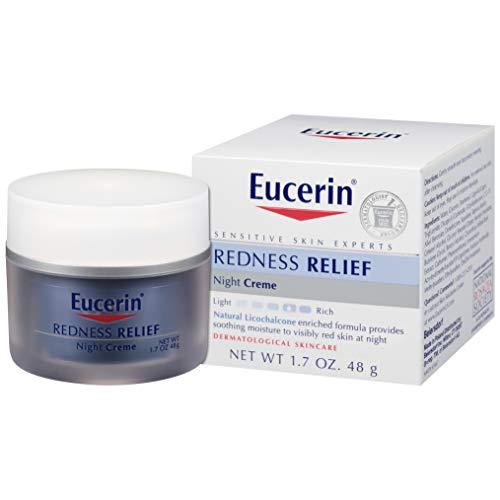 Eucerin Redness Relief Soothing Night Creme Fragrance-free and built around licochalcone A, the licorice-root flavonoid this range is known for. | Targeted redness work overnight | Free | |
| 2 | 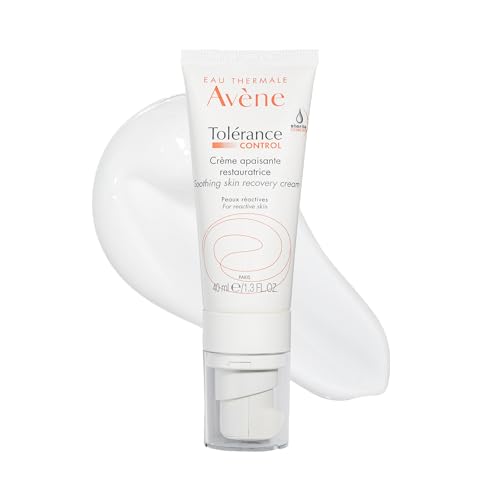 Avene Tolerance Control Soothing Skin Recovery Cream Fifteen ingredients, no fragrance, and no preservative in the ingredient declaration - it ships in a sterile pump instead. | Skin that reacts to almost everything, including preservatives | Free | |
| 3 | 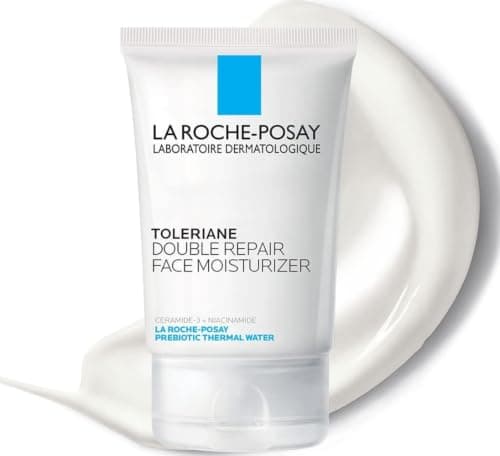 La Roche-Posay Toleriane Double Repair Face Moisturizer Light, fast-absorbing, fragrance-free, with ceramide NP and glycerin doing the barrier work. | Daily moisturizer that disappears under sunscreen | Free | |
| 4 | 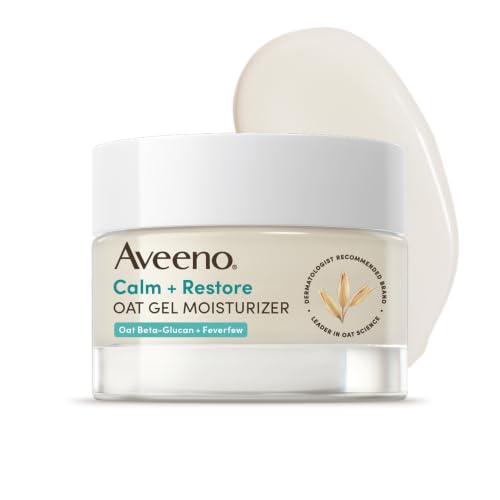 Aveeno Calm + Restore Oat Gel Moisturizer Fragrance-free with oat, feverfew and centella - three of the better-tolerated soothing botanicals. | A lighter gel texture with soothing botanicals | Free |
#ad - Amazon links are affiliate links. Prices come from the Amazon API, are refreshed daily, and disappear rather than go stale - the button shows the current number or it asks you to check.
The picks, in order
1. Targeted redness work overnight
Eucerin Redness Relief Soothing Night Creme
Product photo from Amazon.
Fragrance-free and built around licochalcone A, the licorice-root flavonoid this range is known for. Two things to weigh: it contains parabens and benzyl alcohol, both of which some people avoid.
What is in it
- Licochalcone A (Glycyrrhiza inflata root extract)
- Panthenol
- Squalane
- Glycerin
Best for
Targeted redness work overnight
Strengths
- Licochalcone A, the actual active behind the range
- No added fragrance
- Panthenol and squalane for comfort
- Fragrance-free, dye-free and non-comedogenic on the label
Trade-offs
- Contains methylparaben and propylparaben
- Contains benzyl alcohol, which a minority find stinging
- Getting hard to find in the US - stock is thin and it is no longer a drugstore-priced cream
Who should skip it: If you avoid parabens or have reacted to benzyl alcohol, pick a different redness cream - this one contains both.
Ingredient list read at INCIDecoder - Eucerin Redness Relief Night Cream.
2. Skin that reacts to almost everything, including preservatives
Avene Tolerance Control Soothing Skin Recovery Cream
Product photo from Amazon.
Fifteen ingredients, no fragrance, and no preservative in the ingredient declaration - it ships in a sterile pump instead. If you have reacted to preserved products, this is the one to try.
What is in it
- Avene thermal spring water
- Squalane
- Aquaphilus dolomiae extract filtrate
- Glycerin
Best for
Skin that reacts to almost everything, including preservatives
Strengths
- No preservative listed - sterile packaging does that job
- Fifteen ingredients, no fragrance, no essential oils
- Squalane and glycerin for comfort without heaviness
- The shortest list of any cream here after Vanicream
Trade-offs
- The most expensive per ounce of any pick on this page
- The sterile pump means you cannot scrape out the last of it
Who should skip it: If cost matters more than ingredient minimalism, the CeraVe or Vanicream creams do the barrier job for a fraction of the price.
#ad How we are funded - price as of November 18, 2026
Ingredient list read at INCIDecoder - Avene Tolerance Control Soothing Skin Recovery Cream.
3. Daily moisturizer that disappears under sunscreen
La Roche-Posay Toleriane Double Repair Face Moisturizer
Product photo from Amazon.
Light, fast-absorbing, fragrance-free, with ceramide NP and glycerin doing the barrier work. Niacinamide sits fifth on the list, which is the only reason it is not our first pick for everyone.
What is in it
- Niacinamide
- Ceramide NP
- Glycerin
- Prebiotic thermal water
Best for
Daily moisturizer that disappears under sunscreen
Strengths
- Absorbs in seconds - layers cleanly under mineral SPF
- Ceramide NP and glycerin for barrier and water
- No added fragrance
- Works year-round for most skin types
Trade-offs
- Niacinamide is fifth on the ingredient list - a flushing trigger for some
- Not rich enough on its own for very dry skin in winter
Who should skip it: Skip if niacinamide reliably flushes you. Also skip as a standalone if your skin is very dry - layer it over an occlusive.
#ad How we are funded - price as of November 18, 2026
Ingredient list read at INCIDecoder - La Roche-Posay Toleriane Double Repair Face Moisturizer.
4. A lighter gel texture with soothing botanicals
Aveeno Calm + Restore Oat Gel Moisturizer
Product photo from Amazon.
Fragrance-free with oat, feverfew and centella - three of the better-tolerated soothing botanicals. It is a gel rather than a cream, so it suits combination skin that finds ceramide creams heavy.
What is in it
- Oat kernel flour and extract
- Feverfew
- Centella asiatica extract
- Panthenol
Best for
A lighter gel texture with soothing botanicals
Strengths
- Fragrance-free and essential-oil-free despite being botanical-led
- Oat flour plus oat extract, feverfew and centella
- Light gel texture that layers well
- Drugstore price
Trade-offs
- Botanical extracts are still botanicals - a small number of people react to feverfew
- Not occlusive enough for very dry skin on its own
Who should skip it: If you have reacted to plant extracts before, the ingredient-minimal creams are the safer starting point.
#ad How we are funded - price as of November 18, 2026
Ingredient list read at INCIDecoder - Aveeno Calm + Restore Oat Gel Moisturizer.
How to decide in the aisle
- 1Turn the box over. If no active from the list above appears in the first two-thirds of the ingredient list, it is a moisturizer. Price it as one.
- 2Check for fragrance first, always. A redness claim on a fragranced product is self-cancelling, and this aisle still carries plenty of them.
- 3Count the botanicals. More plant extracts means more potential triggers on skin that is already reacting. Fewer is better when you do not yet know what sets you off.
- 4Decide whether you want treatment or comfort. If you want the redness itself to change, the product to buy is azelaic acid, not a cream with a claim - the ranking is at best azelaic acid products for rosacea.
- 5Buy the plain cream and the active separately. Almost always cheaper, almost always more effective, and you can stop one without stopping both.
That last point is the practical recommendation this page ends on. A plain fragrance-free moisturizer plus a separate azelaic acid serum is the combination that has both the barrier support and the evidence behind it, at a lower total cost than most single anti-redness creams. The full moisturizer ranking is at best redness relief creams, and the lotion-format version of the same question is at best anti-redness face lotions.
If your redness comes and goes rather than staying
Flushing and persistent redness are different problems and they want different answers. Transient flushing - triggered by heat, alcohol, spice, stress or temperature change - responds to trigger management far more than to any cream, and the list worth working through is at the rosacea trigger list. Persistent background redness is the one where a barrier cream plus an active earns its place, because the skin is inflamed rather than briefly dilated.
If both are happening, treat them separately. Manage the triggers for the flushing, use the cream and the active for the background, and keep sunscreen on every day regardless - UV is the most frequently reported trigger in the National Rosacea Society patient surveys, which makes it the cheapest intervention available. The short version of what to do during an episode is at how to calm a rosacea flare up.
How we chose
Published ingredient lists read on each brand's own site and on INCIDecoder, with the source linked on every pick, and screened for added fragrance, masking fragrance, essential oils and the flagged ingredients on our avoid list. Claims about what an active does are limited to ingredients with published evidence, named on the product's own panel - we do not repeat a brand's appearance claim as a mechanism. Prices are pulled from the Amazon API, refreshed daily and stamped with the date they were read. Method at how we choose.
Questions people ask
Is an anti-redness cream better than a regular moisturizer?
Only when it names an active such as licochalcone A, azelaic acid or a high-percentage centella extract. Without one, an anti-redness cream is a fragrance-free moisturizer with a claim on the box, and a plain barrier cream does the same work for less.
What should I look for in a facial moisturizer for redness?
Fragrance-free first, then a short ingredient list, then ceramides or petrolatum for the barrier. An anti-redness active is a bonus rather than the baseline - a repaired barrier is a less reactive one even with no active at all.
Does any cream get rid of facial redness permanently?
No. Skincare can reduce inflammation and stop making things worse, but it cannot close dilated blood vessels. Visible fine vessels are a dermatology conversation about laser or light treatment, not a shelf purchase.
Is azelaic acid an anti-redness cream?
It is a treatment rather than a moisturizer, and it has better evidence than anything sold as an anti-redness cream. Use it under a plain fragrance-free moisturizer rather than instead of one.
Are soothing botanicals like chamomile or green tea worth paying for?
Not really. They are usually well tolerated and mildly comforting, but none of them has the evidence to justify a price premium, and each one is an extra plant extract for reactive skin to object to.