Moisturizers & Barrier Repair
Do you need an eye cream with rosacea?
Usually not. And the aisle you were about to shop in is riskier than the one you are already in.
By Michael W. · Last updated
The short answer
No, for most people. The skin around the eye is thinner and more permeable, but the thing it needs - a fragrance-free, low-irritant moisturizer - is exactly what you already have on the rest of your face, and a 15ml eye cream costs several times more per ounce for the same job. Use your existing cream right up to the orbital bone: La Roche-Posay Cicaplast Baume B5 for genuinely raw lids, Vanicream Moisturizing Skin Cream as the plainest daily option, and Avene Tolerance Control if preservatives are the problem. Buy a dedicated eye product only for an active you specifically want in that area, and never one with fragrance in it.
Some links on this page are affiliate links. If you buy through one, we may earn a commission at no extra cost to you - it is what funds the site. It does not change what gets recommended or in what order. Full disclosure.
The eye-cream question comes up with rosacea for two different reasons that deserve two different answers. One group is asking because the skin around their eyes is dry, flaky and sometimes stinging, and they have been told the face cream is too harsh for it. The other is asking because they want an anti-ageing product and have read that eye creams are gentler. Neither premise holds up well.
The skin of the eyelid is genuinely thinner - a fraction of a millimetre, with less sebaceous support and a more permeable barrier - and that is a real difference. What it argues for is using a gentle, fragrance-free, low-irritant product in that area. What it does not argue for is buying a separate one, because on this site every product already meets that description.
What an eye cream actually gives you
| Claimed benefit | Real? | Can your face cream do it? |
|---|---|---|
| Gentler formula for thin skin | Sometimes - and sometimes the opposite | Yes, if the face cream is fragrance-free and minimal |
| Ophthalmologist-tested | A real test, but it tests tolerance, not efficacy | Not labelled, but the same formula may well pass |
| Reduces puffiness | Caffeine has modest, short-lived evidence | No - but a cold compress does the same thing |
| Reduces dark circles | Mostly no. Most dark circles are structural or vascular | No, and neither can the eye cream |
| Lighter texture that will not migrate | A genuine formulation difference worth having if creams sting your eyes | Partly - use less, and stay on the bone |
| Smaller tube for a delicate area | A packaging decision, priced as a benefit | Yes, at a fifth of the cost per ounce |
The row to take seriously is the fifth. The one practical advantage an eye product has is that it is formulated not to creep into the eye and sting, and if your face cream has been doing that, a dedicated product is a reasonable purchase for that reason alone. That is a comfort argument, not a skin-health one, and it is the honest version of the case for buying one.
Why the eye-cream aisle is riskier than the face aisle
- Fragrance is more common, not less. Eye creams are sold as luxury objects, and fragrance is part of that. A fragrance-free cream in the face aisle is easier to find than one in the eye aisle.
- Retinol is in a large share of them. It is the default anti-ageing active, and eyelid skin is the single worst place to introduce a retinoid if you have rosacea. The slow method is at how to start retinol with sensitive skin.
- Essential oils appear in the natural options. Rose, neroli and lavender oils on eyelid skin is a bad combination of a permeable barrier and a known sensitiser.
- Caffeine and vitamin C formulas are usually low pH or high in alcohol. Both sting on thin skin, and stinging is information you should not have to pay to receive.
- Longer ingredient lists. The average eye cream carries more ingredients than the average plain moisturizer, which on reactive skin is a cost rather than a feature.
The screen
Every product on this page had to clear all of the following before it was considered on its merits. This is the exclusion step, and it runs before any recommendation.
- No added fragrance or parfum anywhere in the ingredient list.
- No essential oils, including ones declared under a botanical name.
- No denatured alcohol, witch hazel, menthol, camphor or peppermint.
- No physical scrub particles.
- Sold in the US right now, from a brand that publishes its full ingredient list.
- Every remaining flagged ingredient is named on the product card rather than quietly left out.
Ingredient lists last checked 2026-09-29. Formulas change - if you spot a discrepancy, the published list on the brand's own site wins and we want to know.
Quick picks
Every product here cleared the screen. Tap a row for the full write-up.
| # | Product | Best for | Fragrance | Price |
|---|---|---|---|---|
| 1 | 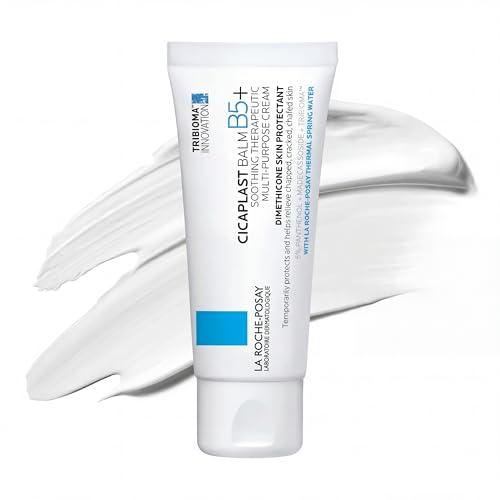 La Roche-Posay Cicaplast Baume B5 A thick fragrance-free balm with panthenol, madecassoside and shea butter. | A rescue balm for the worst two days of a flare | Free | |
| 2 | 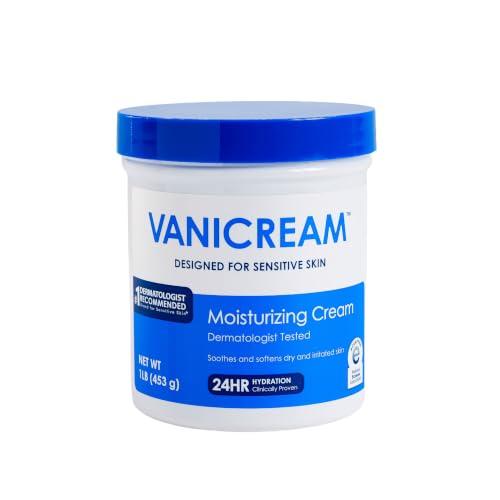 Vanicream Moisturizing Skin Cream Eleven ingredients, petrolatum second on the list, and no fragrance, essential oils or botanicals anywhere. | A barrier rebuild with nothing else in the way | Free | |
| 3 | 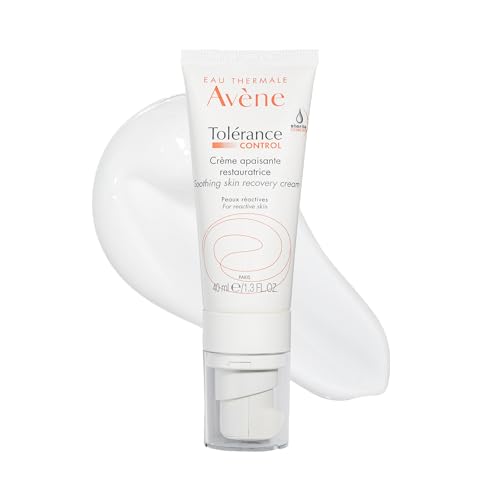 Avene Tolerance Control Soothing Skin Recovery Cream Fifteen ingredients, no fragrance, and no preservative in the ingredient declaration - it ships in a sterile pump instead. | Skin that reacts to almost everything, including preservatives | Free |
#ad - Amazon links are affiliate links. Prices come from the Amazon API, are refreshed daily, and disappear rather than go stale - the button shows the current number or it asks you to check.
The picks, in order
1. A rescue balm for the worst two days of a flare
La Roche-Posay Cicaplast Baume B5
Product photo from Amazon.
A thick fragrance-free balm with panthenol, madecassoside and shea butter. This is a short-term repair layer for raw, stinging patches, not a daily moisturizer for the whole face.
What is in it
- Panthenol
- Madecassoside
- Shea butter
- Glycerin
Best for
A rescue balm for the worst two days of a flare
Strengths
- Panthenol and madecassoside - both well studied for irritated skin
- No added fragrance
- Thick enough to act as an overnight occlusive layer
- A small tube lasts a long time in spot use
Trade-offs
- Heavy and slightly tacky - not a daily all-over cream
- Contains chlorhexidine digluconate, which a small number of people react to
Who should skip it: If you want one cream for everyday use, this is not it - it is a targeted repair layer.
#ad How we are funded - price as of November 18, 2026
Ingredient list read at INCIDecoder - La Roche-Posay Cicaplast Baume B5.
2. A barrier rebuild with nothing else in the way
Vanicream Moisturizing Skin Cream
Product photo from Amazon.
Eleven ingredients, petrolatum second on the list, and no fragrance, essential oils or botanicals anywhere. It is an occlusive that seals water in. It is not elegant and it is not trying to be.
What is in it
- Petrolatum
- Sorbitol
- Glyceryl Stearate
- Simethicone
Best for
A barrier rebuild with nothing else in the way
Strengths
- Eleven ingredients total
- Petrolatum-led - the most reliable occlusive there is
- No fragrance, essential oils or botanical extracts
- Sold in a large tub; cost per ounce is very low
Trade-offs
- Heavy and slightly waxy - it sits on skin rather than sinking in
- No soothing or barrier actives beyond the occlusion itself
Who should skip it: If you wear makeup daily or your skin is oily, this will feel like too much - use it at night only, or pick a lighter cream.
#ad How we are funded - price as of November 18, 2026
Ingredient list read at INCIDecoder - Vanicream Moisturizing Skin Cream.
3. Skin that reacts to almost everything, including preservatives
Avene Tolerance Control Soothing Skin Recovery Cream
Product photo from Amazon.
Fifteen ingredients, no fragrance, and no preservative in the ingredient declaration - it ships in a sterile pump instead. If you have reacted to preserved products, this is the one to try.
What is in it
- Avene thermal spring water
- Squalane
- Aquaphilus dolomiae extract filtrate
- Glycerin
Best for
Skin that reacts to almost everything, including preservatives
Strengths
- No preservative listed - sterile packaging does that job
- Fifteen ingredients, no fragrance, no essential oils
- Squalane and glycerin for comfort without heaviness
- The shortest list of any cream here after Vanicream
Trade-offs
- The most expensive per ounce of any pick on this page
- The sterile pump means you cannot scrape out the last of it
Who should skip it: If cost matters more than ingredient minimalism, the CeraVe or Vanicream creams do the barrier job for a fraction of the price.
#ad How we are funded - price as of November 18, 2026
Ingredient list read at INCIDecoder - Avene Tolerance Control Soothing Skin Recovery Cream.
How to use a face cream around the eye properly
- 1Stay on the bone. Apply along the orbital rim, not on the mobile lid. Product migrates inwards over the following hour on its own - that is the point of not starting there.
- 2Use a fraction of what you would elsewhere. A rice-grain amount per eye. Most stinging is an overdose problem.
- 3Pat with the ring finger, in one direction. Least pressure, least dragging. Friction is a trigger in itself on inflamed skin.
- 4Choose the plainest cream you own for this area. Fewest ingredients, no actives, no botanicals. Save the niacinamide and azelaic acid for the cheeks.
- 5Give it its own patch test. Two days on one eye only before you commit. The method is at how to patch test.
- 6Stop if it stings twice. Once can be an application error. Twice is the product telling you something.
If a cream keeps migrating and stinging despite all of that, the format is the likely culprit rather than the ingredients - a thinner lotion travels further than a thick balm does. The format axis is laid out at cream vs lotion vs ointment for sensitive skin, and the thickest option is usually the one that stays where you put it.
When a dedicated eye product is worth buying
There are three cases. The first is comfort: your face cream stings or blurs your vision, and an eye-specific texture solves that. The second is an active you want in that area and nowhere else - a retinoid for crepiness, introduced extremely slowly, or caffeine for morning puffiness if you find it helps. The third is sunscreen, which is a genuine gap: most facial sunscreens sting on the lid, and the practical answer is a mineral stick or sunglasses rather than an eye cream.
What does not justify the purchase is the general belief that delicate skin needs a specialist product. Delicate skin needs a gentle product, and if your face routine is already built on fragrance-free, short-list, low-irritant formulas then you own several. Spending the same money on a mineral sunscreen you will actually wear every day does more for the skin around your eyes than any eye cream will - the options are at best mineral sunscreens for sensitive skin, and the reasoning is at does sunscreen help rosacea.
How we chose
Published ingredient lists read on each brand's own site and on INCIDecoder, with the source linked on every pick, screened for added fragrance, masking fragrance, essential oils and the flagged ingredients on our avoid list. Claims about eyelid skin follow published dermatological description of its thickness and permeability; we make no claim about wrinkle or dark-circle outcomes, because the evidence for cosmetic products on either is weak. Prices are pulled from the Amazon API, refreshed daily and stamped with the date they were read. Method at how we choose.
Questions people ask
Do you need an eye cream if you have rosacea?
Usually not. Eyelid skin needs a gentle, fragrance-free, low-irritant moisturizer, which is what a well-chosen rosacea face cream already is. Apply your existing cream along the orbital bone in a much smaller amount instead of buying a separate product.
Is it safe to use face moisturizer around the eyes?
For most fragrance-free, active-free creams, yes - apply along the orbital rim rather than on the mobile lid, use a rice-grain amount, and pat rather than rub. Keep actives such as retinol, azelaic acid and high-percentage niacinamide away from the area.
Which eye cream is best for rosacea?
The best option for most people is not an eye cream at all. If you want a dedicated product, the requirements are the same as everywhere else - no fragrance, no essential oils, no retinol, short ingredient list - and the eye-cream aisle meets them less often than the face aisle does.
Why does my eye cream sting?
Most often because too much was applied, or it was applied to the mobile lid and migrated into the eye. Beyond that, the usual culprits are fragrance, denatured alcohol, low-pH vitamin C and retinoids - all common in this category.
Can eye cream help ocular rosacea?
No. Ocular rosacea affects the eye itself rather than the skin around it, and it is managed medically - by an eye-care professional or dermatologist. Gritty, burning or watering eyes are a reason to book an appointment, not to buy a cream.