Routines & Flare Care
A beginner rosacea routine
Three products, four weeks, and nothing else until you have a baseline.
By Michael W. · Last updated
The short answer
Buy three things: a fragrance-free cleanser, a fragrance-free moisturizer, a mineral sunscreen. Use only those for four weeks. That gives you a baseline - and without a baseline, nothing you add afterwards can be evaluated.
Some links on this page are affiliate links. If you buy through one, we may earn a commission at no extra cost to you - it is what funds the site. It does not change what gets recommended or in what order. Full disclosure.
If you have just worked out that you have rosacea, or just been told, the temptation is to buy everything that has ever been recommended for it. That is the single most common mistake, and it is expensive in both money and time - because a routine assembled all at once cannot tell you anything about what helped.
What you need first is a baseline: a period where your routine is so simple that you can attribute any change to something specific. Four weeks is enough.
What to buy
- 1A fragrance-free cleanser. Short ingredient list, non-foaming. Vanicream's is the strictest.
- 2A fragrance-free moisturizer. Ceramides if you can, plain occlusion if not. CeraVe's cream is the best value.
- 3A mineral sunscreen, SPF 30 or higher. Fragrance-free. This is the one to spend on if you are spending anywhere.
Three products. Total cost is modest, all three are in ordinary US pharmacies, and none of them is a compromise made for the price.
The screen
Every product on this page had to clear all of the following before it was considered on its merits. This is the exclusion step, and it runs before any recommendation.
- No added fragrance or parfum anywhere in the ingredient list.
- No essential oils, including ones declared under a botanical name.
- No denatured alcohol, witch hazel, menthol, camphor or peppermint.
- No physical scrub particles.
- Sold in the US right now, from a brand that publishes its full ingredient list.
- Every remaining flagged ingredient is named on the product card rather than quietly left out.
Ingredient lists last checked 2026-09-29. Formulas change - if you spot a discrepancy, the published list on the brand's own site wins and we want to know.
Quick picks
Every product here cleared the screen. Tap a row for the full write-up.
| # | Product | Best for | Fragrance | Price |
|---|---|---|---|---|
| 1 |  Vanicream Gentle Facial Cleanser Twelve ingredients, no fragrance, no essential oils, no botanical extracts. | The shortest ingredient list on the shelf | Free | |
| 2 | CeraVe Moisturizing Cream Three ceramides plus cholesterol and petrolatum, no fragrance, in a tub big enough to use on your body too. | Barrier repair on a budget | Free | |
| 3 | 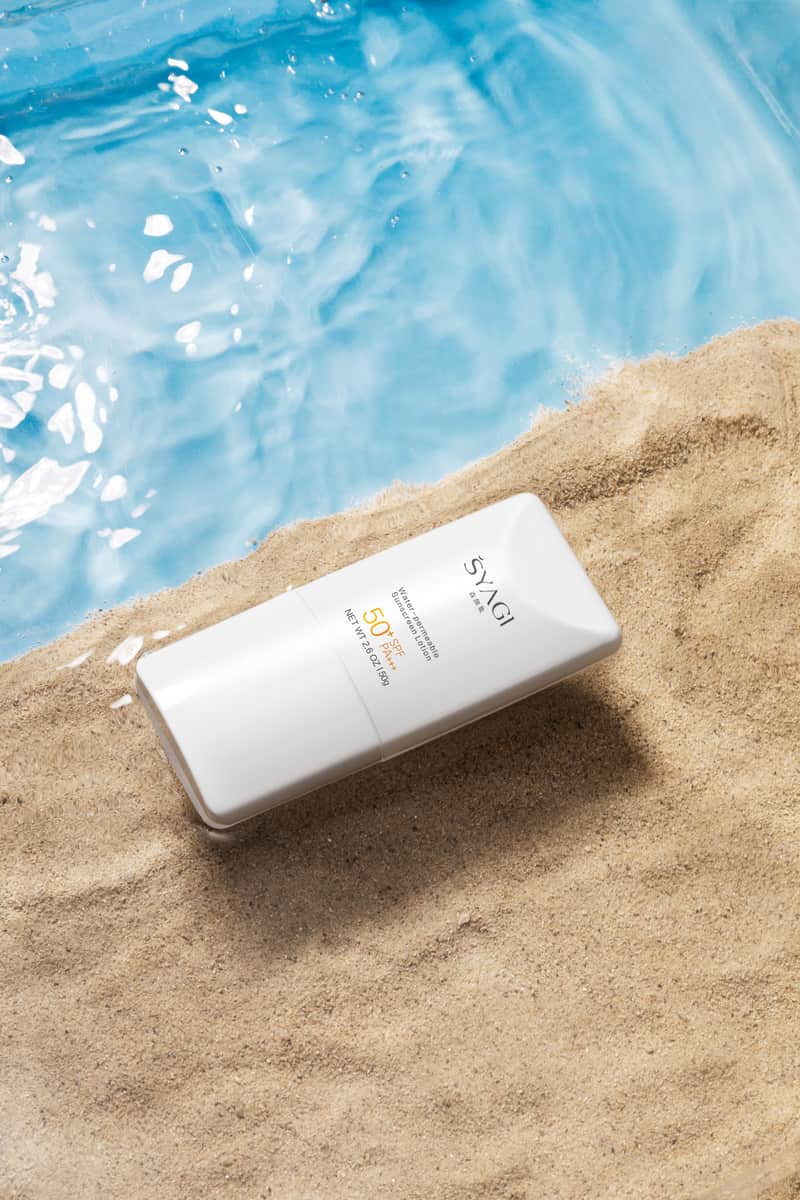 La Roche-Posay Anthelios Mineral Zinc Oxide Sunscreen SPF 50 Mineral-only filters at SPF 50, fragrance-free, in a fluid base that actually spreads instead of dragging. | Mineral-only SPF 50 that still spreads | Free |
#ad - Amazon links are affiliate links. We do not publish prices, because we have no live price feed and will not print a number we cannot verify.
Week by week
Week one
- 1Stop everything you were using. All of it, at once. This is the one time to change several things simultaneously.
- 2Morning: rinse with lukewarm water, moisturize on damp skin, apply sunscreen.
- 3Night: cleanse gently, moisturize on damp skin.
- 4Write one line a day: did you sting, flush or flake, and anything unusual.
Week two
Change nothing. This is the hard part. Skin often gets slightly worse before it settles when you strip a routine back, and week two is where people abandon the experiment. Keep writing the daily line.
Week three
You should be noticing less stinging and less tightness by now. Visible redness may not have changed at all, and that is normal - comfort improves before color does.
Week four
Read back your four weeks of notes. Compare the last week to the first. If things are better, you now have a baseline and you can start adding one thing at a time. If nothing has changed, that is genuinely useful information too - it points away from your products and toward triggers or a clinician.
The picks, in order
1. The shortest ingredient list on the shelf
Vanicream Gentle Facial Cleanser
Illustrative photo - not the product.
Twelve ingredients, no fragrance, no essential oils, no botanical extracts. When skin is reacting and you cannot work out to what, this is the cleanser that removes the most variables at once.
What is in it
- Glycerin
- Coco-Glucoside
- Sodium Cocoyl Glycinate
Best for
The shortest ingredient list on the shelf
Strengths
- Twelve ingredients total - the shortest list of any cleanser here
- No fragrance, masking fragrance, essential oils or botanical extracts
- Non-foaming, gentle surfactants (coco-glucoside, sodium cocoyl glycinate)
- Widely stocked and inexpensive for the size
Trade-offs
- Does very little beyond cleaning - no ceramides, no soothing actives
- The lotion texture feels slippery to people used to a foaming wash
Who should skip it: If you wear heavy sunscreen or makeup and want one-step removal, this will not cut through it - double-cleanse or pick a balm.
Ingredient list read at INCIDecoder - Vanicream Gentle Facial Cleanser.
2. Barrier repair on a budget
CeraVe Moisturizing Cream
Illustrative photo - not the product.
Three ceramides plus cholesterol and petrolatum, no fragrance, in a tub big enough to use on your body too. This is the cream most dermatology offices hand out, and the formula earns it.
What is in it
- Ceramide NP, AP and EOP
- Petrolatum
- Sodium Hyaluronate
- Cholesterol
Best for
Barrier repair on a budget
Strengths
- Ceramides NP, AP and EOP with cholesterol - a complete lipid set
- Petrolatum for occlusion plus hyaluronic acid for water
- No added fragrance
- Very low cost per ounce in the large tub
Trade-offs
- Thick - it needs warming between your palms in winter
- The tub invites fingers into the product; the pump version is more hygienic
Who should skip it: Oily or acne-prone skin may find the richness too much for daytime; use the lotion version instead.
Ingredient list read at INCIDecoder - CeraVe Moisturizing Cream.
3. Mineral-only SPF 50 that still spreads
La Roche-Posay Anthelios Mineral Zinc Oxide Sunscreen SPF 50
Illustrative photo - not the product.
Mineral-only filters at SPF 50, fragrance-free, in a fluid base that actually spreads instead of dragging. The trade is a visible cast on deeper skin tones, which the tinted version solves.
Filters: Titanium dioxide 6%, zinc oxide 5%
What is in it
- Titanium dioxide 6%
- Zinc oxide 5%
- Dimethicone
Best for
Mineral-only SPF 50 that still spreads
Strengths
- 100% mineral - titanium dioxide 6% and zinc oxide 5%, no chemical filters
- SPF 50 with a genuinely light fluid texture
- No added fragrance
- Layers under makeup without pilling
Trade-offs
- Leaves a white cast on medium and deep skin tones
- The fluid finish is matte - dry skin needs moisturizer under it
Who should skip it: If a white cast is a dealbreaker, go straight to a tinted mineral formula - untinted zinc always casts.
Ingredient list read at INCIDecoder - La Roche-Posay Anthelios Mineral Zinc Oxide Sunscreen SPF 50.
What to add first, at week five
| If your main problem is | Add |
|---|---|
| Papules or pustules | Azelaic acid 10%, twice a week over moisturizer |
| Diffuse redness, no bumps | Niacinamide at 4-5%, or centella |
| Dryness and flaking | A richer night cream, not a new active |
| Redness that looks worse in photos | A tinted mineral sunscreen |
| Nothing in particular - it is just better | Nothing. Hold here |
One thing, then two weeks of nothing else. That is roughly twenty-five controlled experiments a year, which is far more useful information than a year of swapping everything monthly.
Mistakes that cost the most time
- Changing more than one thing at a time. The experiment produces nothing.
- Buying a product to fix a flare. Flares settle on their own with bland care; a new product mid-flare is a new suspect.
- Abandoning at week two, when things often look slightly worse before they settle.
- Not writing it down. Memory reconstructs. Four weeks of one-line notes is genuinely different from remembering.
- Expecting redness to change in a fortnight. Comfort first, color much later, and sometimes not at all without a clinician.
Questions people ask
What products do I need to start a rosacea routine?
Three: a fragrance-free cleanser, a fragrance-free moisturizer, and a mineral sunscreen at SPF 30 or higher. Use only those for four weeks before adding anything, because without a baseline you cannot evaluate what you add.
How long should I stick with a new routine before judging it?
Four weeks minimum. Skin often looks slightly worse in the first fortnight when you strip a routine back, and week two is where most people abandon the experiment just before it becomes useful.
Should I stop all my current products at once?
Yes, at the very start - this is the one time changing several things simultaneously is right, because you are establishing a clean baseline rather than testing anything. After that, one change at a time.
What should I add first after the four weeks?
It depends on your main problem. Azelaic acid if you have papules or pustules; niacinamide or centella for diffuse redness; a richer night cream for dryness. One thing, then a fortnight of nothing else.
What if four weeks changes nothing?
That is useful information, not a failure. It points away from your products and toward triggers, or toward a clinician. Prescription options exist and work, and no over-the-counter routine substitutes for them.