Moisturizers & Barrier Repair
Best creams for rosacea on the nose
The nose is the hardest place on the face to treat and the easiest place to make worse.
By Michael W. · Last updated
The short answer
La Roche-Posay Toleriane Double Repair is the best everyday cream for rosacea on the nose: light enough not to clog the larger pores there, with ceramide NP and glycerin for the barrier. Eucerin Redness Relief Soothing Night Creme is the pick if you want the one ingredient with redness-specific evidence, licochalcone A, though it contains parabens and benzyl alcohol. La Roche-Posay Cicaplast Baume B5 is for the raw, flaking days only. Be clear on the limit: no cream shrinks a visible blood vessel, and none reverses thickening.
Some links on this page are affiliate links. If you buy through one, we may earn a commission at no extra cost to you - it is what funds the site. It does not change what gets recommended or in what order. Full disclosure.
Nose redness is the part of rosacea people most want gone and the part that responds least to a cream. There are three honest reasons. The skin on the nose is thicker than on the cheeks and carries far more sebaceous glands, so rich creams behave differently there. The vessels are closer to the surface and more visibly dilated, and no topical product constricts them. And the nose is where phymatous change - the thickening and texture coarsening of subtype 3 - shows up first, which is a different process from flushing altogether.
What a cream can genuinely do is keep the barrier intact, reduce the flaking that makes redness look worse, and stop you from reaching for the things that aggravate it. That is a smaller promise than the aisle makes, and it is worth stating before any product, because people spend a lot of money on nose redness on the strength of claims nothing topical can keep.
The screen
Every product on this page had to clear all of the following before it was considered on its merits. This is the exclusion step, and it runs before any recommendation.
- No added fragrance or parfum anywhere in the ingredient list.
- No essential oils, including ones declared under a botanical name.
- No denatured alcohol, witch hazel, menthol, camphor or peppermint.
- No physical scrub particles.
- Sold in the US right now, from a brand that publishes its full ingredient list.
- Every remaining flagged ingredient is named on the product card rather than quietly left out.
Ingredient lists last checked 2026-09-29. Formulas change - if you spot a discrepancy, the published list on the brand's own site wins and we want to know.
Quick picks
Every product here cleared the screen. Tap a row for the full write-up.
| # | Product | Best for | Fragrance | Price |
|---|---|---|---|---|
| 1 | 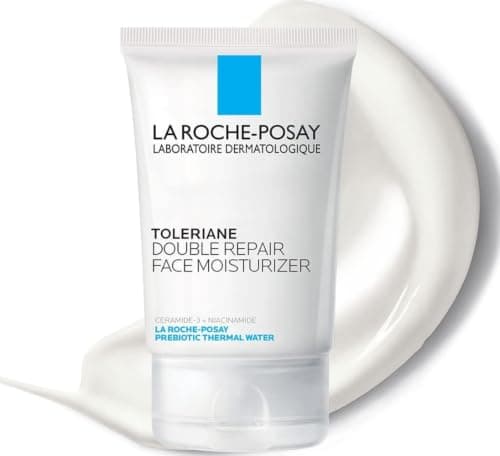 La Roche-Posay Toleriane Double Repair Face Moisturizer Light, fast-absorbing, fragrance-free, with ceramide NP and glycerin doing the barrier work. | Daily moisturizer that disappears under sunscreen | Free | |
| 2 | 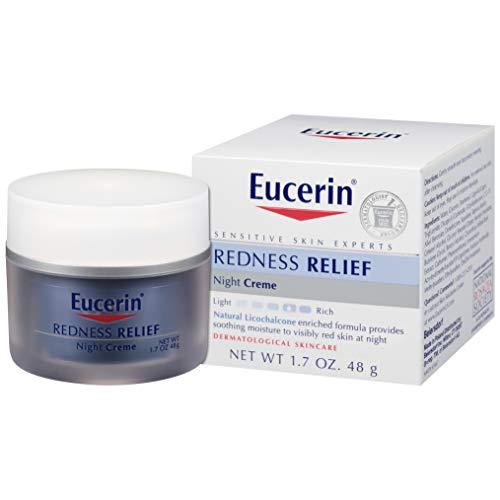 Eucerin Redness Relief Soothing Night Creme Fragrance-free and built around licochalcone A, the licorice-root flavonoid this range is known for. | Targeted redness work overnight | Free | |
| 3 | 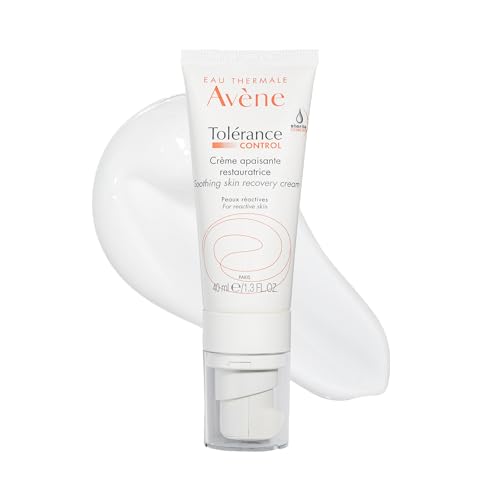 Avene Tolerance Control Soothing Skin Recovery Cream Fifteen ingredients, no fragrance, and no preservative in the ingredient declaration - it ships in a sterile pump instead. | Skin that reacts to almost everything, including preservatives | Free | |
| 4 | 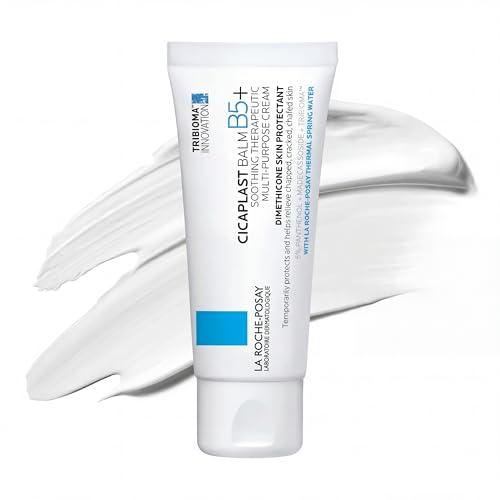 La Roche-Posay Cicaplast Baume B5 A thick fragrance-free balm with panthenol, madecassoside and shea butter. | A rescue balm for the worst two days of a flare | Free |
#ad - Amazon links are affiliate links. Prices come from the Amazon API, are refreshed daily, and disappear rather than go stale - the button shows the current number or it asks you to check.
What actually changes nose redness, in order of effect
| Intervention | Effect on nose redness | Available over the counter? |
|---|---|---|
| Daily mineral sunscreen | The largest single effect of anything here, over months | Yes |
| Removing your own trigger exposures | Large, and specific to you | Yes - free |
| Azelaic acid 10 to 15% | Real effect on papules and pustules; modest on background redness | Yes at 10% |
| A fragrance-free barrier cream | Reduces flaking and tightness, so redness reads less angrily | Yes |
| Brimonidine or oxymetazoline gel | Temporary vasoconstriction, hours not days, with rebound risk | No - prescription |
| Vascular laser or IPL | The only thing that addresses dilated vessels | No - clinic |
| Any cream, on visible broken vessels | None | n/a |
| Any cream, on phymatous thickening | None | n/a |
The last two rows are the point of this page. If what bothers you is a fine red thread you can trace with your eye, or a nose that has coarsened in texture over years, the honest answer is that you are in a clinic conversation and no purchase on this site changes that. If what bothers you is a nose that goes hot and red, flakes around the nostrils and stings when you cleanse, the creams below help with all three.
The picks, in order
1. Daily moisturizer that disappears under sunscreen
La Roche-Posay Toleriane Double Repair Face Moisturizer
Product photo from Amazon.
Light, fast-absorbing, fragrance-free, with ceramide NP and glycerin doing the barrier work. Niacinamide sits fifth on the list, which is the only reason it is not our first pick for everyone.
What is in it
- Niacinamide
- Ceramide NP
- Glycerin
- Prebiotic thermal water
Best for
Daily moisturizer that disappears under sunscreen
Strengths
- Absorbs in seconds - layers cleanly under mineral SPF
- Ceramide NP and glycerin for barrier and water
- No added fragrance
- Works year-round for most skin types
Trade-offs
- Niacinamide is fifth on the ingredient list - a flushing trigger for some
- Not rich enough on its own for very dry skin in winter
Who should skip it: Skip if niacinamide reliably flushes you. Also skip as a standalone if your skin is very dry - layer it over an occlusive.
#ad How we are funded - price as of November 18, 2026
Ingredient list read at INCIDecoder - La Roche-Posay Toleriane Double Repair Face Moisturizer.
2. Targeted redness work overnight
Eucerin Redness Relief Soothing Night Creme
Product photo from Amazon.
Fragrance-free and built around licochalcone A, the licorice-root flavonoid this range is known for. Two things to weigh: it contains parabens and benzyl alcohol, both of which some people avoid.
What is in it
- Licochalcone A (Glycyrrhiza inflata root extract)
- Panthenol
- Squalane
- Glycerin
Best for
Targeted redness work overnight
Strengths
- Licochalcone A, the actual active behind the range
- No added fragrance
- Panthenol and squalane for comfort
- Fragrance-free, dye-free and non-comedogenic on the label
Trade-offs
- Contains methylparaben and propylparaben
- Contains benzyl alcohol, which a minority find stinging
- Getting hard to find in the US - stock is thin and it is no longer a drugstore-priced cream
Who should skip it: If you avoid parabens or have reacted to benzyl alcohol, pick a different redness cream - this one contains both.
Ingredient list read at INCIDecoder - Eucerin Redness Relief Night Cream.
3. Skin that reacts to almost everything, including preservatives
Avene Tolerance Control Soothing Skin Recovery Cream
Product photo from Amazon.
Fifteen ingredients, no fragrance, and no preservative in the ingredient declaration - it ships in a sterile pump instead. If you have reacted to preserved products, this is the one to try.
What is in it
- Avene thermal spring water
- Squalane
- Aquaphilus dolomiae extract filtrate
- Glycerin
Best for
Skin that reacts to almost everything, including preservatives
Strengths
- No preservative listed - sterile packaging does that job
- Fifteen ingredients, no fragrance, no essential oils
- Squalane and glycerin for comfort without heaviness
- The shortest list of any cream here after Vanicream
Trade-offs
- The most expensive per ounce of any pick on this page
- The sterile pump means you cannot scrape out the last of it
Who should skip it: If cost matters more than ingredient minimalism, the CeraVe or Vanicream creams do the barrier job for a fraction of the price.
#ad How we are funded - price as of November 18, 2026
Ingredient list read at INCIDecoder - Avene Tolerance Control Soothing Skin Recovery Cream.
4. A rescue balm for the worst two days of a flare
La Roche-Posay Cicaplast Baume B5
Product photo from Amazon.
A thick fragrance-free balm with panthenol, madecassoside and shea butter. This is a short-term repair layer for raw, stinging patches, not a daily moisturizer for the whole face.
What is in it
- Panthenol
- Madecassoside
- Shea butter
- Glycerin
Best for
A rescue balm for the worst two days of a flare
Strengths
- Panthenol and madecassoside - both well studied for irritated skin
- No added fragrance
- Thick enough to act as an overnight occlusive layer
- A small tube lasts a long time in spot use
Trade-offs
- Heavy and slightly tacky - not a daily all-over cream
- Contains chlorhexidine digluconate, which a small number of people react to
Who should skip it: If you want one cream for everyday use, this is not it - it is a targeted repair layer.
#ad How we are funded - price as of November 18, 2026
Ingredient list read at INCIDecoder - La Roche-Posay Cicaplast Baume B5.
What we screened out, and why
These are products you will find recommended elsewhere for this exact search. Each one is excluded here for a specific, checkable reason - not because it is a bad product, but because it does not clear the screen above.
Mattifying and pore-minimising creams
The nose has the largest sebaceous glands on the face, so this aisle targets it hard. Mattifying formulas work through alcohol, clays and high silica loads, and all three dehydrate the one area of a rosacea face that is already prone to flaking around a red patch.
Nose strips, scrubs and anything abrasive
Not a cream, but the single most common self-inflicted injury in this area. Mechanical exfoliation over dilated vessels and inflamed follicles reliably makes both worse, and on phymatous skin it does nothing at all to the thickening it is aimed at.
Menthol, camphor and cooling redness gels
These act directly on the nerve receptors implicated in flushing. On a nose, where the vessels are nearest the surface and most visible, that is the worst place on the face to apply them.
Green colour-correcting creams sold as treatment
A green-tinted cream cancels red optically for as long as it is on your face. That is cosmetics, not care, and there is nothing wrong with it - but it belongs in the makeup conversation, not in the step that is meant to be repairing your barrier.
The full list of what we flag, what each ingredient is and where the evidence is genuinely mixed lives on ingredients to avoid with rosacea.
How to choose between these four
- 1You want one cream, morning and night, that will not clog the larger pores there. La Roche-Posay Toleriane Double Repair. The lightest complete cream here, with ceramide NP - and niacinamide fifth, which is the thing to check against your own history.
- 2You want the ingredient with the most redness-specific support. Eucerin Redness Relief Soothing Night Creme, built on licochalcone A. It contains methylparaben, propylparaben and benzyl alcohol, so read that list before you buy.
- 3Everything stings, including products that used to be fine. Avene Tolerance Control. Fifteen ingredients, no preservative in the declaration.
- 4The skin over the bridge or the nostrils is raw and cracking. La Roche-Posay Cicaplast Baume B5, in spot use for two or three days. Panthenol and madecassoside, and too heavy for daily all-over use.
Applying any of these to a nose has a technique component that matters more here than elsewhere. Use less product than on the cheeks, press it in rather than rubbing along the sides, and pay attention to the rim of the nostril, which is the spot people miss and then find flaking. If you are also using azelaic acid - the one over-the-counter active with evidence for the papules that cluster on and around the nose - it goes on first and the cream a minute later, as set out at best moisturizers to use with azelaic acid.
Sunscreen does more for a red nose than any cream
The nose is the most sun-exposed plane on the face. It takes more cumulative UV than the cheeks, the forehead or the jaw, and UV is the most consistently reported rosacea trigger there is. That makes daily mineral SPF the single highest-value thing on this page, and it also makes the nose the place where sunscreen most often fails in practice - it sweats off first, it gets wiped when you blow your nose, and it is the first area to lose coverage behind glasses.
The practical fix is a mineral stick kept in a pocket for midday reapplication on the nose alone, rather than trying to redo the whole face. The sticks are ranked at best sunscreen sticks for sensitive skin, and the full mineral lineup is at best mineral sunscreens for rosacea. If a white cast across the nose is what stops you wearing it, a tinted mineral formula solves that specific problem - the options are at best tinted sunscreens for rosacea.
When the nose is a clinician's problem, not a cream's
- The skin is thickening or the texture is coarsening. That is phymatous change, and it is treated with prescription medication early or procedurally later. Creams do not reverse it.
- You can see individual vessels. Telangiectasia responds to vascular laser or IPL and to nothing you can buy.
- There are persistent pustules on and around the nose. Worth a diagnosis rather than a purchase - prescription options outperform anything over the counter here.
- It is painful, swollen or spreading rather than just red. Red noses are not always rosacea, and cellulitis and lupus both present on the central face.
- Your eyes are also gritty, dry or sore. Ocular involvement is common, under-recognised and needs an eye examination rather than a cream.
Where the over-the-counter line actually falls, and what sits on the other side of it, is set out at over the counter vs prescription rosacea treatment. Nothing on this site is a substitute for a diagnosis, and a nose is the part of a rosacea face most worth getting looked at properly.
How we chose
Published ingredient lists read on each brand's own site and on INCIDecoder, with the source linked on every pick, screened for added fragrance, masking fragrance, essential oils and the flagged ingredients on our avoid list. Claims about what changes nose redness are limited to interventions with published support, and we state plainly where nothing topical works rather than filling the gap. Prices are pulled from the Amazon API, refreshed daily and stamped with the date they were read. Method at how we choose.
Questions people ask
What is the best cream for rosacea on the nose?
La Roche-Posay Toleriane Double Repair for everyday use - light enough for the larger pores on the nose, with ceramide NP and glycerin for the barrier. For redness specifically, Eucerin Redness Relief Soothing Night Creme is built on licochalcone A, with parabens and benzyl alcohol as the trade-offs.
Can a cream get rid of redness on the nose?
It can reduce flaking, tightness and irritation, which makes redness read less angrily. It cannot constrict a dilated blood vessel, remove a visible broken vessel or reverse the skin thickening of phymatous rosacea. Those are laser and prescription conversations.
Why is my nose redder than the rest of my face?
Three reasons stack on the nose: it is the most sun-exposed plane on the face, it has the largest sebaceous glands, and the vessels there sit closest to the surface. It is also where phymatous thickening shows first.
Is redness around the nose rosacea or something else?
Redness and flaking confined to the creases either side of the nose is more often seborrheic dermatitis. Redness across the nose itself and the cheeks, with flushing, is more typical of rosacea - and plenty of people have both at once.
Should I exfoliate a red nose?
No. Scrubs, nose strips and brushes over dilated vessels and inflamed follicles make both worse, and they do nothing to the thickening they are usually aimed at. If you exfoliate at all, do it away from the nose and gently.