Actives & Treatments
Azelaic acid vs niacinamide for redness
Different mechanisms, different risks, and a clear order to try them in.
By Michael W. · Last updated
The short answer
If you have papules or pustules, azelaic acid first - it is the only one of the two with real evidence for them. If your redness is diffuse with no bumps, niacinamide is gentler and worth trying first. Do not start both in the same fortnight.
Some links on this page are affiliate links. If you buy through one, we may earn a commission at no extra cost to you - it is what funds the site. It does not change what gets recommended or in what order. Full disclosure.
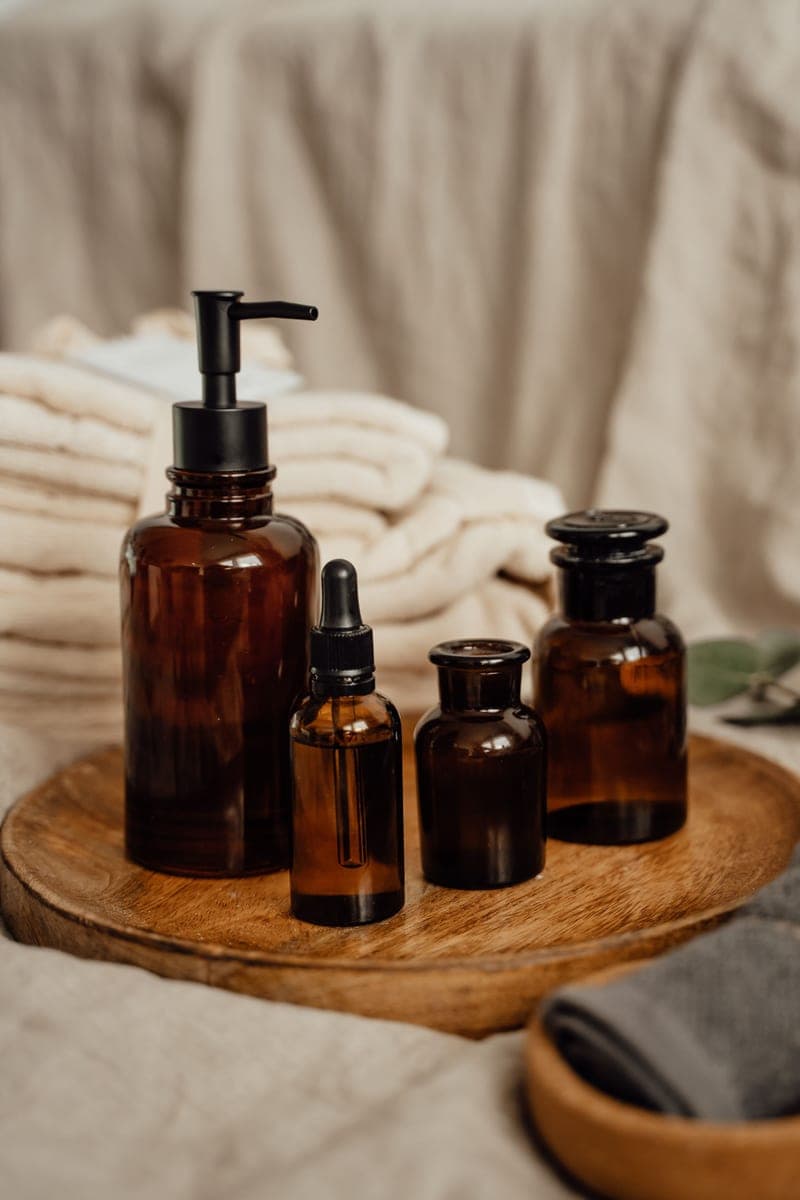
These are the two ingredients you will be pointed at most often for rosacea redness, and they are not doing the same thing. Choosing between them is easier once you know what each one actually addresses.
Side by side
| Azelaic acid | Niacinamide | |
|---|---|---|
| What it is | A dicarboxylic acid | Vitamin B3 |
| Best evidence for | Papules, pustules and redness in rosacea | Barrier function, general redness, oil |
| Strength OTC | 10% (15-20% by prescription) | 2-10% typically |
| Stinging | Common for the first week | Uncommon |
| Flushing risk | Low | Real for a minority - the key caveat |
| Time to effect | 8-12 weeks | 4-8 weeks |
| Texture issues | Silicone base can pill | Gum base can pill |
| Cost | Low | Very low |
The deciding question: do you have bumps?
If you have papules or pustules - raised bumps, with or without visible heads - azelaic acid is the one with evidence behind it for exactly that. Niacinamide does not address them.
If your rosacea is diffuse redness and flushing with no raised lesions, niacinamide is the gentler starting point and the one less likely to cost you a week of stinging. The exception is if you have flushed from niacinamide before, in which case it is off the table entirely.
The screen
Every product on this page had to clear all of the following before it was considered on its merits. This is the exclusion step, and it runs before any recommendation.
- No added fragrance or parfum anywhere in the ingredient list.
- No essential oils, including ones declared under a botanical name.
- No denatured alcohol, witch hazel, menthol, camphor or peppermint.
- No physical scrub particles.
- Sold in the US right now, from a brand that publishes its full ingredient list.
- Every remaining flagged ingredient is named on the product card rather than quietly left out.
Ingredient lists last checked 2026-09-29. Formulas change - if you spot a discrepancy, the published list on the brand's own site wins and we want to know.
Quick picks
Every product here cleared the screen. Tap a row for the full write-up.
| # | Product | Best for | Fragrance | Price |
|---|---|---|---|---|
| 1 |  The Ordinary Azelaic Acid Suspension 10% Actual azelaic acid at 10%, fragrance-free, for less than most cleansers cost. | True azelaic acid at the lowest price | Free | |
| 2 | The Ordinary Niacinamide 10% + Zinc 1% Twelve ingredients, no fragrance, niacinamide at 10%. | Testing whether niacinamide suits you, cheaply | Free | |
| 3 |  Naturium Azelaic Topical Acid 10% This uses potassium azeloyl diglycinate, a water-soluble azelaic derivative, not azelaic acid itself. | A lightweight azelaic serum with no silicone drag | Free | |
| 4 |  Purito Centella Unscented Serum Centella asiatica extract at 49%, plus the three isolated centella actives, in a fragrance-free base. | Centella at a concentration that is actually doing something | Free |
#ad - Amazon links are affiliate links. We do not publish prices, because we have no live price feed and will not print a number we cannot verify.
What each one is doing
Azelaic acid
It has anti-inflammatory activity, it normalizes keratinization - which is why it works on the follicular component of papules - and it has some effect on pigmentation. In rosacea specifically it is one of the better-studied topicals, which is why prescription versions at 15-20% exist for exactly this condition.
Niacinamide
It is involved in ceramide synthesis, so it supports skin building its own barrier lipids, and it has an anti-inflammatory effect. It also reduces sebum and slows melanin transfer. That breadth is why it is in so many products - and why it appears in almost every product marketed for rosacea, including several sunscreens.
The picks, in order
1. True azelaic acid at the lowest price
The Ordinary Azelaic Acid Suspension 10%
Illustrative photo - not the product.
Actual azelaic acid at 10%, fragrance-free, for less than most cleansers cost. The silicone base gives it a grippy, primer-like feel that people either tolerate or hate - there is no middle.
What is in it
- Azelaic acid 10%
- Dimethicone
- Tocopherol
Best for
True azelaic acid at the lowest price
Strengths
- Real azelaic acid at 10%, not a derivative
- No fragrance or essential oils
- The cheapest way to try azelaic acid
- Works under makeup like a primer
Trade-offs
- The silicone texture pills under some sunscreens
- Can sting for the first week - that is expected and usually settles
Who should skip it: If silicone textures bother you, a derivative-based serum will feel much better on skin.
Ingredient list read at INCIDecoder - The Ordinary Azelaic Acid Suspension 10%.
2. Testing whether niacinamide suits you, cheaply
The Ordinary Niacinamide 10% + Zinc 1%
Illustrative photo - not the product.
Twelve ingredients, no fragrance, niacinamide at 10%. Ten percent is a high starting dose for reactive skin - if you are testing tolerance, a 4-5% product is the smarter first try.
What is in it
- Niacinamide 10%
- Zinc PCA 1%
Best for
Testing whether niacinamide suits you, cheaply
Strengths
- Twelve ingredients, no fragrance or essential oils
- Very low cost for a 30ml bottle
- Zinc PCA for oil control alongside
Trade-offs
- 10% is a high dose to start on if you have never used niacinamide
- The gum base can pill under some sunscreens
Who should skip it: If you have flushed from niacinamide before, skip it entirely - a high-percentage product is the worst place to retest.
Ingredient list read at INCIDecoder - The Ordinary Niacinamide 10% + Zinc 1%.
3. A lightweight azelaic serum with no silicone drag
Naturium Azelaic Topical Acid 10%
Illustrative photo - not the product.
This uses potassium azeloyl diglycinate, a water-soluble azelaic derivative, not azelaic acid itself. The texture is far nicer. It also contains niacinamide, which changes who it suits.
What is in it
- Potassium azeloyl diglycinate
- Niacinamide
- Ethyl ascorbic acid
- Sodium hyaluronate
Best for
A lightweight azelaic serum with no silicone drag
Strengths
- Light, watery texture with none of the silicone grip
- Sodium hyaluronate and glycerin keep it comfortable
- No added fragrance
- Layers under sunscreen cleanly
Trade-offs
- A derivative, not azelaic acid - do not assume equivalence to a 10% acid
- Contains niacinamide and ethyl ascorbic acid, two more variables
Who should skip it: Skip if you are trying to isolate one variable, or if niacinamide flushes you - this has several actives at once.
Ingredient list read at INCIDecoder - Naturium Azelaic Topical Acid 10%.
4. Centella at a concentration that is actually doing something
Purito Centella Unscented Serum
Illustrative photo - not the product.
Centella asiatica extract at 49%, plus the three isolated centella actives, in a fragrance-free base. Most centella products use a trace amount; this one does not. It also contains niacinamide.
What is in it
- Centella asiatica extract 49%
- Asiaticoside, asiatic acid, madecassic acid
- Ceramide NP
- Niacinamide
Best for
Centella at a concentration that is actually doing something
Strengths
- 49% centella extract plus asiaticoside, asiatic acid and madecassic acid
- Ceramide NP and sodium hyaluronate in the base
- No added fragrance - the 'unscented' in the name is accurate
- Light serum texture
Trade-offs
- Contains niacinamide
- A long ingredient list with several peptides and plant extracts
Who should skip it: If you are in the middle of a flare and stripping back to essentials, a 30-ingredient serum is the wrong move - come back to it when things are calm.
Ingredient list read at INCIDecoder - Purito Centella Unscented Serum.
Can you use both?
Yes, once you have established that you tolerate each separately. There is no meaningful chemical incompatibility - the old advice about niacinamide and acids not mixing was about vitamin C and has been substantially overstated anyway.
Practically, most people find alternating nights easier than layering, because two active layers is more than reactive skin usually wants in one sitting. Azelaic acid on Monday, Wednesday, Friday; niacinamide on the other nights.
If neither works
That is a real outcome and it is worth naming. If twelve weeks of azelaic acid and eight weeks of niacinamide have changed nothing, the over-the-counter route has largely run out - the remaining options are prescription topicals, oral treatment and vascular laser, all of which require a clinician. Getting to that conclusion in five months rather than five years is itself useful.
Questions people ask
Should I use azelaic acid or niacinamide for rosacea?
Azelaic acid first if you have papules or pustules - it is the only one of the two with evidence for them. Niacinamide first if your redness is diffuse with no bumps, unless you have flushed from niacinamide before.
Can I use azelaic acid and niacinamide together?
Yes, once you know you tolerate each separately. There is no meaningful chemical incompatibility. Most people find alternating nights easier than layering, because two active layers at once is a lot for reactive skin.
Which one is gentler?
Niacinamide, for most people - it rarely stings. The exception matters though: it causes flushing in a minority of people with rosacea, which azelaic acid does not. Gentler on average, worse for a specific group.
Which one works faster?
Niacinamide, at four to eight weeks against eight to twelve for azelaic acid. Azelaic acid addresses more, particularly if you have papules, so faster is not the same as better here.
What if neither helps?
That is a real outcome. If twelve weeks of azelaic acid and eight of niacinamide have changed nothing, the over-the-counter route is largely exhausted and the next options - prescription topicals, oral treatment, vascular laser - all need a clinician.