Ingredients & Triggers
Is dimethicone good for rosacea?
The ingredient the clean-beauty aisle warns you about is one of the safest things in your routine.
By Michael W. · Last updated
The short answer
Yes, for almost everyone. Dimethicone is a large, inert silicone polymer that sits on the surface, reduces water loss and gives products slip. It is one of the lowest-irritancy, lowest-allergenicity ingredients in cosmetics, it does not clog pores at the molecular size used, and it does not suffocate skin - silicone films are gas-permeable. The real drawback is mechanical: silicone layers pill against polymer-thickened products, which is why your azelaic acid rolls off under sunscreen. La Roche-Posay Anthelios Mineral, The Ordinary Azelaic Acid Suspension and Vanicream Moisturizing Skin Cream all use silicones well.
Some links on this page are affiliate links. If you buy through one, we may earn a commission at no extra cost to you - it is what funds the site. It does not change what gets recommended or in what order. Full disclosure.
Dimethicone is the most maligned harmless ingredient in skincare. The clean-beauty case against it runs on three claims: that it suffocates skin, that it clogs pores, and that it builds up. All three are checkable, and all three are wrong as stated - which matters here more than usual, because people with rosacea are told to strip their routines back and dimethicone is frequently the first thing cut, often from products that were working.
What dimethicone is, chemically, is a silicone polymer with a backbone of alternating silicon and oxygen atoms. It is large, it is not absorbed through intact skin, and it is essentially unreactive. On a face it forms a breathable film that slows water loss and makes whatever else is in the formula spread smoothly. For a condition where the defining problem is a barrier that loses water too fast, that is a useful property rather than a suspicious one.
The three claims, checked
| Claim | What is true | Verdict |
|---|---|---|
| It suffocates the skin | Silicone films are permeable to oxygen and water vapour; they slow water loss without sealing | No |
| It clogs pores | Dimethicone is widely rated non-comedogenic; the molecule is too large to enter a follicle | No |
| It builds up on skin | It is removed by any surfactant cleanse; nothing accumulates across days | No |
| It causes allergic reactions | Contact allergy to dimethicone is very rare in patch-test series | Rarely |
| It traps bacteria and sebum underneath | No support for this on cleansed skin | No |
| It pills under other products | Yes - against carbomer and cellulose thickeners especially | Yes, and this is the real issue |
| It is bad for the environment | A real and separate debate about persistence in wastewater, not a skin claim | Out of scope here |
The sixth row is the one that costs people actual money and comfort. Silicone-based products pill - small grey rolls that appear as you apply the next layer - and the pilling happens between layers rather than inside the product. The Ordinary's Azelaic Acid Suspension is the classic example: a genuinely good 10% azelaic acid in a dimethicone base that rolls up under a polymer-thickened sunscreen or gel moisturizer. People conclude the acid does not suit them when the problem was the pair.
Where silicones genuinely help a rosacea routine
- In mineral sunscreen. Dimethicone is what makes a high zinc or titanium load spread instead of dragging. A mineral SPF with no silicone at all is usually one you will not reapply.
- As a buffer under an active. A silicone layer slows how fast something penetrates, which is sometimes exactly what reactive skin needs.
- For slip over flaking skin. It fills surface irregularity optically, so a flaking patch reads smoother - a cosmetic effect, but a real one.
- As a fragrance-free alternative to plant oils. For anyone who has reacted to botanical oils, a silicone emollient carries none of the same risk.
- In anything that needs to feel elegant without an occlusive. Which is most of why it is in so many products.
There is one caveat worth naming honestly. If your skin is fungal-acne-prone, the usual advice is to avoid heavy occlusion, and silicone films are a mild form of it - though far less so than plant oils, which also feed Malassezia in a way silicone does not. The products that work with that constraint are at best moisturizers for rosacea and fungal acne.
The screen
Every product on this page had to clear all of the following before it was considered on its merits. This is the exclusion step, and it runs before any recommendation.
- No added fragrance or parfum anywhere in the ingredient list.
- No essential oils, including ones declared under a botanical name.
- No denatured alcohol, witch hazel, menthol, camphor or peppermint.
- No physical scrub particles.
- Sold in the US right now, from a brand that publishes its full ingredient list.
- Every remaining flagged ingredient is named on the product card rather than quietly left out.
Ingredient lists last checked 2026-09-29. Formulas change - if you spot a discrepancy, the published list on the brand's own site wins and we want to know.
Quick picks
Every product here cleared the screen. Tap a row for the full write-up.
| # | Product | Best for | Fragrance | Price |
|---|---|---|---|---|
| 1 | 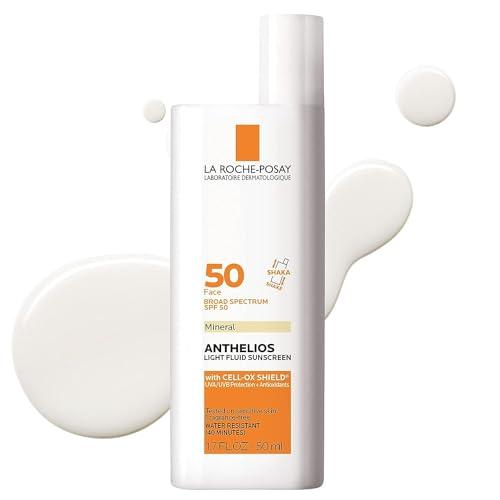 La Roche-Posay Anthelios Mineral Zinc Oxide Sunscreen SPF 50 Mineral-only filters at SPF 50, fragrance-free, in a fluid base that actually spreads instead of dragging. | Mineral-only SPF 50 that still spreads | Free | |
| 2 | 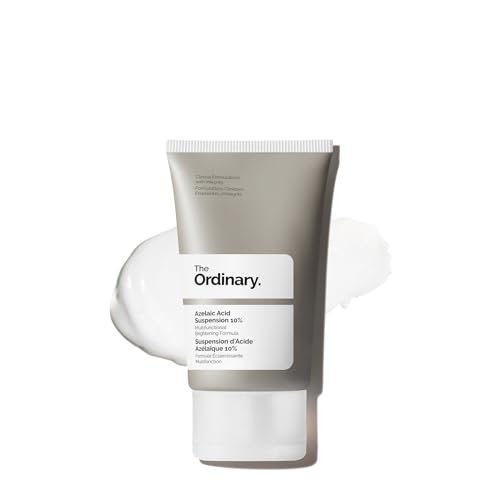 The Ordinary Azelaic Acid Suspension 10% Actual azelaic acid at 10%, fragrance-free, for less than most cleansers cost. | True azelaic acid at the lowest price | Free | |
| 3 | 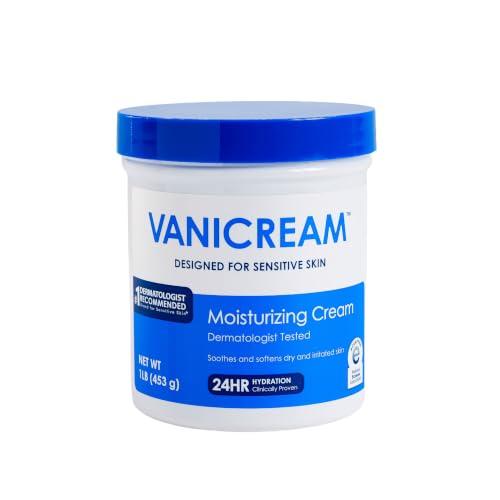 Vanicream Moisturizing Skin Cream Eleven ingredients, petrolatum second on the list, and no fragrance, essential oils or botanicals anywhere. | A barrier rebuild with nothing else in the way | Free |
#ad - Amazon links are affiliate links. Prices come from the Amazon API, are refreshed daily, and disappear rather than go stale - the button shows the current number or it asks you to check.
The picks, in order
1. Mineral-only SPF 50 that still spreads
La Roche-Posay Anthelios Mineral Zinc Oxide Sunscreen SPF 50
Product photo from Amazon.
Mineral-only filters at SPF 50, fragrance-free, in a fluid base that actually spreads instead of dragging. The trade is a visible cast on deeper skin tones, which the tinted version solves.
Filters: Titanium dioxide 6%, zinc oxide 5%
What is in it
- Titanium dioxide 6%
- Zinc oxide 5%
- Dimethicone
Best for
Mineral-only SPF 50 that still spreads
Strengths
- 100% mineral - titanium dioxide 6% and zinc oxide 5%, no chemical filters
- SPF 50 with a genuinely light fluid texture
- No added fragrance
- Layers under makeup without pilling
Trade-offs
- Leaves a white cast on medium and deep skin tones
- The fluid finish is matte - dry skin needs moisturizer under it
Who should skip it: If a white cast is a dealbreaker, go straight to a tinted mineral formula - untinted zinc always casts.
#ad How we are funded - price as of November 18, 2026
Ingredient list read at INCIDecoder - La Roche-Posay Anthelios Mineral Zinc Oxide Sunscreen SPF 50.
2. True azelaic acid at the lowest price
The Ordinary Azelaic Acid Suspension 10%
Product photo from Amazon.
Actual azelaic acid at 10%, fragrance-free, for less than most cleansers cost. The silicone base gives it a grippy, primer-like feel that people either tolerate or hate - there is no middle.
What is in it
- Azelaic acid 10%
- Dimethicone
- Tocopherol
Best for
True azelaic acid at the lowest price
Strengths
- Real azelaic acid at 10%, not a derivative
- No fragrance or essential oils
- The cheapest way to try azelaic acid
- Works under makeup like a primer
Trade-offs
- The silicone texture pills under some sunscreens
- Can sting for the first week - that is expected and usually settles
Who should skip it: If silicone textures bother you, a derivative-based serum will feel much better on skin.
#ad How we are funded - price as of November 18, 2026
Ingredient list read at INCIDecoder - The Ordinary Azelaic Acid Suspension 10%.
3. A barrier rebuild with nothing else in the way
Vanicream Moisturizing Skin Cream
Product photo from Amazon.
Eleven ingredients, petrolatum second on the list, and no fragrance, essential oils or botanicals anywhere. It is an occlusive that seals water in. It is not elegant and it is not trying to be.
What is in it
- Petrolatum
- Sorbitol
- Glyceryl Stearate
- Simethicone
Best for
A barrier rebuild with nothing else in the way
Strengths
- Eleven ingredients total
- Petrolatum-led - the most reliable occlusive there is
- No fragrance, essential oils or botanical extracts
- Sold in a large tub; cost per ounce is very low
Trade-offs
- Heavy and slightly waxy - it sits on skin rather than sinking in
- No soothing or barrier actives beyond the occlusion itself
Who should skip it: If you wear makeup daily or your skin is oily, this will feel like too much - use it at night only, or pick a lighter cream.
#ad How we are funded - price as of November 18, 2026
Ingredient list read at INCIDecoder - Vanicream Moisturizing Skin Cream.
The silicone names on an ingredient list
- Dimethicone. The standard one. Non-volatile, film-forming, the subject of this page.
- Cyclopentasiloxane and cyclohexasiloxane. Volatile - they evaporate. They give a dry-touch finish and leave nothing behind.
- Dimethicone crosspolymer. A thickened, powdery version used for mattifying and blurring.
- Dimethiconol and amodimethicone. Heavier, more substantive; more common in hair products.
- Simethicone. Dimethicone with silica added as an anti-foaming agent. It is in Vanicream's eleven-ingredient cream.
- Phenyl trimethicone. Higher refractive index, so it adds shine - often in primers and foundations.
None of those are on our flagged list, which is worth stating plainly because the clean-beauty framing has made a lot of people with rosacea discard good products on a bad premise. The things that actually earn a place on that list - fragrance, essential oils, denatured alcohol, menthol, specific preservatives - are set out with the reasoning at ingredients to avoid with rosacea, and the general method for reading a label in order is at how to read a skincare label.
How we chose
Published ingredient lists read on each brand's own site and on INCIDecoder, with the source linked on every pick, screened for added fragrance, masking fragrance, essential oils and the flagged ingredients on our avoid list. Statements about silicone permeability, comedogenicity and allergenicity reflect the published cosmetic-science position; the environmental persistence debate is real and deliberately out of scope on a skin-tolerability page. Prices are pulled from the Amazon API, refreshed daily and stamped with the date they were read. Method at how we choose.
Questions people ask
Is dimethicone good for rosacea?
Yes, for almost everyone. It is a large, inert silicone that forms a breathable film, slows water loss and gives products slip. Contact allergy to it is very rare and it is not comedogenic at cosmetic molecular sizes.
Is silicone bad for sensitive skin?
No. Silicones are among the lowest-irritancy, lowest-allergenicity ingredients in cosmetics. The common objections - suffocation, pore clogging, build-up - do not hold up; the real drawback is that silicone layers pill against polymer-thickened products.
Does dimethicone clog pores?
At the molecular sizes used in skincare it is too large to enter a follicle, and it is widely rated non-comedogenic. If a silicone-containing product broke you out, the likelier cause is something else in the formula.
Why does my silicone-based serum pill under sunscreen?
Because silicone meets a carbomer or cellulose thickener in the next layer and the two roll up against each other. Change one of the two layers, wait ninety seconds between them, use less, and press rather than rub.
Should I avoid dimethicone if I have fungal acne?
Not necessarily. Silicone does not feed Malassezia the way plant oils and many esters do, though heavy occlusion of any kind can be worth limiting. A lighter silicone-containing product is a reasonable choice there.