Moisturizers & Barrier Repair
Best lotions for sensitive skin
Lighter than a cream on purpose, and the reason most people actually keep using it.
By Michael W. · Last updated
The short answer
CeraVe Daily Moisturizing Lotion is the best lotion for sensitive skin for most people: ceramides NP, AP and EOP with cholesterol and sodium hyaluronate, no added fragrance, accepted by the National Eczema Association, and sold in a pump big enough for a whole body. Vanicream Moisturizing Lotion is the one to buy if you are troubleshooting a reaction - twelve ingredients with petrolatum second and no niacinamide - and Aveeno Daily Moisturizing Lotion is the cheapest list here that still has petrolatum high in it.
Some links on this page are affiliate links. If you buy through one, we may earn a commission at no extra cost to you - it is what funds the site. It does not change what gets recommended or in what order. Full disclosure.
A lotion is not a weaker cream. It is a different emulsion: more water, less oil, more emulsifier holding the two together. That is why it pours, why it pumps, why it spreads over a whole arm in one pass, and why it sinks in without leaving a film. It is also why, ounce for ounce, it seals less water into your skin than a cream does.
The AAD is direct about this: for very dry skin, creams and ointments do more than lotions. That advice is correct and it is not a reason to skip this page, because the best moisturizer in the world has an effect of zero if it stays in the cupboard. Most people with easily-upset skin under-moisturize their body, not their face, and the reason is almost never the formula - it is that a tub of petrolatum cream takes four minutes to apply to two legs and a lotion takes forty seconds.
So this is a page about the format. Every lotion below was checked against a published ingredient list before it was judged on anything else, and one otherwise-sensible lotion is excluded on a single ingredient that most fragrance-free claims do not cover. If what you actually want is the heaviest thing that will stay on your face overnight, the cream version of this ranking is at best moisturizers for sensitive skin, and the format argument in full is at cream vs lotion vs ointment for sensitive skin.
The screen
Every product on this page had to clear all of the following before it was considered on its merits. This is the exclusion step, and it runs before any recommendation.
- No added fragrance or parfum anywhere in the ingredient list.
- No essential oils, including ones declared under a botanical name.
- No denatured alcohol, witch hazel, menthol, camphor or peppermint.
- No physical scrub particles.
- Sold in the US right now, from a brand that publishes its full ingredient list.
- Every remaining flagged ingredient is named on the product card rather than quietly left out.
Ingredient lists last checked 2026-09-29. Formulas change - if you spot a discrepancy, the published list on the brand's own site wins and we want to know.
Quick picks
Every product here cleared the screen. Tap a row for the full write-up.
| # | Product | Best for | Fragrance | Price |
|---|---|---|---|---|
| 1 | 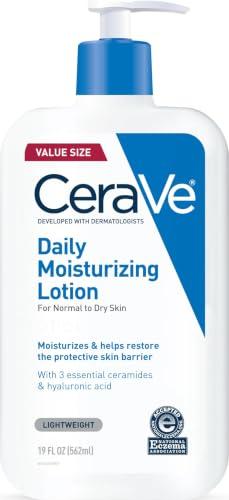 CeraVe Daily Moisturizing Lotion The only lotion here that supplies the full lipid set - ceramides NP, AP and EOP with cholesterol and phytosphingosine - rather than just sealing. | Barrier lipids in a texture you will use on your whole body | Free | |
| 2 | 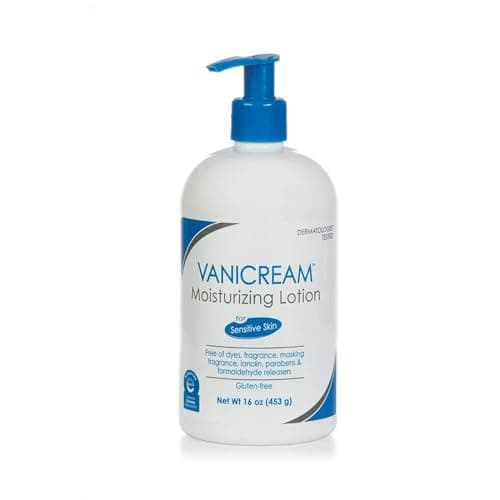 Vanicream Moisturizing Lotion Twelve ingredients with white petrolatum second on the list - the occlusion of the Vanicream tub in something that actually pumps. | The shortest lotion list on the shelf | Free | |
| 3 | 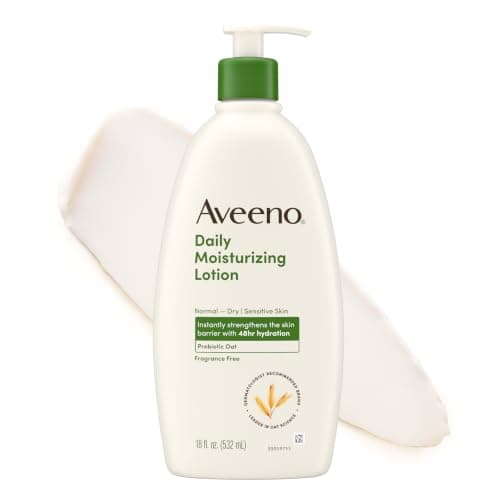 Aveeno Daily Moisturizing Lotion Ten ingredients, with petrolatum fourth and oat kernel flour seventh. | Oat plus petrolatum in ten ingredients | Free | |
| 4 | 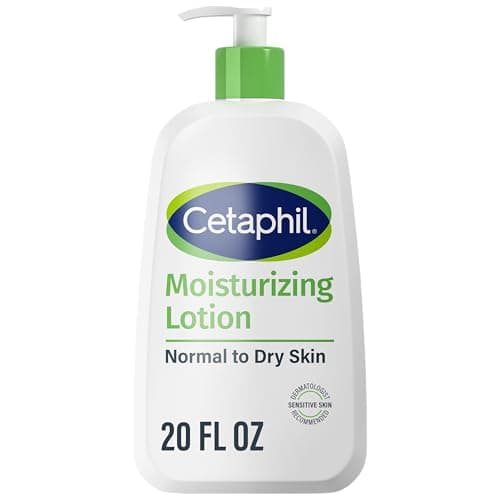 Cetaphil Moisturizing Lotion Sixteen ingredients, no fragrance and no essential oils, with panthenol and pantolactone doing the soothing. | The lightest finish of any lotion here | Free | |
| 5 | 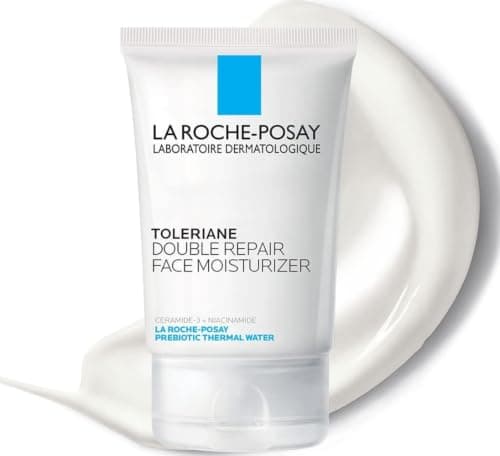 La Roche-Posay Toleriane Double Repair Face Moisturizer Light, fast-absorbing, fragrance-free, with ceramide NP and glycerin doing the barrier work. | Daily moisturizer that disappears under sunscreen | Free |
#ad - Amazon links are affiliate links. Prices come from the Amazon API, are refreshed daily, and disappear rather than go stale - the button shows the current number or it asks you to check.
What a lotion gives up, and what it buys
What it gives up is occlusion. A cream can be forty percent oil phase; a lotion is mostly water with enough oil and fatty alcohol to hold a stable emulsion. Less oil phase means a thinner film, which means more water evaporating out of the upper layers over the course of a day. On intact skin that difference is invisible. On a barrier that is genuinely damaged it is the whole ballgame, which is why the cream pages exist.
What it buys is four things, and they are not trivial. Coverage - you will moisturize your shins, which nobody does with a jar. Speed - it absorbs in seconds, so you can dress. Layering - a lotion sits under mineral sunscreen without pilling, and a petrolatum cream does not, which is the commonest reason people quietly stop wearing SPF. And the pump, which keeps fingers out of a product and is the only one of the four that is about hygiene rather than habit.
The practical answer most dermatology advice converges on is to use both: a lotion in the morning and on the body, a cream at night and on anywhere cracked. Nothing on this page is in competition with a cream. It is the other half of the same routine.
The ingredient that fragrance-free does not cover
Fragrance-free is the single most useful filter on a label, and it is narrower than people assume. It addresses the word fragrance or parfum - the undisclosed mixture. It does not stop a brand declaring an individual aroma chemical by its own name, and in a lotion that distinction decided one of the exclusions on this page.
Farnesol is the example. It appears on the published list for one widely-recommended sensitive-skin lotion, the product is described as fragrance free, and both things are true at once: there is no parfum entry, and there is a declarable fragrance allergen in the bottle. Farnesol has no function in a cosmetic other than perfuming, and EU rules require it to be named on a label precisely because of its allergy record. A lotion with it in does not clear this screen.
Benzyl alcohol is the ingredient that looks the same and is not, and two picks here contain it. It is also a declarable aroma chemical in Europe, but it has a second, approved job: it is a permitted cosmetic preservative, and in these formulas that is what it is doing. It is worth knowing it stings a small number of people, which is why we name it as a con on every card that has it - but excluding every preservative-system benzyl alcohol would knock out half the fragrance-free aisle for no gain. The difference is function, and we would rather state the rule than pretend the two cases are identical. The wider version of this argument is at fragrance-free vs unscented.
How the six compare
| Lotion | Ingredients | What it adds | Watch for | Face or body |
|---|---|---|---|---|
| CeraVe Daily Moisturizing Lotion | Around twenty-five | Ceramides NP, AP, EOP, cholesterol, sodium hyaluronate | Longest list of the three cheap picks | Both |
| Vanicream Moisturizing Lotion | Twelve | White petrolatum, second on the list | Propylene glycol third; contains BHT | Both |
| Aveeno Daily Moisturizing Lotion | Ten | Oat kernel flour plus petrolatum | Benzyl alcohol; no published oat percentage | Body, face if you like it |
| Cetaphil Moisturizing Lotion | Sixteen | Panthenol and pantolactone; fastest absorption | Niacinamide seventh; benzyl alcohol | Both |
| LRP Toleriane Double Repair | Around twenty | Ceramide NP and glycerin in a face-weight lotion | Niacinamide fifth; small tube, high cost per ounce | Face |
| Eucerin Advanced Repair Lotion | Thirty-four | Urea third, sodium lactate, ceramide NP | Urea stings reactive facial skin; shea butter | Body only |
The picks, in order
1. Barrier lipids in a texture you will use on your whole body
CeraVe Daily Moisturizing Lotion
Product photo from Amazon.
The only lotion here that supplies the full lipid set - ceramides NP, AP and EOP with cholesterol and phytosphingosine - rather than just sealing. CeraVe's published list carries no added fragrance and no parabens, and the product is accepted by the National Eczema Association.
What is in it
- Ceramides NP, AP and EOP
- Sodium hyaluronate
- Cholesterol
- Dimethicone
Best for
Barrier lipids in a texture you will use on your whole body
Strengths
- Three ceramides plus cholesterol and phytosphingosine - it rebuilds rather than only occluding
- Sodium hyaluronate and glycerin for the humectant half
- No added fragrance and no parabens on CeraVe's published list
- Accepted by the National Eczema Association; sold in sizes up to 19 oz
Trade-offs
- Around twenty-five ingredients - a long list if you are mid-elimination
- The dimethicone-and-ceramide base can pill under mineral sunscreen
- Thinner than the tub cream, so very dry skin needs more of it
Who should skip it: If you are troubleshooting a reaction and want the fewest possible suspects, start with the twelve-ingredient Vanicream lotion instead.
#ad How we are funded - price as of November 18, 2026
Ingredient list read at CeraVe - Daily Moisturizing Lotion ingredients.
2. The shortest lotion list on the shelf
Vanicream Moisturizing Lotion
Product photo from Amazon.
Twelve ingredients with white petrolatum second on the list - the occlusion of the Vanicream tub in something that actually pumps. No fragrance, no masking fragrance, no essential oils, no botanical extracts, no lanolin and no dye.
What is in it
- White petrolatum
- Sorbitol
- Propylene glycol
- Simethicone
Best for
The shortest lotion list on the shelf
Strengths
- Twelve ingredients total - the shortest list of any lotion here
- White petrolatum second on the list, so it still seals properly
- No fragrance, essential oils, botanicals, lanolin or dye
- Pumps and spreads, which a petrolatum tub does not
Trade-offs
- No ceramides, no cholesterol, no soothing actives - it occludes and nothing else
- Propylene glycol is third on the list and a small number of people react to it
- Contains BHT, which some readers specifically avoid
Who should skip it: If your barrier is genuinely damaged rather than just dry, a ceramide formula does more over a month than pure occlusion does.
#ad How we are funded - price as of November 18, 2026
Ingredient list read at INCIDecoder - Vanicream Moisturizing Lotion.
3. Oat plus petrolatum in ten ingredients
Aveeno Daily Moisturizing Lotion
Product photo from Amazon.
Ten ingredients, with petrolatum fourth and oat kernel flour seventh. It is the only lotion here built on the one soothing botanical that holds FDA skin-protectant status, and the published list carries no fragrance and no essential oils.
What is in it
- Avena sativa (oat) kernel flour
- Petrolatum
- Glycerin
- Dimethicone
Best for
Oat plus petrolatum in ten ingredients
Strengths
- Ten ingredients - second-shortest list on this page
- Petrolatum fourth, so it seals better than most lotions of this weight
- Oat kernel flour, the ingredient class with FDA OTC skin-protectant status behind it
- The cheapest pick here per ounce and sold everywhere
Trade-offs
- Benzyl alcohol is classed as a perfuming ingredient despite the fragrance-free claim
- The published list we read gives no oat percentage, so we do not quote one
- No ceramides, no cholesterol - it soothes and seals rather than rebuilds
Who should skip it: If your history includes reactions to oat or to gluten-adjacent botanicals, every other lotion on this page is oat-free.
#ad How we are funded - price as of November 18, 2026
Ingredient list read at INCIDecoder - Aveeno Daily Moisturizing Body Lotion.
4. The lightest finish of any lotion here
Cetaphil Moisturizing Lotion
Product photo from Amazon.
Sixteen ingredients, no fragrance and no essential oils, with panthenol and pantolactone doing the soothing. It is the thinnest and fastest-absorbing lotion on this page, and it contains niacinamide seventh on the list.
What is in it
- Glycerin
- Panthenol
- Niacinamide
- Dimethicone
Best for
The lightest finish of any lotion here
Strengths
- Sixteen ingredients, no added fragrance, no essential oils, no parabens
- Panthenol and pantolactone, the same soothing pair as the Cetaphil cleanser
- Absorbs faster than anything else here - the easiest to layer under SPF
- Stocked by every US pharmacy and cheap per ounce
Trade-offs
- Niacinamide is seventh on the list, which flushes a minority of people with rosacea
- Benzyl alcohol is classed as a perfuming ingredient even though no fragrance is declared
- Avocado and sunflower seed oil are the only emollients - no petrolatum, no ceramides
Who should skip it: If niacinamide is a known trigger for you, this is the wrong lotion - the Vanicream and CeraVe lists are both niacinamide-free.
#ad How we are funded - price as of November 18, 2026
Ingredient list read at INCIDecoder - Cetaphil Moisturizing Lotion.
5. Daily moisturizer that disappears under sunscreen
La Roche-Posay Toleriane Double Repair Face Moisturizer
Product photo from Amazon.
Light, fast-absorbing, fragrance-free, with ceramide NP and glycerin doing the barrier work. Niacinamide sits fifth on the list, which is the only reason it is not our first pick for everyone.
What is in it
- Niacinamide
- Ceramide NP
- Glycerin
- Prebiotic thermal water
Best for
Daily moisturizer that disappears under sunscreen
Strengths
- Absorbs in seconds - layers cleanly under mineral SPF
- Ceramide NP and glycerin for barrier and water
- No added fragrance
- Works year-round for most skin types
Trade-offs
- Niacinamide is fifth on the ingredient list - a flushing trigger for some
- Not rich enough on its own for very dry skin in winter
Who should skip it: Skip if niacinamide reliably flushes you. Also skip as a standalone if your skin is very dry - layer it over an occlusive.
#ad How we are funded - price as of November 18, 2026
Ingredient list read at INCIDecoder - La Roche-Posay Toleriane Double Repair Face Moisturizer.
6. Rough, scaly, genuinely cracked body skin
Eucerin Advanced Repair Lotion
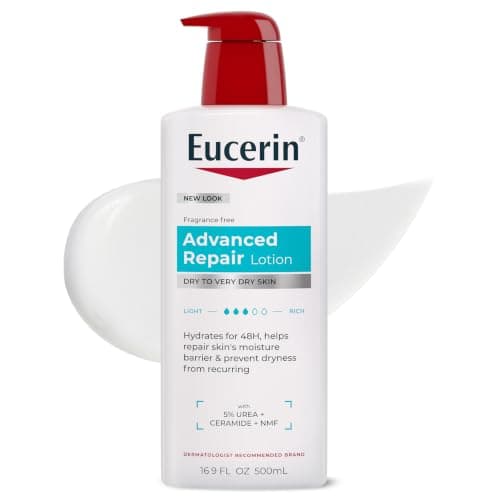
Product photo from Amazon.
Urea third on the list with sodium lactate and lactic acid behind it, which makes this the only lotion here that softens thickened skin rather than just hydrating it. Thirty-four ingredients, no fragrance, no essential oils - and the urea is exactly why it is a body lotion and not a face lotion.
What is in it
- Urea
- Sodium lactate
- Ceramide NP
- Shea butter
Best for
Rough, scaly, genuinely cracked body skin
Strengths
- Urea third on the list - the one humectant that also breaks down thickened, scaly skin
- Ceramide NP and shea butter for the lipid side
- No fragrance and no essential oils on the published list
- The pick for heels, shins, elbows and hands rather than faces
Trade-offs
- Urea and lactic acid sting on a compromised barrier - not for facial use on reactive skin
- Thirty-four ingredients, the longest list on this page
- Contains shea butter, which is the usual problem for anyone with a tree-nut history
Who should skip it: Anyone looking for a face lotion, and anyone whose skin is currently raw rather than rough - urea on broken skin is the wrong instrument.
#ad How we are funded - price as of November 18, 2026
Ingredient list read at INCIDecoder - Eucerin Advanced Repair Lotion.
What we screened out, and why
These are products you will find recommended elsewhere for this exact search. Each one is excluded here for a specific, checkable reason - not because it is a bad product, but because it does not clear the screen above.
Cetaphil Daily Advance Ultra Hydrating Lotion
The clearest example on this page of why a fragrance-free description is not the same as a fragrance-free list. The formula is otherwise sensible - glycerin second, shea butter, panthenol, no parfum entry - and it declares farnesol, which has no function in a cosmetic except perfuming and is one of the fragrance substances EU rules require to be named on a label because of its allergy record. We are not calling it a bad lotion. It does not clear a screen whose first rule is no perfuming-only ingredients.
Anything with fragrance or parfum declared
A body lotion covers more skin than every other product in a routine put together, and it stays on. One 'fragrance' entry can legally stand for dozens of compounds you will never see named, and fragrance remains the leading cause of cosmetic contact allergy. This single exclusion removes most of the lotion aisle.
Lotions sold on a calming or soothing scent
Lavender, chamomile and rose are the three most common, and they are in the bottle to smell of something. An aromatic plant oil is fragrance by chemistry and by function, and a sensitive-skin label on the front does not stop a brand listing it on the back.
Cooling and tingling body lotions
Menthol, camphor and peppermint produce that sensation by stimulating nerve endings. On skin that already overreacts to stimulus, the feeling is the reaction rather than evidence of relief - and the National Rosacea Society lists menthol among the cosmetic ingredients that may provoke a flare.
Anti-itch lotions with an added drug
Pramoxine, benzocaine and topical diphenhydramine are medicines rather than moisturizers, and topical antihistamines in particular have a sensitization record that makes them a poor choice for repeated whole-body use. If itch is the main problem, that is a conversation with a clinician and a different product, not a swap within this category.
Lotions sold on a hypoallergenic claim and nothing else
The FDA states plainly that there are no federal standards or definitions governing the term hypoallergenic and that manufacturers are not required to submit substantiation for it. It tells you what the marketing department decided. Several lotions excluded here carry the word and declare a fragrance mixture on the same label.
Acid and urea lotions marketed for the face
Urea, lactic acid and glycolic acid genuinely work on thickened, scaly skin, which is why one urea lotion is on this list - as a body pick, clearly labeled as one. Sold as a facial lotion for sensitive skin, the same chemistry is a reliable way to produce a sting on a barrier that is already compromised.
The full list of what we flag, what each ingredient is and where the evidence is genuinely mixed lives on ingredients to avoid with rosacea.
Match the lotion to where you are putting it
You want one bottle for your face and your body
CeraVe Daily Moisturizing Lotion. It is the only lotion here that supplies the actual lipid set a stratum corneum uses - ceramides NP, AP and EOP with cholesterol and phytosphingosine - rather than just sealing water in, and the sodium hyaluronate and glycerin cover the humectant half. CeraVe's published list carries no added fragrance and no parabens, and the product is accepted by the National Eczema Association. The honest trade is around twenty-five ingredients, which is a lot if you are mid-elimination, and a dimethicone-and-ceramide base that can pill under some mineral sunscreens. What ceramides actually do is at best ceramide creams for rosacea.
You are reacting and you do not know to what
Vanicream Moisturizing Lotion. Twelve ingredients, white petrolatum second, and no fragrance, masking fragrance, essential oil, botanical extract, lanolin, dye or niacinamide anywhere - which is the occlusion of the Vanicream tub in something you can actually pump onto two legs. Use it for two weeks with a bland cleanser and nothing else, then add things back one at a time. The two things to know are that propylene glycol sits third and a small number of people react to it, and that it contains BHT, which some readers avoid on principle. The cream version is reviewed at Vanicream Moisturizing Cream review.
You want the shortest list for the least money
Aveeno Daily Moisturizing Lotion. Ten ingredients, petrolatum fourth, and oat kernel flour seventh - which makes it the only pick here built on the one soothing botanical with FDA over-the-counter skin-protectant status behind it. It is the cheapest lotion on this page per ounce and it is stocked everywhere. Two caveats, both on the card: the published list we read declares benzyl alcohol, and it gives no oat percentage, so we do not quote one. What the oat evidence does and does not support is at is colloidal oatmeal good for rosacea.
You wear sunscreen or makeup every day
Cetaphil Moisturizing Lotion for the body, La Roche-Posay Toleriane Double Repair for the face. Both absorb in seconds, which is the entire reason they are here - the pilling that happens when mineral SPF goes over a rich cream is the most common reason a sunscreen habit fails. The Cetaphil is sixteen ingredients with panthenol and pantolactone doing the soothing; the Toleriane adds ceramide NP in a face-weight formula. Both contain niacinamide, which matters only if you flush from it. Layering without pilling is covered at best moisturizers for sensitive skin under makeup.
Your skin is rough and scaly rather than reactive
Eucerin Advanced Repair Lotion, and only on a body. Urea third on the list with sodium lactate and lactic acid behind it is what breaks down thickened, flaking skin - on heels, shins, elbows and hands it does something no other lotion here can. That same chemistry is why it is the wrong product for a reactive face, and why we have labeled it body-only rather than ranking it on finish. Thirty-four ingredients and shea butter are the other two things to know.
Niacinamide flushes you
Then your shortlist is three bottles long: the CeraVe, the Vanicream and the Aveeno, none of which declare it. The Cetaphil lists it seventh and the Toleriane fifth. For most people this is a non-issue and niacinamide is a useful ingredient; for a minority with rosacea it produces a warm, prickling flush within minutes. The way to find out which you are, in about a week, is at is niacinamide good for rosacea.
Your skin itches as much as it reacts
Then the lotion is only part of the answer and the format matters less than the frequency. Persistent itch with dryness is more often eczema than anything else, and the routine around it - including when it is time to stop buying products and see someone - is at eczema and sensitive skin. Nothing on this page is a treatment for itch, and the lotions sold as one are on our screened-out list for a reason.
The label checks that do most of the work
- Scan for fragrance, parfum and aroma first. One word and the bottle goes back. This check alone eliminates most of the aisle.
- Then scan for individual aroma chemicals. Farnesol, linalool, limonene, citronellol, geraniol. These survive a fragrance-free claim and they are declared by name for a reason.
- Then scan for Latin plant names ending in oil. Lavandula angustifolia, citrus aurantium peel, eucalyptus globulus leaf. Same logic, different spelling.
- Look at what is doing the sealing, and how high it sits. Petrolatum, dimethicone and squalane are all low-risk. Position matters more than presence - petrolatum second does something, petrolatum twentieth does not.
- Check for urea, lactic acid and glycolic acid if the lotion is for your face. They belong on rough body skin and they sting a compromised facial barrier.
- Check for niacinamide if you flush. It is in more sensitive-skin lotions than people expect, including two of the six here.
- Ignore the front of the bottle entirely. Hypoallergenic, dermatologist tested and for sensitive skin are unregulated claims. The ingredient list is the only part of the packaging with enforceable content.
None of these checks need any expertise - they need the back of the bottle, which is why we link a published ingredient list on every card rather than asking you to take our word for it. The method for reading one end to end is at how to read a skincare ingredient label.
What to avoid
Passes the screen
Flagged
How to use a lotion so it actually works
- 1Within about a minute of patting dry. The AAD's advice for dry or itchy skin is to moisturize while skin is still slightly damp, which gives the humectants water to hold on to instead of pulling it from deeper down. With a lotion this matters more than with a cream, because there is less oil phase holding anything in.
- 2Twice a day on anywhere that itches, once is fine elsewhere. A lotion's thinner film is the reason frequency does more here than it does with an ointment.
- 3Press and stroke; do not rub it in hard. Friction is a trigger in its own right on reactive skin, and the thin texture does not need the help.
- 4Lotion in the morning, cream at night. This is the pattern that avoids pilling under sunscreen without giving up overnight occlusion, and it is the reason to own both rather than argue about which is better.
- 5Keep a pump bottle where you get dressed. The whole case for a lotion is compliance. A bottle in the bathroom you walk past is worse than a cheaper one in the bedroom you use.
What we did not consider
Lotions with SPF in them, as a sun-protection purchase. They are convenient and they are the commonest way people end up under-protected, because nobody applies a quarter-teaspoon of body lotion per limb. The sunscreen you should actually buy is at best sunscreens for sensitive skin, and the one sensible SPF-moisturizer exception is at best moisturizers with SPF for rosacea.
Body butters and in-shower lotions, which are both formats rather than formulas - the first is a cream by any reasonable definition, and the second is applied to wet skin and rinsed, which changes the whole calculation. Neither is a lotion in the sense this page uses the word.
And tinted or self-tanning lotions. They may well be fine on your skin; they are a cosmetic decision with a moisturizer attached, and ranking them against a twelve-ingredient petrolatum lotion would tell you nothing useful.
How we chose
We read the published ingredient list for every lotion considered and excluded anything carrying a flagged ingredient - including one lotion that is described as fragrance free and declares a perfuming-only aroma chemical - before looking at anything else. What remained was ranked on whether it supplies barrier lipids rather than only sealing, how few unknowns it leaves, whether the texture suits the job it is being bought for, and whether it is genuinely easy to buy in the US. We have no testing lab and we make no first-hand-use claim anywhere on this site - what we do is read the label and show our working, which is set out in full at how we choose.
Questions people ask
What is the best lotion for sensitive skin?
CeraVe Daily Moisturizing Lotion for most people - ceramides NP, AP and EOP with cholesterol and sodium hyaluronate, no added fragrance, accepted by the National Eczema Association, and sold in a pump large enough for a whole body. If you are actively reacting and want the fewest suspects, Vanicream Moisturizing Lotion is twelve ingredients with petrolatum second and no niacinamide.
Is a lotion or a cream better for sensitive skin?
A cream seals more water in, and the AAD says so for very dry skin. A lotion gets applied, which is the variable that decides most outcomes. The pattern that works is a lotion in the morning and on the body and a cream at night and on anything cracked - the full argument is at cream vs lotion vs ointment for sensitive skin.
Can a lotion be labeled fragrance-free and still contain a fragrance ingredient?
Yes, and one otherwise-good sensitive-skin lotion is excluded from this page for exactly that. Fragrance-free addresses the parfum mixture; it does not stop a brand declaring an individual aroma chemical such as farnesol by its own name. Scanning for named aroma chemicals is a separate ten-second check from scanning for the word fragrance.
Why does my body lotion sting?
Fragrance first, then an acid or urea you did not notice, then denatured alcohol, then simply a barrier that is currently compromised. If a twelve-ingredient petrolatum lotion stings, the barrier itself is usually the problem - strip the routine back to a bland cleanser and one lotion and give it two weeks.
Is hypoallergenic lotion safe for sensitive skin?
The word tells you nothing enforceable. The FDA states there are no federal standards or definitions for hypoallergenic and that manufacturers are not required to submit substantiation for the claim. Read the ingredient list instead; several lotions carrying the word declare a fragrance mixture on the same label.
How often should I use a body lotion?
Once a day as a baseline and twice on anywhere that itches, applied within about a minute of patting dry while skin is still slightly damp. Frequency matters more with a lotion than with an ointment, because the thinner film holds less water in over the course of a day.
Can I use a body lotion on my face?
Usually yes, with two exceptions. Anything with urea, lactic acid or glycolic acid in it belongs on rough body skin and will sting a reactive face - the Eucerin pick here is body-only for that reason. And a heavy lotion under mineral sunscreen can pill, which is a texture problem rather than a safety one.
Are lotions better under sunscreen than creams?
Yes, and it is the most practical reason to own one. A petrolatum cream under a mineral SPF pills reliably, and pilling is the most common reason people quietly stop wearing sunscreen. A light lotion in the morning solves it without compromising either step.
Sources
- AAD - Dermatologists' tips for relieving dry skin
- FDA - Hypoallergenic cosmetics
- Cosmile Europe - Farnesol (declarable fragrance allergen)
- Cosmile Europe - Benzyl alcohol (preservative and declarable aroma chemical)
- INCIDecoder - Cetaphil Daily Advance Ultra Hydrating Lotion
- National Rosacea Society - Skin care and cosmetics